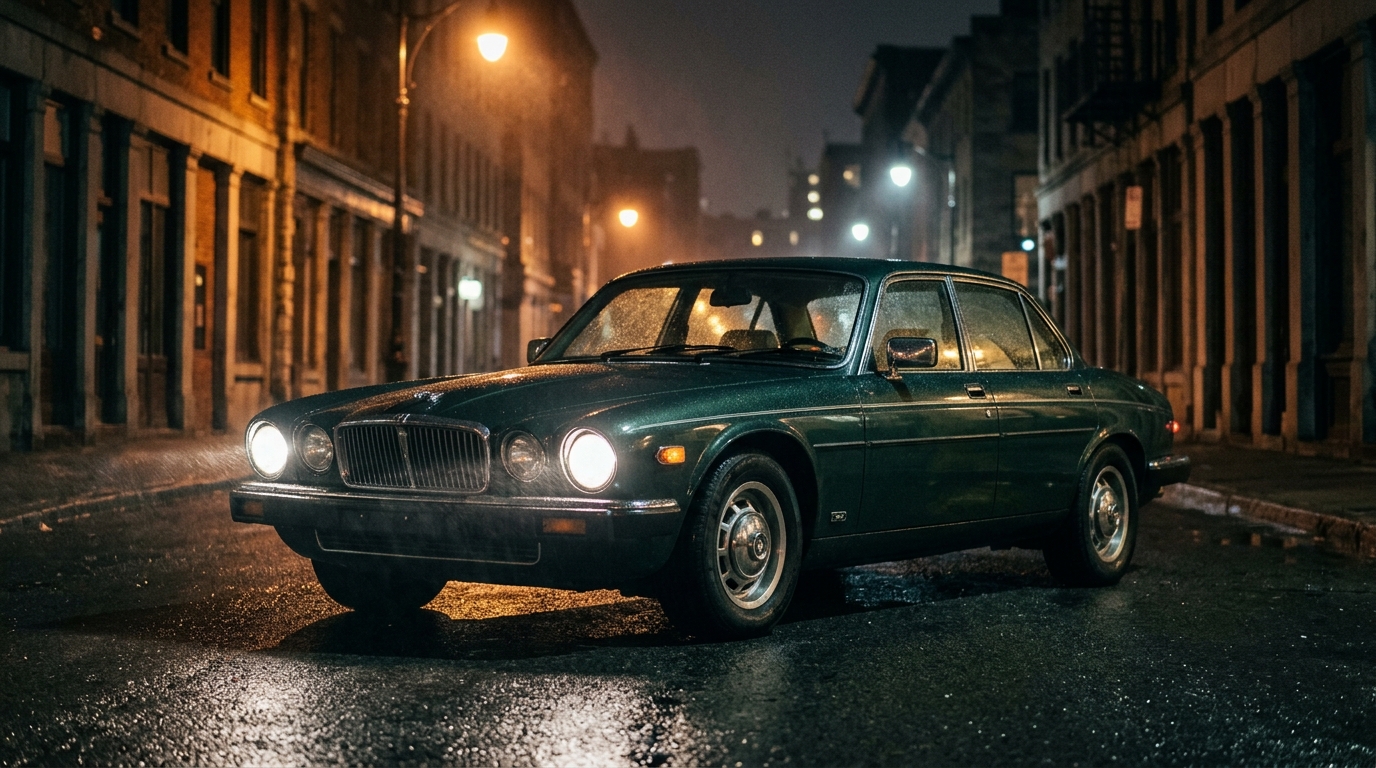
There is a particular hush that settles over a city after midnight, when the traffic thins and the streetlights stretch into long amber ribbons. The 1990 Jaguar XJ6 was built for exactly that hour. It does not roar or posture. It simply glides, wrapped in leather and walnut, while the world outside blurs into soft orange light.
A Saloon Born in Difficult Times
The XJ40, as the 1986 to 1994 generation is known internally, had one of the most troubled gestations in Jaguar history. It was meant to replace the beloved Series III XJ6, but development dragged on for years, delayed by budget pressure at British Leyland, the privatization of Jaguar in 1984, and a long, painful push toward reliability. When it finally arrived in 1986, it carried a crisp, squared-off body penned under the direction of Jaguar’s in-house design team, a sharp departure from the curvy Sir William Lyons shape that preceded it.
By the 1990 model year, Jaguar was a Ford property (the takeover completed that year), and the XJ40 had matured. Early electrical gremlins had been largely addressed, and the car you see here represents the XJ6 at a more settled point in its life. For North American buyers, the 1990 XJ6 came with the 3.6-litre AJ6 inline-six, a modern all-aluminium unit with twin overhead camshafts and 24 valves, replacing the long-lived XK engine of the old car.
Behind the Wheel After Dark
Slide in at night and the XJ6 reveals its real character. The instrument cluster glows in a soft, warm tone, and the dashboard (a mix of burr walnut veneer and a very 1980s digital-meets-analogue gauge arrangement) feels more like a gentleman’s club than a cockpit. The driving position is low and settled, with big, supportive seats trimmed in Connolly leather. Nothing feels rushed.
The AJ6 engine is smooth, quiet and willing rather than fierce. At idle it is almost inaudible. Rolling onto the throttle on an empty road, you get a refined, silky six-cylinder hum that builds to a gentle snarl near the redline, never intrusive, always reassuring. In the stillness of a midnight run, that muted soundtrack is half the appeal. You can hear the tyres on wet asphalt, the faint tick of the indicators, and not much else.
The ride is the headline. Jaguar’s all-independent suspension, with double wishbones at the front and a rear setup using the traditional inboard rear brakes and lower wishbones, delivers a magic-carpet quality that few contemporary saloons could match. Broken night-time tarmac, patched asphalt and cracked concrete simply dissolve beneath you. Body roll is present, but it is progressive and unthreatening. This is a car you steer with two fingers.
Headlights, Visibility and the Night Experience
Lighting technology in 1990 was far from today’s LED matrix systems, and the XJ6 shows its age here. The rectangular halogen units give a respectable but not dazzling throw of light, and in heavy rain the beam pattern can feel a touch soft by modern standards. What the car does offer is excellent all-round visibility. The large glasshouse, slim pillars and tall greenhouse make parking and city driving at night remarkably easy, and the squared-off corners help you place the car precisely.
Inside, the warm glow of the gauges and the absence of glaring screens keep your eyes relaxed. Night driving in the XJ6 is calming rather than tiring, which is exactly what a long-distance luxury saloon should deliver.
Handling and Everyday Reality
This is not a sports sedan, and Jaguar never pretended otherwise. The four-speed ZF automatic is smooth and well matched to the engine, though it lacks the extra ratios that would sharpen both performance and economy. Steering is light and slightly numb by modern standards, but accurate enough, and the car tracks straight and true at motorway speed. Brakes are competent, though a hard stop from high speed will remind you that this is a late-1980s design.
As a classic, the XJ6 rewards careful ownership. Check for rust in the sills and wheel arches, ensure the electrical systems have been sorted, and budget for the sort of attention any 30-plus-year-old British luxury car demands. In return, you get one of the most pleasant night-time cruisers money can buy, and prices for good examples remain remarkably approachable.
The Legacy
The XJ40 was never universally loved. Purists mourned the loss of the Series III’s flowing lines, and early cars earned a reputation for fragility. Yet time has been kind. As examples age, appreciation has grown for the car’s crisp styling, superb ride and genuine sense of occasion. Seen under a streetlight at night, with the chrome trim catching the glow and the long bonnet stretching ahead, the XJ6 looks every inch the proper Jaguar.
The 1990 Jaguar XJ6 is not the fastest or the most technically advanced luxury saloon of its era, but after dark it is among the most soothing. Bring it to a service specialist, keep the rust at bay, and you will own a bargain-priced slice of British grace that glides through the night like nothing else.