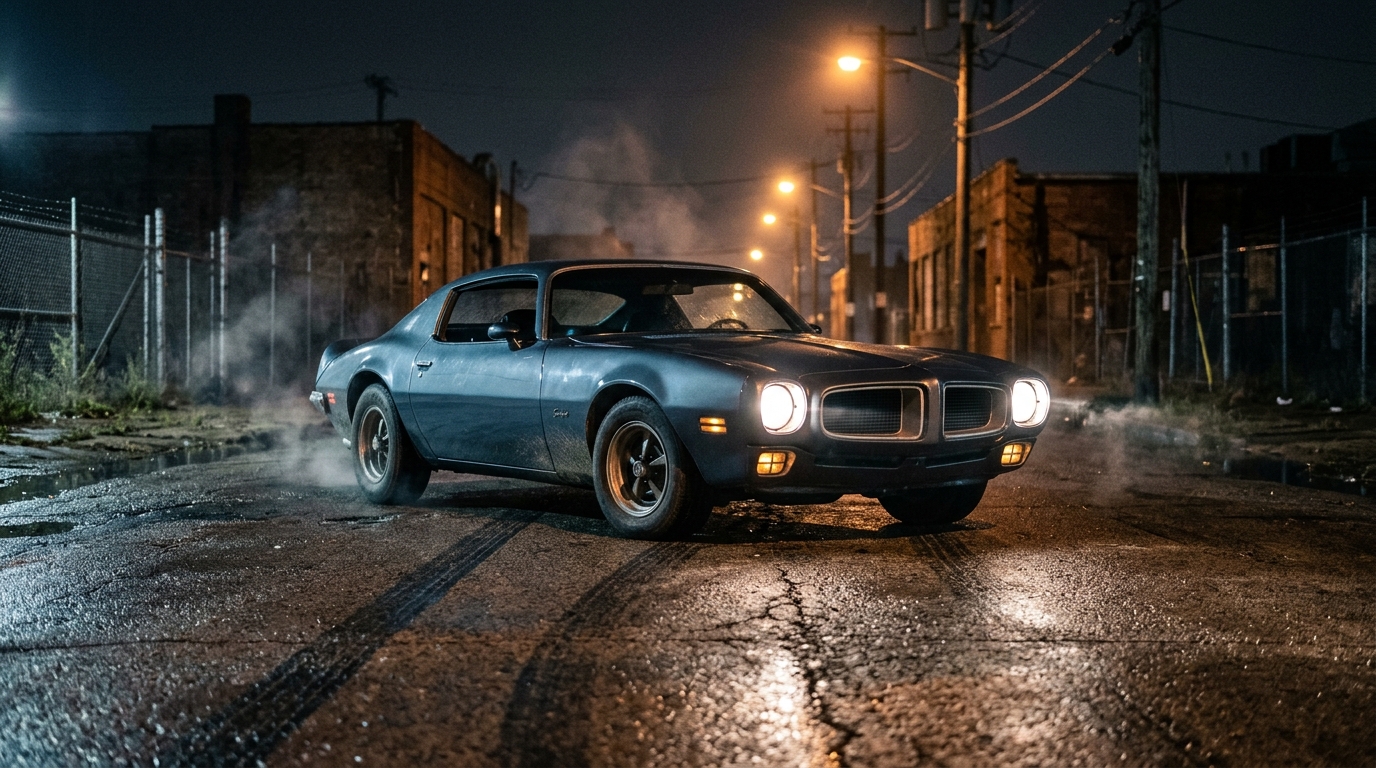
Somewhere past midnight, the sodium lamps along an empty four-lane buzz orange, and a flat-black silhouette idles at the light with that lazy, off-beat Pontiac V8 burble. The 1970 Firebird Esprit was never the loudest car on the strip, but after dark it had a way of making the loudest ones look like they were trying too hard. This is the story of the Firebird nobody remembers as a street fighter, and why it deserves a second look when the sun goes down.
The Car That Arrived Late to Its Own Party
The 1970 Firebird has a famously odd birth. The second-generation F-body was meant to debut for the 1970 model year alongside the Chevrolet Camaro, but a combination of tooling delays and a prolonged strike at GM meant the cars did not reach showrooms until February 1970. That is why you will hear these called 1970 1/2 models, and why the first-year production numbers are lower than you might expect. Pontiac, always the performance-minded division of GM, used the delay to get the car right.
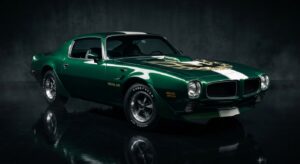
The result was a dramatic departure from the 1967-69 first generation. Gone was the rounded, Camaro-twin look. In its place came a long-hood, short-deck fastback with a sloping roofline, a pair of deep-set round headlamps, and a distinctive split grille. The signature was the body-colored Endura nose, a soft urethane front bumper structure that could shrug off minor impacts. Pontiac advertised it heavily, and it gave the car a clean, almost European face that still looks fresh today.
Where the Esprit Fits
For 1970, the Firebird lineup was a four-rung ladder: the base Firebird, the Esprit, the Formula 400, and the Trans Am. The Esprit sat just above the base car and was pitched as the luxury-leaning, grown-up option. It got upgraded interior trim, richer upholstery, extra brightwork, and more sound deadening. Where the Trans Am shouted with spoilers and shaker scoops, the Esprit whispered. It was the one you bought if you wanted a handsome, well-finished cruiser with real V8 punch but no desire to look like you were headed to a drag strip.
Standard power was a 250 cubic inch overhead-cam inline-six in the lower trims, but the Esprit was most commonly ordered with Pontiac’s 350 cubic inch V8 in two-barrel form, making 255 horsepower, with a four-barrel 350 rated at 330 horsepower available as well. A 400 cubic inch V8 was optional on the broader range. That 350 four-barrel is a lovely engine, torquey and willing, and it suits the Esprit’s character far better than an overwrought big-block would.
Driving It After Dark
Night is where a car like this earns its reputation. Slide behind the wheel and you sit low, looking out over a long, gently domed hood with the twin bulges rising ahead of you. The dash is a wraparound, driver-focused layout with deep-set round gauges that glow a soft green-white after dark. It is a genuinely good nighttime cockpit: the instrumentation is legible without being blinding, and the vertical emphasis keeps your eyes up and on the road.
The headlights are where honesty is required. Period sealed-beam units, even the quartet-style arrangement some Firebirds wore, are a far cry from modern LED or projector optics. They throw a warm, yellowish pool of light that falls off quickly, and on a dark country road you learn to respect them. That said, there is a romance to it. The light is soft and golden, the road ahead feels intimate, and you naturally drive a touch slower and with more attention. Anyone planning regular night driving in a car like this should consider a modern halogen sealed-beam conversion, which keeps the look while improving output considerably.
Then there is the sound. A Pontiac V8 has its own voice, a deeper, slightly lumpy note that differs from the sharper bark of a small-block Chevy. At idle it rumbles with a loping cadence, and under throttle on a quiet night the exhaust note rolls off the buildings and echoes down empty streets. With a four-barrel 350 you get a pleasant growl rather than a roar, and in the stillness after midnight it sounds enormous without being obnoxious.
Handling and Road Manners
Pontiac’s engineers made a point of improving the second-generation F-body’s chassis. The 1970 car rides on a front subframe with coil springs and an independent front suspension, with leaf springs and a live axle at the rear. A front stabilizer bar was standard, and the Esprit rode softer than the Trans Am or Formula, which suited its mission. This is not a corner-carving machine by modern standards. It leans, it understeers when pushed, and the steering is on the slow, light side. But on a smooth night road at a measured pace it flows beautifully, and the added mass up front from the V8 gives it a planted, confident feel at highway speeds.
Braking is manual front discs being optional on some models, drums on others, so period binders demand planning. Treat it like the classic it is, leave room, and it will reward you with relaxed, effortless cruising.
Why It Matters Today
The Esprit has long lived in the shadow of the Trans Am, but that is precisely its appeal now. It offers the same stunning 1970 1/2 body, the same Pontiac V8 character, and a more refined interior, often at a lower entry price than its more famous siblings. Values have climbed steadily, yet a clean Esprit remains one of the more accessible ways into second-generation Firebird ownership. It is the muscle car for people who prefer a quiet entrance and a long, satisfying drive home.
The 1970 Firebird Esprit is the muscle car that does its best work in the dark, a handsome, burbling, beautifully shaped cruiser that trades Trans Am theatrics for real midnight-road charm. It is quicker than it looks, easier to live with than its rivals, and criminally overlooked. Find a good one, fit some better headlamps, and go for a drive when the streetlights come on.