In 1987, as the automotive world mourned the end of the rear-wheel-drive G-body platform, Buick delivered one final masterpiece that redefined what American muscle could be. The GNX wasn’t just a farewell; it was a declaration that the turbo era could produce legends every bit as potent as the big-block heroes of the past.
The Final Chapter
When Buick announced the end of Grand National production, they partnered with ASC/McLaren to create something extraordinary. The GNX (Grand National Experimental) would be limited to just 547 units, each one hand-built and specially tuned to deliver performance that would embarrass Corvettes and Mustangs alike.
The transformation began with the already potent 3.8-liter turbocharged V6, but ASC/McLaren took it several steps further. A larger Garrett T3 turbocharger, improved intercooling, and a free-flowing exhaust system pushed output to an underrated 276 horsepower and 360 lb-ft of torque. In reality, dyno tests revealed the GNX was producing closer to 300 horsepower, making Buick’s conservative figures part of the car’s mystique.
Black Magic Performance
Behind the wheel, the GNX delivers a driving experience unlike any other muscle car of its era. The turbocharged V6 builds boost with an addictive whoosh, delivering a massive wave of torque that pins you to the seat. Unlike the traditional muscle cars that relied on displacement, the GNX’s forced induction creates a more modern power delivery that feels surprisingly contemporary even today.
The numbers tell the story: 0-60 mph in just 4.7 seconds and a quarter-mile time of 13.5 seconds at 102 mph. These figures didn’t just embarrass the competition, they obliterated it. The GNX could outrun a Ferrari 328 GTS and came dangerously close to matching the mighty Porsche 911 Turbo.
More Than Just Speed
ASC/McLaren’s modifications went far beyond engine tuning. The suspension received extensive reworking with specific springs, shocks, and a unique rear-axle assembly. The result was a muscle car that could actually handle corners, a revelation in 1987. The steering wheel bucked and fought in your hands under hard acceleration, but the GNX remained surprisingly composed through sweeping curves.
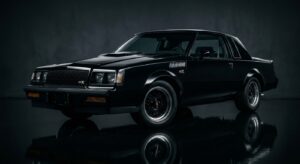
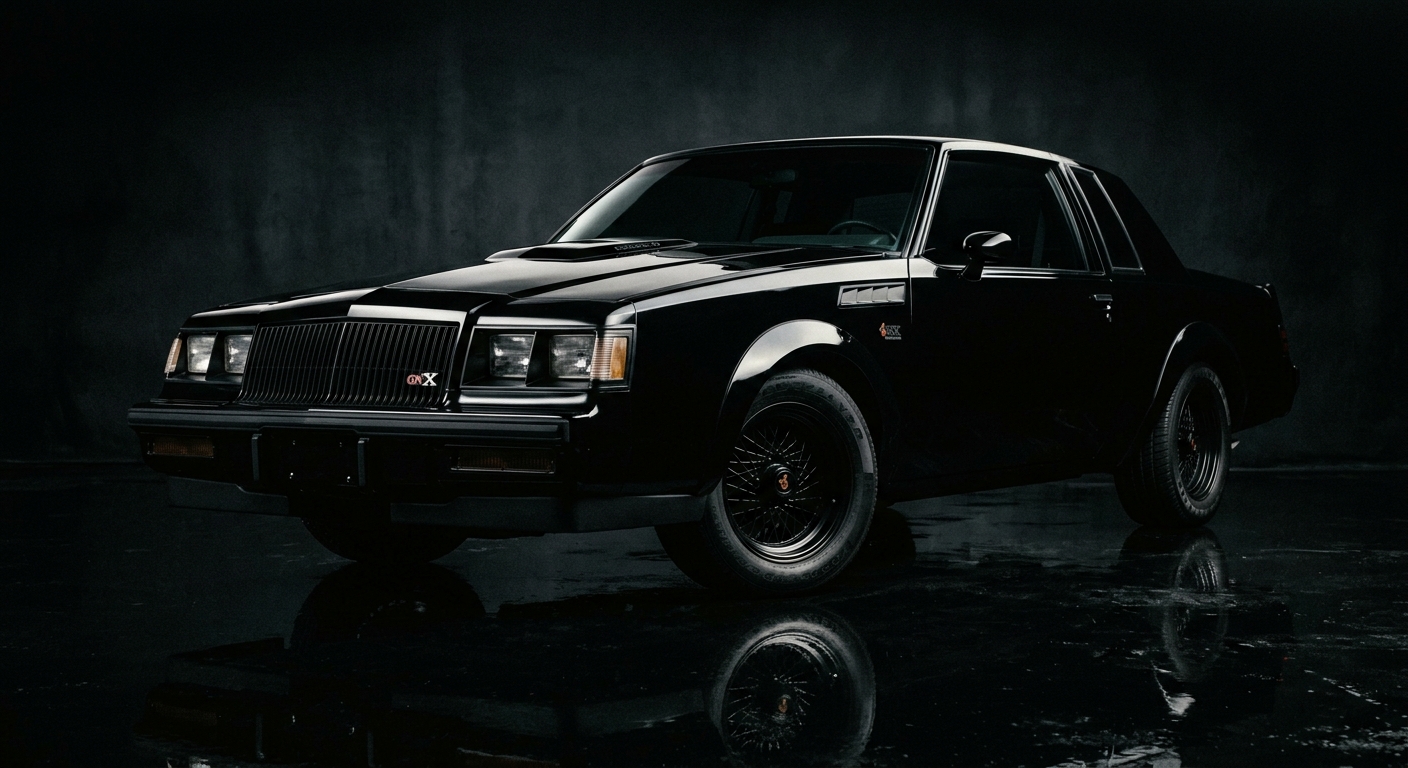
Visually, the GNX was menacing in its subtlety. The all-black paint scheme was accented by unique fender flares, special wheels, and discrete GNX badging. Inside, gray leather appointments and numbered plaques reminded occupants they were experiencing something special. Every GNX came with a certificate of authenticity and detailed documentation, establishing its collector status from day one.
The Turbocharged Legend
What makes the GNX truly special is how it bridged two eras of American performance. It proved that muscle cars didn’t need massive V8 engines to deliver crushing acceleration. The sophisticated turbo V6 was more efficient, more responsive, and in many ways more exciting than the big-blocks of old.
The GNX also established the template for modern performance cars. Its combination of forced induction, advanced electronics, and carefully tuned chassis dynamics pointed toward the future of automotive performance. Today, nearly every performance car employs similar principles.
The GNX stands as proof that the best muscle cars aren’t always the loudest or most obvious. With its sinister presence and devastating performance, it redefined what American muscle could be in the modern era. Today, finding one is like discovering automotive treasure, and the prices reflect that rarity.