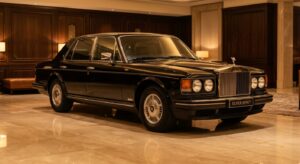
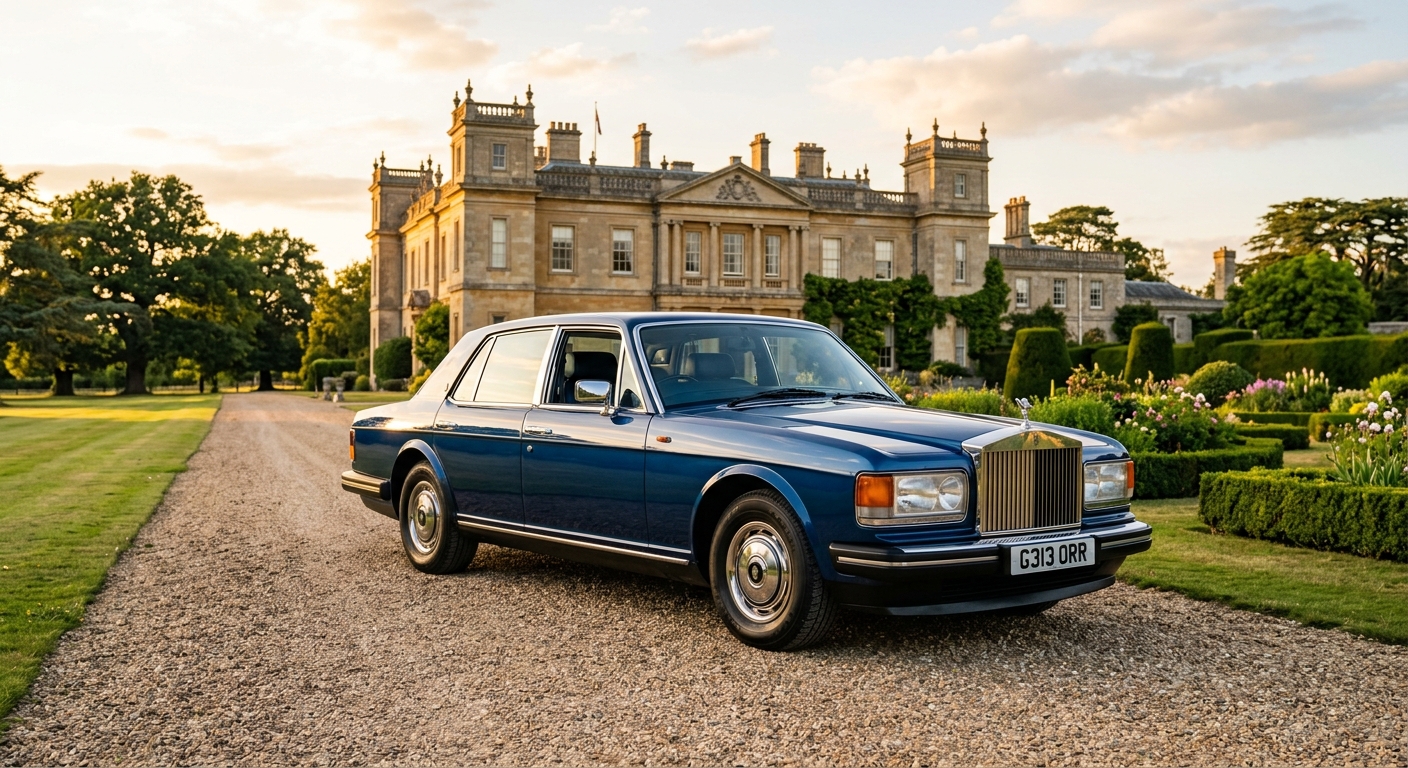
By 1991, the Rolls-Royce Silver Spirit had evolved into its final form before the seismic changes that would reshape the company forever. The Silver Spirit II represented the culmination of decades of refinement in the art of ultra-luxury motoring, arriving at a moment when the old world was giving way to new technologies and corporate realities.
The Art of Effortless Motion
Behind the wheel of the Silver Spirit II, you’re not so much driving as conducting a symphony of mechanical precision. The 6.75-liter V8 engine, a powerplant that traces its lineage back to 1959, delivers its substantial torque with the kind of seamless authority that only comes from decades of development. There’s no drama here, no theatrical flourishes, just the inexorable forward progress that Rolls-Royce perfected better than anyone.
The steering is light enough to maneuver through London traffic with minimal effort, yet weighted precisely to inspire confidence at motorway speeds. This isn’t a car that corners like a sports sedan, nor is it meant to. Instead, it glides over imperfections in the road surface with a supernatural ability to isolate its occupants from the harsh realities of the outside world.
Interior Sanctuary
Step inside the Silver Spirit II and you enter a world crafted by artisans who understood that luxury means never having to think about the mechanics of comfort. The leather is sourced from bulls that have never experienced barbed wire, hand-selected and crafted by specialists in Crewe. Walnut veneer covers nearly every surface, each piece carefully matched and finished to mirror-like perfection.
The rear seats offer a throne-like experience, with individual climate controls, fold-out picnic tables, and enough legroom to host a small diplomatic summit. This was transportation for those who could afford to have someone else do the driving, though the Silver Spirit II was equally capable of serving owner-drivers who appreciated the finer things.
The Last of the Old Guard
What makes the 1991 Silver Spirit II particularly significant is its position in Rolls-Royce history. This was among the final cars produced under the old Vickers ownership, before the company’s eventual acquisition by BMW. The craftsmanship standards, the traditional materials, and the unhurried approach to engineering all reflect a philosophy that was about to face dramatic changes.
The Silver Spirit II featured subtle improvements over its predecessor, including refined fuel injection mapping and enhanced sound deadening. Anti-lock brakes became standard equipment, acknowledging that even Rolls-Royce couldn’t ignore advancing safety technology. Yet these modern touches were seamlessly integrated without compromising the car’s essential character.
Engineering Excellence
Beneath the stately exterior lies engineering that prioritized longevity and refinement over outright performance. The 6.75-liter V8 produces its power with minimal noise or vibration, paired to a three-speed automatic transmission that shifts with the smoothness of silk. The suspension system, featuring self-leveling rear springs, maintains the car’s dignified posture regardless of load.
Build quality was exceptional by the standards of the era, with hand-assembly processes that ensured each car met the exacting standards that had made Rolls-Royce synonymous with perfection. Panel gaps were measured with precision tools, and the famous Spirit of Ecstasy hood ornament was individually weighted and balanced.
The 1991 Rolls-Royce Silver Spirit II represents the end of an era, a final expression of old-world luxury before corporate restructuring changed everything. Today, it stands as both a remarkable bargain and a monument to craftsmanship that may never be equaled again. For those who appreciate the finer things, few cars deliver such authentic luxury at today’s used prices.