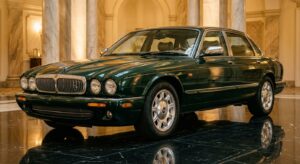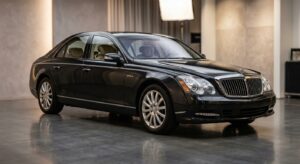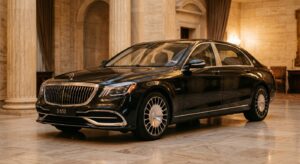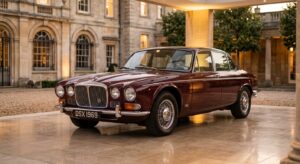
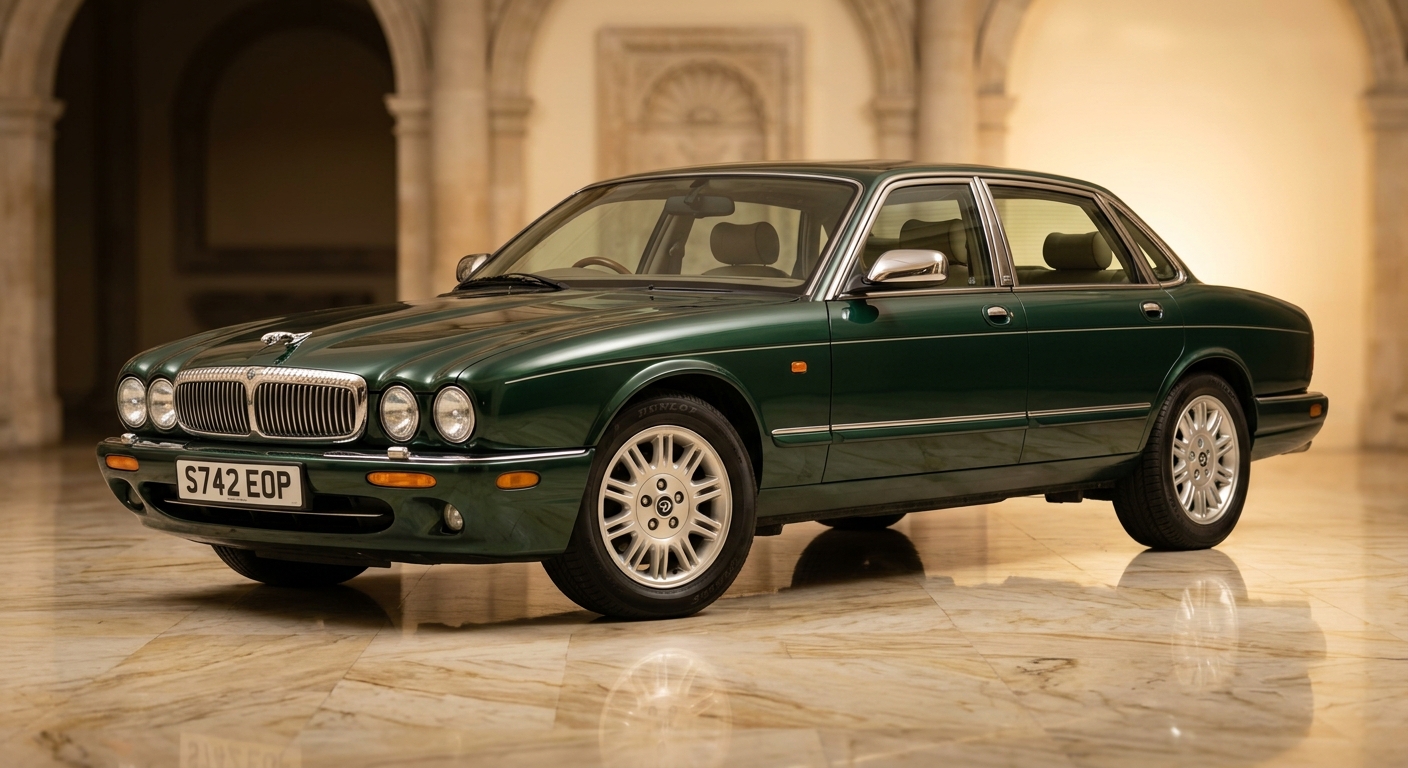
By 1998, the Daimler marque was entering its twilight years as a distinct luxury brand, but the Super Eight represented everything the company had learned about building the perfect gentleman’s saloon. Based on Jaguar’s XJ platform but elevated with traditional Daimler luxury appointments, the Super Eight combined old-world craftsmanship with modern supercharged performance in a package that whispered rather than shouted.
This was automotive aristocracy in its purest form: a car built for those who appreciated the finer things but didn’t need to announce their success to the world. With its distinctive fluted grille, sumptuous interior, and effortlessly powerful supercharged V8, the Super Eight served as both a swan song for traditional British luxury and a reminder of what made Daimler special for nearly a century.
The Supercharged Heart
Beneath the Super Eight’s elegant bonnet lay Jaguar’s magnificent 4.0-liter supercharged V8, producing 370 horsepower and 387 lb-ft of torque. This wasn’t the brutal, attention-seeking power of German rivals, but rather a refined surge that delivered its performance with the discretion expected of a proper Daimler.
The supercharger’s whine was barely audible from the cabin, muffled by extensive sound deadening and the car’s focus on serenity over sportiness. Acceleration felt effortless rather than explosive, with the Super Eight gliding from standstill to 60 mph in just 5.8 seconds while maintaining the composure of a much larger, heavier vehicle.
The five-speed automatic transmission was calibrated for smoothness above all else, with shifts so seamless they were felt more than heard. This powertrain philosophy perfectly matched Daimler’s ethos: power should be abundant but never ostentatious, available when needed but invisible when cruising.
Traditional Luxury Redefined
Inside, the Super Eight showcased everything that made Daimler interiors legendary. Hand-stitched leather covered nearly every surface, with traditional pleated designs that harked back to the great Daimlers of the 1950s and 60s. The dashboard featured genuine wood veneers with book-matched grain patterns, while the instruments were elegantly simple white-on-black dials.
The seats deserved special mention: individual armchairs upholstered in the finest hides, with support that somehow managed to be both firm and cosseting. Rear passengers enjoyed limousine-like space and comfort, with generous legroom and individual climate controls. This was a car designed to be driven by a chauffeur as much as an owner-driver.
Technology was present but discreet, integrated in a way that complemented rather than dominated the traditional luxury theme. The climate control system was whisper-quiet, the sound system delivered concert-hall acoustics, and even the electric window motors operated with barely a whisper.
On The Road
The Super Eight’s road manners epitomized the Daimler driving experience: supremely comfortable, eerily quiet, and possessed of a ride quality that seemed to iron out even the worst road imperfections. The air suspension system continuously adjusted to maintain perfect composure, while the steering provided just enough feedback to inspire confidence without compromising isolation.
This wasn’t a car you drove aggressively, despite its considerable performance potential. The Super Eight encouraged a more measured pace, rewarding smooth inputs with faultless progress and reminding its occupants that the journey could be as pleasurable as the destination.
Highway cruising revealed the car’s true character: at 80 mph, the cabin remained library-quiet, the engine barely audible, and the ride quality actually improved as the suspension settled into its optimal operating range. This was grand touring in the classic British tradition, where covering ground quickly meant doing so in supreme comfort rather than through raw speed.
The 1998 Daimler Super Eight represents the end of an era, a final masterpiece from a marque that understood luxury in ways modern manufacturers seem to have forgotten. It’s a car that prioritized the journey over the destination, comfort over conquest, and character over mere capability. Today, finding a pristine example feels like discovering a piece of automotive history, a reminder of when true luxury meant never having to prove anything at all.