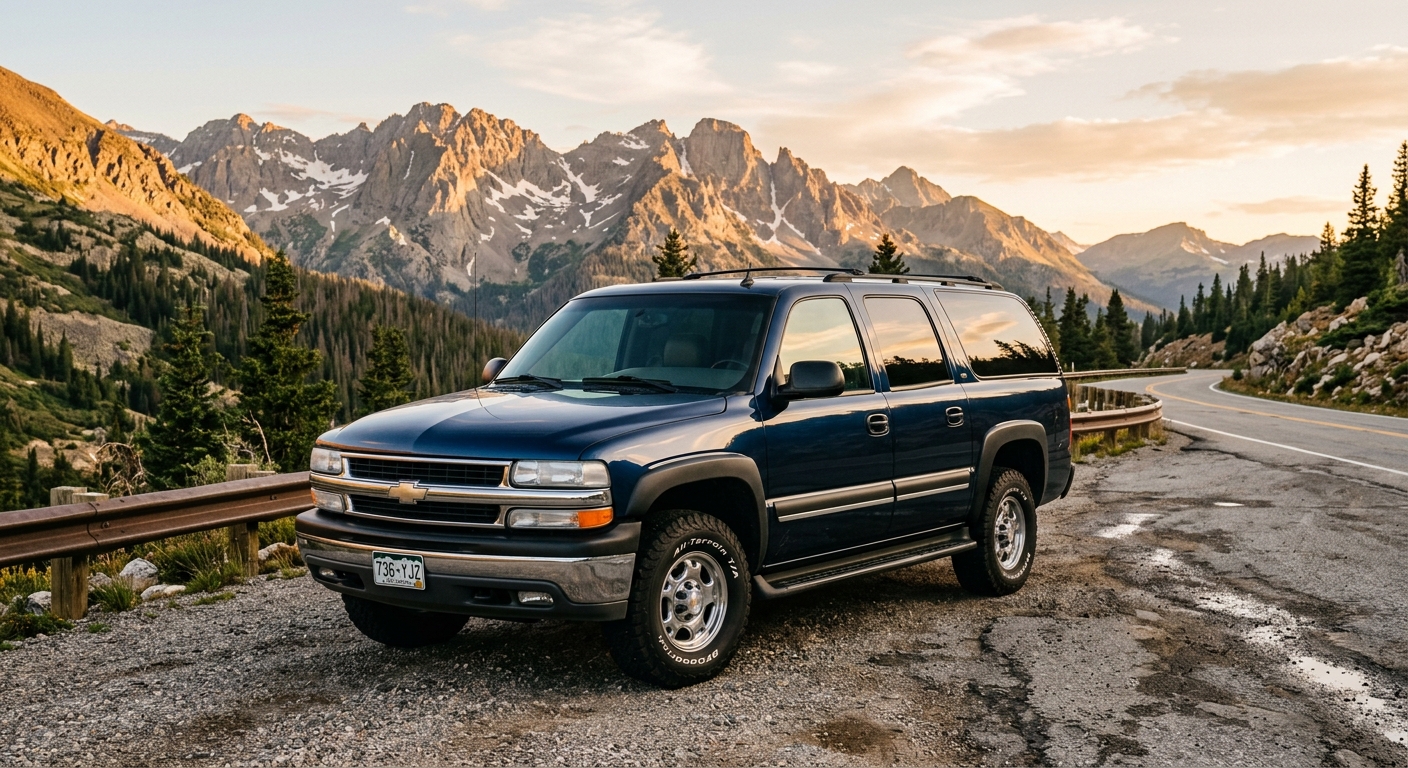
In the year 2000, when gas was cheap and environmental consciousness was still a fringe concern, Chevrolet built what might be the most unapologetically American vehicle ever conceived. The Suburban 2500 LT didn’t just transport families; it conquered highways, towed massive loads, and made every other SUV look like a compact car in comparison.
Built Like a Commercial Truck
The Suburban 2500 wasn’t simply a larger version of its half-ton sibling. This was a genuine three-quarter-ton truck wearing SUV bodywork, built on the same heavy-duty GMT800 platform that underpinned Chevy’s serious work trucks. The differences ran deep: a more robust frame, stronger axles, heavy-duty suspension components, and cooling systems designed for sustained high-load operation.
Under the hood, the standard engine was Chevrolet’s venerable 5.3-liter Vortec V8, producing 285 horsepower and 325 lb-ft of torque. But the real workhorse option was the 6.0-liter Vortec, delivering 300 horsepower and a substantial 360 lb-ft of torque. Both engines paired with a four-speed automatic transmission that prioritized durability over refinement.
Commanding Road Presence
At over 18 feet long and weighing more than 6,000 pounds empty, the Suburban 2500 dominated any parking lot. The LT trim brought genuine luxury touches: leather-appointed seating, dual-zone climate control, and a premium Bose audio system. Yet beneath the comfort lay pure utility: seating for nine passengers, 137 cubic feet of cargo space with the rear seats folded, and an 8,100-pound towing capacity that put most pickup trucks to shame.
The driving experience was exactly what you’d expect from a truck-based behemoth. The steering required genuine effort at parking speeds, body roll was pronounced in corners, and the ride quality prioritized load-carrying capability over comfort. But on the highway, the Suburban 2500 settled into a confident, stable cruise that ate miles effortlessly.
The Last of the Giants
Environmental regulations and changing consumer preferences would soon make vehicles like the Suburban 2500 extinct. The three-quarter-ton configuration was discontinued after 2003, marking the end of an era when American automakers built SUVs without apology or compromise.
For families who needed maximum capability, the 2000 Suburban 2500 LT represented the pinnacle of American excess done right. It was comfortable enough for daily driving, luxurious enough for road trips, and tough enough to haul a house. In an age of efficient crossovers and hybrid SUVs, it stands as a monument to a time when bigger was always better.
The 2000 Suburban 2500 LT represents American automotive philosophy at its most unapologetic: build it big, build it tough, and don’t apologize for the fuel bill. It’s a rolling monument to an era when practicality trumped efficiency, and sometimes that’s exactly what the world needed.