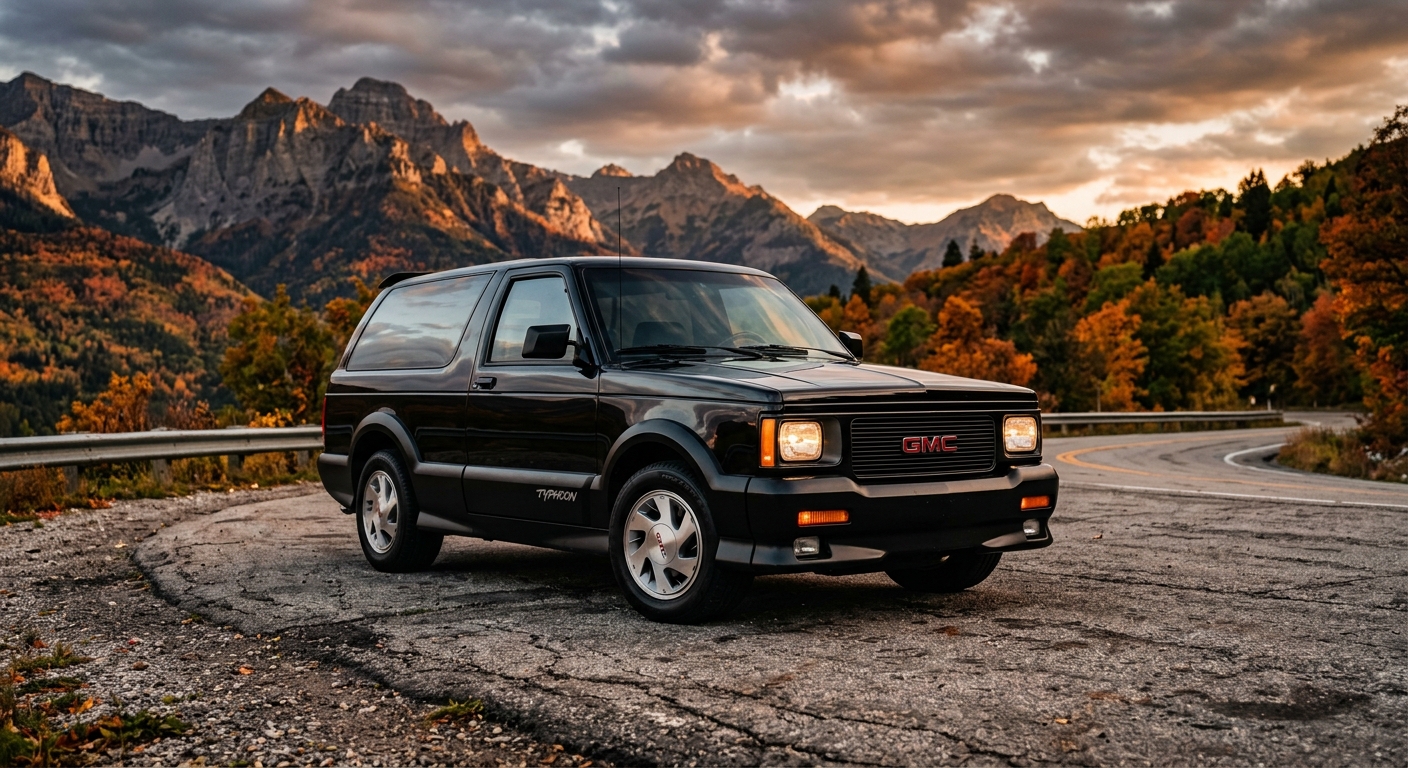
In the early 1990s, when most SUVs were slow, truck-based workhorses, GMC unleashed something extraordinary. The Typhoon took the humble S-15 Jimmy platform and transformed it into a turbocharged missile that could embarrass sports cars at traffic lights. This wasn’t just marketing hyperbole: this compact SUV could reach 60 mph faster than a contemporary Corvette.
The Syclone’s Taller Brother
The Typhoon shared its DNA with the legendary GMC Syclone pickup, both products of Production Automotive Services (PAS) in Troy, Michigan. While the Syclone grabbed headlines as the world’s fastest pickup truck, the Typhoon offered the same performance thrills with added practicality. The recipe was intoxicating: a turbocharged and intercooled 4.3-liter V6 engine producing 280 horsepower and 350 lb-ft of torque, all channeled through a sophisticated all-wheel-drive system.
Unlike the crude truck-based SUVs of its era, the Typhoon featured a genuine performance-oriented drivetrain. The Mitsubishi-sourced turbocharger spooled up with authority, while the BorgWarner transfer case and Hydra-Matic 4L60 automatic transmission delivered power to all four wheels with remarkable efficiency. The result was a 0-60 mph time of just 5.3 seconds, making it quicker than the C4 Corvette and most European sports cars of the period.
Understated Aggression
The Typhoon’s exterior modifications were subtle but purposeful. The lowered stance, aggressive body cladding, and distinctive wheels hinted at the performance lurking beneath, but many unsuspecting sports car drivers learned the hard way that appearances could be deceiving. The interior featured supportive bucket seats and a full complement of gauges, including a boost gauge that became the focus of attention under acceleration.
The driving experience was unlike anything else in the SUV segment. The turbocharged V6 delivered its power with a characteristic whoosh and surge that felt more exotic than domestic. The all-wheel-drive system provided exceptional traction, allowing drivers to exploit the engine’s torque without drama. However, the Typhoon demanded respect: its short wheelbase and powerful engine could catch inexperienced drivers off guard, particularly in wet conditions.
Limited Production Legacy
GMC produced just 4,697 Typhoons over two model years (1992-1993), making them significantly rarer than their Syclone siblings. This limited production run was partly due to the specialized nature of the conversion and the niche market for high-performance SUVs. Each Typhoon carried a substantial price premium over standard Jimmy models, positioning it as a specialized enthusiast vehicle rather than a mainstream offering.
Today, the Typhoon is recognized as a pioneering performance SUV that predicted the market’s eventual embrace of fast, capable crossovers. Clean examples command strong prices among collectors who appreciate the vehicle’s unique combination of practicality and performance. The Typhoon proved that SUVs didn’t have to be slow, boring, or purely utilitarian.
The GMC Typhoon remains one of the most compelling performance SUVs ever built, offering supercar acceleration in a practical package that was decades ahead of its time. While fuel economy and ride quality weren’t priorities, the Typhoon delivered an unforgettable driving experience that still thrills enthusiasts today. For collectors seeking a piece of American performance history, few vehicles offer the Typhoon’s unique combination of rarity, capability, and character.