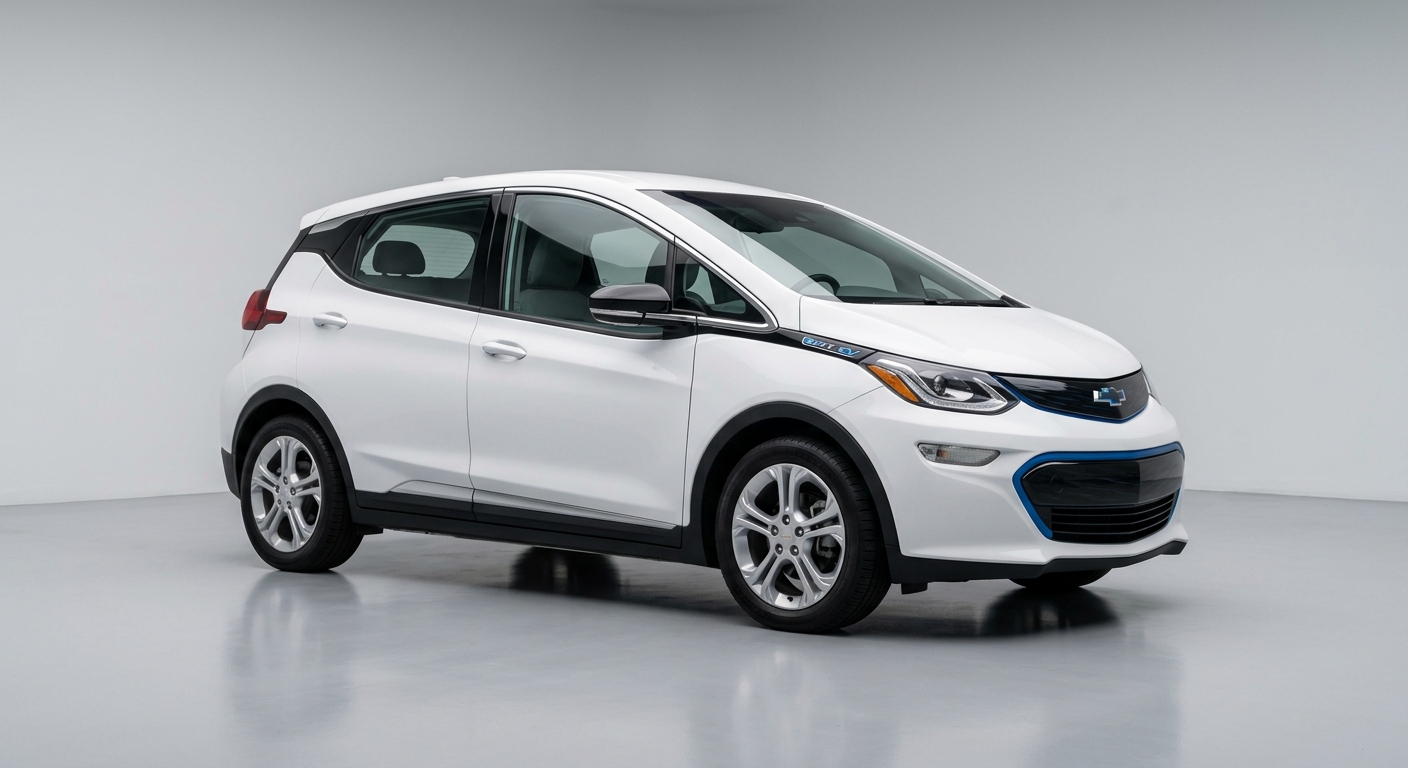
When General Motors unveiled the Bolt EV in 2017, it wasn’t just launching another electric car. It was making a bold statement that practical, affordable electric mobility could emerge from the heart of American automotive manufacturing. While Tesla grabbed headlines with luxury performance, Chevrolet quietly revolutionized the EV landscape with a car that ordinary families could actually buy and live with every day.
The Democratization of Electric Driving
The Bolt EV arrived at a pivotal moment in automotive history. Electric vehicles were still largely the domain of early adopters and luxury buyers, but Chevrolet had different plans. With a starting price under $40,000 before incentives, the Bolt EV positioned itself as the first truly mass-market long-range electric vehicle, beating even Tesla’s Model 3 to market by several months.
Behind the Bolt’s unassuming exterior lies genuinely impressive technology. The 60 kWh lithium-ion battery pack, developed in partnership with LG Chem, delivers an EPA-estimated 238 miles of range. In 2017, this was revolutionary for a vehicle at this price point. The permanent magnet electric motor produces 200 horsepower and 266 lb-ft of torque, providing the instant acceleration that makes electric driving so compelling.
Living with Electric Reality
Step inside the Bolt EV, and you’re greeted by a surprisingly spacious cabin that maximizes the advantages of electric vehicle packaging. The flat floor and compact drivetrain create room that rivals much larger vehicles. The interior design feels modern without being overly futuristic, featuring a 10.2-inch touchscreen running Chevrolet’s MyLink infotainment system with integrated navigation and energy management features.
On the road, the Bolt EV delivers on its promise of practical electric mobility. The regenerative braking system can be adjusted through paddle shifters, allowing for near one-pedal driving in heavy regeneration mode. The ride quality is composed and comfortable, while the electric powertrain provides whisper-quiet operation and impressive efficiency in urban environments.
The driving experience emphasizes efficiency over excitement, but the instant torque delivery still provides satisfying acceleration from standstills. Highway cruising is serene and confident, though wind noise becomes more noticeable at higher speeds without engine noise to mask it.
Charging Into the Future
The Bolt EV’s charging capabilities were competitive for its era, supporting DC fast charging up to 55 kW. While modest by today’s standards, this allowed for practical road trip capability when combined with the substantial 238-mile range. Level 2 AC charging at home could fully replenish the battery overnight, making daily charging routines simple and cost-effective.
Perhaps more importantly, the Bolt EV proved that electric vehicles could be manufactured profitably by traditional automakers without relying on regulatory credit sales. This demonstrated a sustainable path forward for electric vehicle adoption beyond the startup world.
The 2017 Chevrolet Bolt EV stands as a watershed moment in electric vehicle history, proving that practical electric mobility didn’t require Silicon Valley innovation or luxury pricing. While it may lack the excitement of a Tesla or the prestige of a German alternative, the Bolt EV delivered exactly what the mass market needed: honest, reliable electric transportation that simply worked.