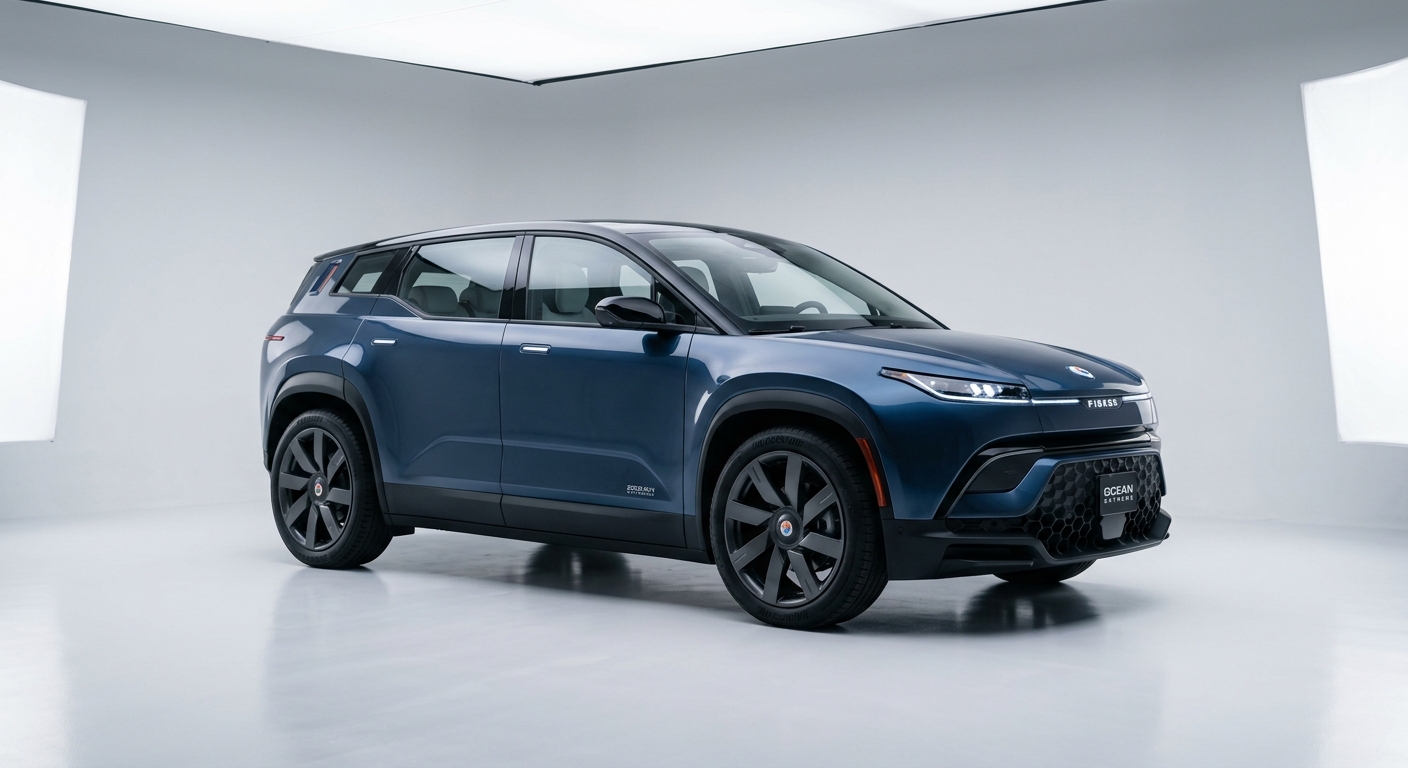
The Fisker name carries both promise and caution in equal measure. Henrik Fisker’s latest venture attempts to recapture the sustainable luxury vision that made the original Karma such a compelling concept, this time with lessons learned and Tesla-era technology backing the play. The Ocean Extreme represents the flagship expression of this renewed ambition.
Step inside and the Ocean’s party trick immediately becomes apparent. Press a button and watch the entire glass roof slide away, transforming this electric SUV into something approaching a convertible experience. Fisker calls it “California Mode,” and while the name might be peak Silicon Valley marketing speak, the execution delivers genuine wow factor that few rivals can match.
Electric Performance Meets Sustainable Style
The Ocean Extreme’s dual-motor all-wheel-drive system produces 564 horsepower, launching this 5,500-pound SUV to 60 mph in a respectable 3.6 seconds. The performance feels smooth and linear in typical EV fashion, though it lacks the savage acceleration punch of a Model X Plaid or the refined power delivery of a BMW iX M60.
More impressive is the claimed 440-mile EPA range, achieved through aerodynamic optimization and an efficient 113-kWh battery pack. In real-world driving, expect something closer to 350-380 miles, which still places the Ocean among the longer-range electric SUVs available today.
Danish Design Philosophy
The interior showcases Fisker’s commitment to sustainable materials, with recycled ocean plastic, vegan leather alternatives, and reclaimed fishing nets woven throughout the cabin. The 17.1-inch central touchscreen rotates between portrait and landscape modes, a clever feature that actually serves practical purposes rather than mere novelty.
Build quality represents a significant step forward from the original Karma’s troubled production, though some panel gaps and interior trim pieces still trail established luxury marques. The Ocean feels more premium than its $61,499 starting price suggests, even if it doesn’t quite reach German luxury standards.
Technology and Charging
DC fast charging reaches peaks of 250kW, enabling 10-80% charges in roughly 35 minutes under ideal conditions. The Ocean’s 400V architecture limits charging speeds compared to 800V systems from Porsche and Genesis, but real-world charging performance proves adequate for long-distance travel.
Fisker’s infotainment system runs on Android Automotive, providing familiar Google services integration. The interface occasionally suffers from lag and minor glitches, though over-the-air updates continue improving functionality.
The Ocean Extreme succeeds as a compelling alternative to mainstream electric SUVs, offering distinctive design and genuine innovation in a market increasingly defined by conformity. While Fisker’s execution isn’t flawless, the company has delivered a product that feels mature enough for prime time. For buyers seeking electric luxury with a conscience, the Ocean charts a promising course forward.