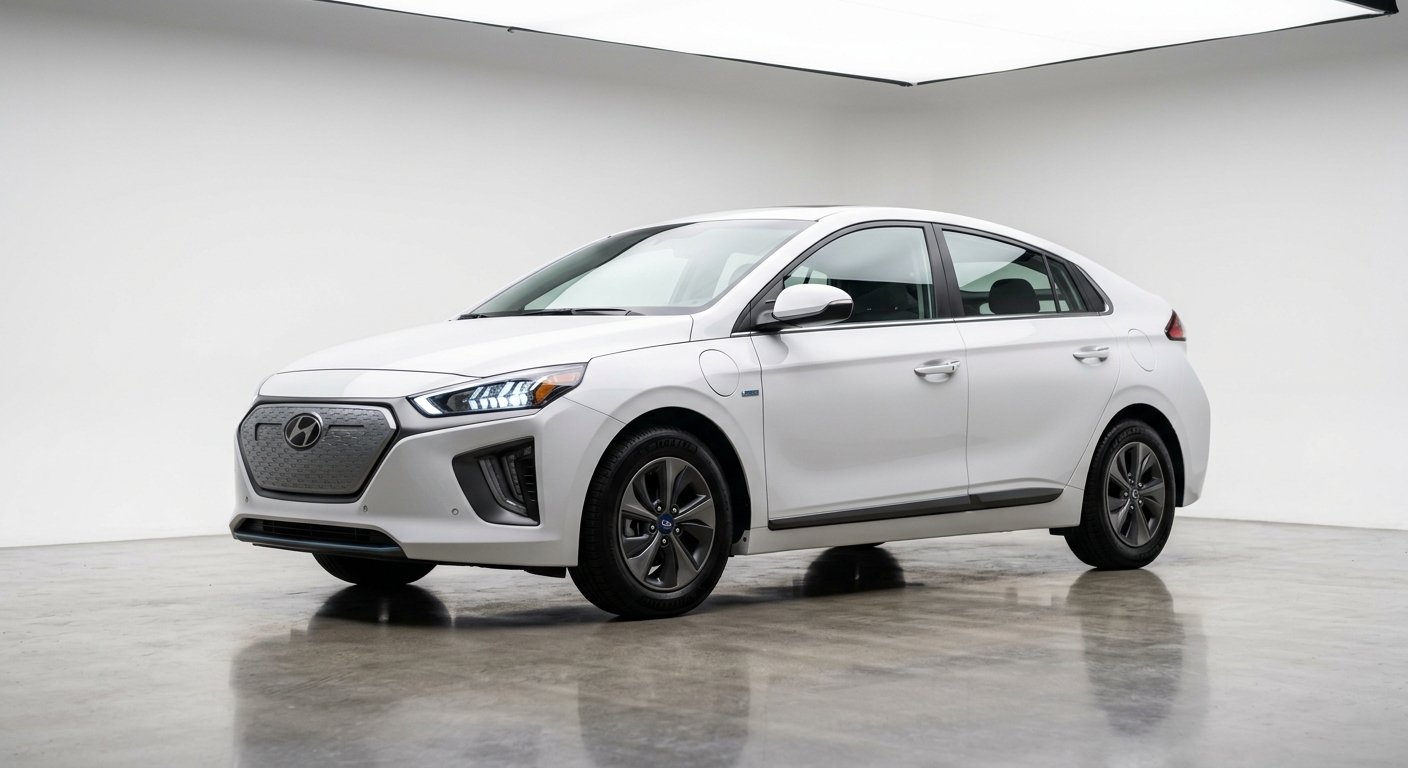
While Tesla grabbed headlines with radical designs and Ludicrous modes, Hyundai took a different approach with the IONIQ Electric. Here was an EV that didn’t need to announce its electric nature with radical styling or gimmicky features. Instead, it simply got on with the business of being an excellent electric car, wrapped in refreshingly normal packaging.
The IONIQ Electric represented Hyundai’s first serious attempt at a dedicated electric vehicle platform, sharing its bones with hybrid and plug-in hybrid variants but optimized specifically for pure electric propulsion. It was a statement of intent from a manufacturer that had quietly become one of the most competent builders of alternative powertrains.
The Electric Experience
Behind the wheel, the IONIQ Electric delivers exactly what you’d hope for from a well-engineered EV. The 134-horsepower electric motor provides smooth, instant torque delivery that makes city driving effortless. There’s no drama here, no tire-shredding acceleration, just refined progress that happens to be whisper-quiet.
The regenerative braking system is among the best in the business, offering multiple levels of regen that can be adjusted via steering wheel paddles. At its most aggressive setting, the car approaches one-pedal driving, slowing significantly when you lift off the accelerator. It’s intuitive enough that even EV newcomers adapt quickly.
What impresses most about the IONIQ Electric is its efficiency. The EPA-rated 150 miles of range might seem modest compared to newer EVs, but the car achieves it while consuming just 25 kWh per 100 miles. That’s exceptional efficiency that translates to lower charging costs and reduced range anxiety.
Substance Over Style
The IONIQ’s interior prioritizes function over flash. The cabin is well-built and logically laid out, with physical buttons for climate controls and a clear, responsive infotainment system. The seats are comfortable and supportive, while rear passengers get adequate space despite the car’s compact footprint.
Cargo space is reasonable at 23.8 cubic feet with the rear seats up, though the oddly-shaped opening limits what you can actually fit. The lack of a front trunk is disappointing, especially considering the space savings of electric propulsion.
Build quality feels solid throughout, with materials that punch above the car’s price point. Hyundai’s attention to detail shows in the tight panel gaps and consistent interior finish, qualities that weren’t always associated with Korean brands just a decade earlier.
The Bigger Picture
The IONIQ Electric arrived at a crucial moment in EV adoption. While premium brands pushed the boundaries of performance and luxury, Hyundai focused on making electric driving accessible and practical. The result was a car that proved EVs could be normal, reliable transportation rather than exotic statements.
The IONIQ’s platform would later evolve into Hyundai’s dedicated E-GMP architecture, spawning more ambitious projects like the IONIQ 5. But this original IONIQ Electric deserves credit for establishing Hyundai as a serious player in the EV space, offering buyers a sensible alternative to Tesla’s radical approach.
The IONIQ Electric may not have the flashy appeal of a Tesla or the exotic nature of a high-end EV, but it succeeds precisely because it doesn’t try to be something it’s not. Here’s an electric car that prioritizes efficiency, value, and everyday usability over headline-grabbing performance figures. For buyers seeking their first taste of electric driving without the premium price or radical styling, the IONIQ Electric delivered exactly what was needed at exactly the right time.