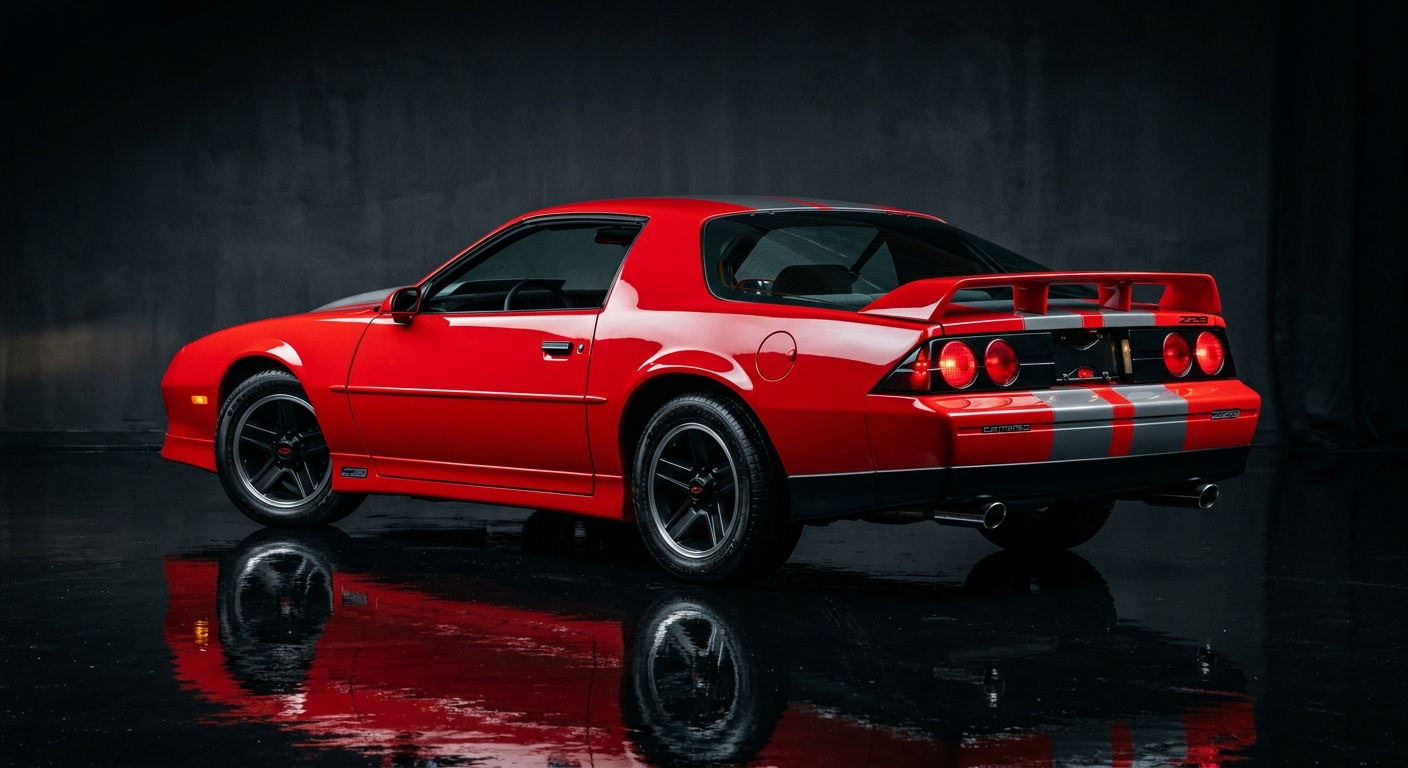
In 1992, the automotive world stood at a crossroads between old-school muscle and modern efficiency. The Chevrolet Camaro Z28 represented the last hurrah of an era, delivering 245 horsepower from a throaty 5.7-liter V8 that still relied on throttle body fuel injection. This was analog muscle in its purest form, before computers began managing every aspect of performance.
Third Generation Finale
The 1992 model year marked the end of the third-generation Camaro’s remarkable 10-year run. By this point, GM had refined the formula to near perfection. The Z28’s aggressive ground effects, functional hood louvers, and distinctive 16-inch aluminum wheels gave it a purposeful stance that announced serious intent. The iconic IROC-Z had been discontinued after 1990, leaving the Z28 to carry the performance torch solo.
Under the hood, the L98 5.7-liter V8 produced its power through relatively primitive means compared to today’s engines. Throttle body injection fed the beast, while a computer-controlled carburetor-style system managed the air-fuel mixture. The result was 245 horsepower and 345 lb-ft of torque, figures that seemed impressive in 1992 but represented the final gasps of pre-OBD-II simplicity.
Behind the Wheel
Climbing into the Z28’s cockpit reveals a quintessentially 1990s interior, complete with digital gauges and angular design elements. The seats offer decent support for spirited driving, though long-distance comfort wasn’t the priority. Fire up the V8 and the distinctive rumble immediately sets the mood, a deep bass note that modern muscle cars struggle to replicate despite their superior power.
The four-speed automatic transmission, while not particularly quick-shifting by today’s standards, suited the engine’s torquey character perfectly. Floor it from a standstill and the Z28 would lumber to 60 mph in about 6.5 seconds, respectable for the era but modest compared to modern performance cars. The real joy came in the mid-range surge, where that abundant torque would pin you back in the seat with authoritative thrust.
Handling and Character
The Z28’s suspension setup struck a reasonable balance between performance and street manners. While it couldn’t match the precision of European sports cars, it offered distinctly American character with its slightly loose, muscular feel. The steering provided adequate feedback, and the chassis displayed surprising competence when pushed through corners, though ultimate grip was limited by the era’s tire technology.
What the ’92 Z28 lacked in outright performance, it made up for in character and presence. This was a car that announced itself with visual drama and aural theater, creating an emotional connection that transcended mere numbers. The analog nature of its controls and responses created a direct, unfiltered driving experience increasingly rare in today’s digital age.
Market Position and Legacy
Priced at around $16,000 when new, the Z28 offered serious performance value. It competed directly with the Ford Mustang GT while positioning itself as a more sophisticated alternative to the Pontiac Firebird Formula. Today, clean examples command strong prices among collectors who appreciate the model’s significance as the final representative of pre-computer muscle.
The 1992 Camaro Z28 stands as a monument to analog muscle, delivering authentic V8 theater before electronics sanitized the experience. While it may lack the outright performance of modern alternatives, its character and soul remain unmatched. This is muscle car purity distilled into its most essential form.