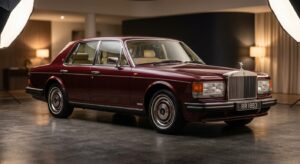
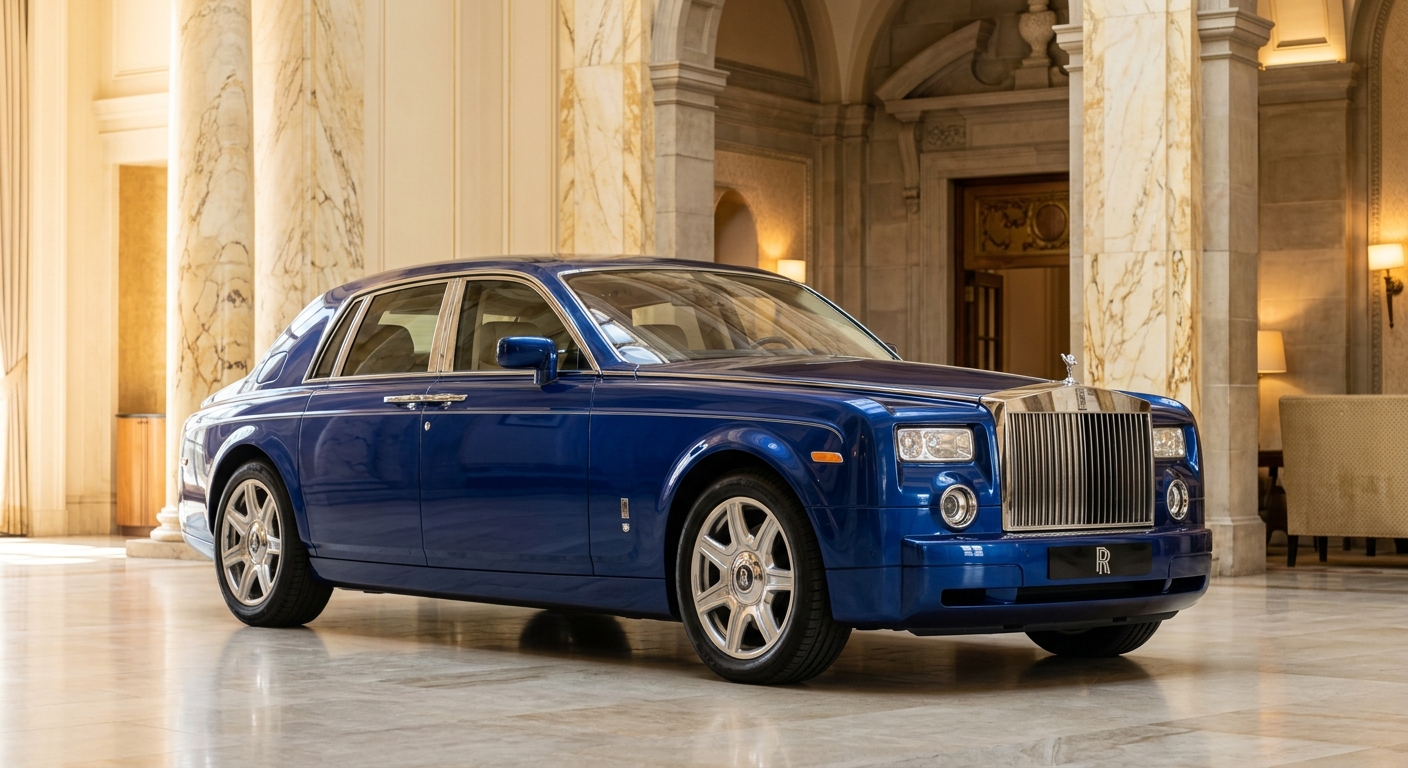
When BMW purchased the Rolls-Royce name in 1998, skeptics wondered if the German automaker could preserve the essence of British luxury motoring. The 2003 Phantom VII provided a resounding answer, marking not just the revival of an iconic nameplate but the establishment of new benchmarks for automotive opulence. This wasn’t merely a luxury car; it was a statement of intent that Rolls-Royce would reclaim its throne as the world’s ultimate luxury automobile manufacturer.
Engineering Excellence Meets Timeless Design
The Phantom VII represented a complete reimagining of what a Rolls-Royce could be in the 21st century. Built on BMW’s bespoke aluminum spaceframe platform, the Phantom combined traditional craftsmanship with cutting-edge technology. The result was a car that felt both familiar and revolutionary, maintaining the visual DNA of classic Rolls-Royce design while incorporating modern safety, performance, and comfort features that previous generations could never have imagined.
At the heart of this resurrection lay BMW’s magnificent 6.75-liter V12 engine, producing 453 horsepower and 531 lb-ft of torque. While purists initially questioned the German powerplant, the engine proved itself worthy of the Rolls-Royce badge, delivering effortless acceleration wrapped in the kind of refinement that made occupants question whether the engine was actually running.
The Art of Effortless Motion
Behind the wheel of the Phantom VII, the concept of driving transforms into something approaching a spiritual experience. The steering is light yet precise, requiring minimal input to guide this 5,600-pound leviathan through traffic with surprising grace. The air suspension system, working in concert with the car’s sophisticated damping, creates a ride quality that seems to defy physics, isolating passengers from the imperfections of the road while maintaining composure through corners.
The six-speed automatic transmission operates with such smoothness that gear changes become imperceptible events. This isn’t about performance in the traditional sense; it’s about the effortless delivery of power that makes highway merging or city driving feel equally serene. The Phantom doesn’t hurry; it simply arrives, and everything else adjusts accordingly.
Craftsmanship Redefined
Step inside the Phantom VII, and you enter a realm where traditional British craftsmanship meets modern luxury expectations. Every surface tells a story of meticulous attention to detail, from the hand-stitched leather that required multiple hides to achieve consistent grain patterns, to the wood veneers that were book-matched with the precision of fine furniture making.
The rear passenger compartment transforms the concept of automotive luxury. With acres of legroom, individual climate controls, and seating that rivals the finest furniture, passengers experience transportation as mobile sanctuary. The famous umbrella stored in the door pillar isn’t just a practical accessory; it’s a symbol of the thoughtfulness that permeates every aspect of the Phantom ownership experience.
Technology Wrapped in Tradition
BMW’s influence appears most clearly in the Phantom’s technological sophistication. The navigation system, climate control, and audio components represented state-of-the-art technology for 2003, but they were integrated so seamlessly into the traditional Rolls-Royce aesthetic that they felt like natural evolutions rather than modern intrusions.
The adaptive damping system constantly monitored road conditions, adjusting suspension settings hundreds of times per second to maintain the famous Rolls-Royce ride quality. Meanwhile, the traction and stability control systems worked invisibly in the background, ensuring that the Phantom’s considerable mass never translated into unwieldy behavior, regardless of weather conditions or driving circumstances.
The 2003 Phantom VII stands as proof that automotive resurrection can exceed even the highest expectations. BMW didn’t just revive Rolls-Royce; they elevated the brand to new heights while preserving everything that made it legendary. This remains the gold standard for ultra-luxury motoring, a masterpiece that justified every skeptic’s conversion and every enthusiast’s admiration.