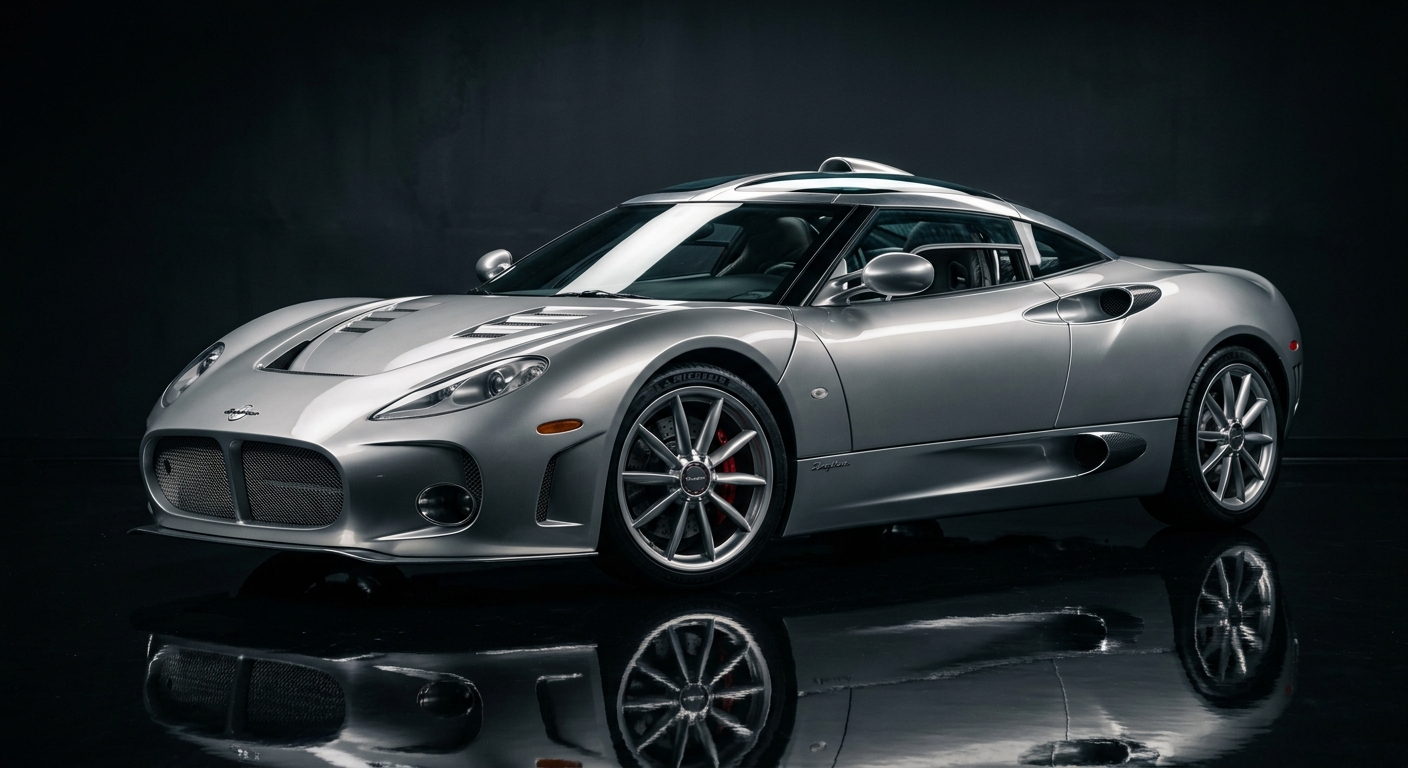
In a world where supercars often follow predictable formulas, the 2008 Spyker C12 Zagato stands as a glorious anomaly. Born from the unlikely marriage of Dutch aviation heritage and Italian design mastery, this machine represents everything that makes the exotic car world fascinating: rarity, craftsmanship, and an almost reckless commitment to being different.
The Meeting of Minds
When Spyker, the small Dutch manufacturer with roots in early 20th-century aviation, approached the legendary Zagato design house, the result was always going to be special. Limited to just 24 examples worldwide, the C12 Zagato takes the already exclusive C12 platform and wraps it in bodywork that looks like it was sculpted by the wind itself.
The collaboration wasn’t merely cosmetic. Zagato’s signature double-bubble roof treatment serves both aesthetic and aerodynamic purposes, while the flowing lines that cascade from nose to tail create a visual drama that stops traffic. This isn’t just another limited edition with a few badges and unique paint; it’s a complete reimagining of automotive sculpture.
Aviation Meets Automotive
Step inside the C12 Zagato and you’re immediately transported into Spyker’s aviation-obsessed world. The cabin feels more like a fighter jet cockpit than a traditional supercar interior. Machined aluminum components reference aircraft construction, while the exposed gear linkage operates with the precision of aerospace engineering.
Every surface tells a story of craftsmanship. The leather is hand-stitched, the aluminum is hand-polished, and the attention to detail borders on obsessive. This is automotive haute couture, where function and form dance together in perfect harmony. The seats, while supportive enough for spirited driving, feel more like luxury furniture pieces that happen to be bolted into a supercar.
The Heart of the Beast
Beneath the Zagato’s flowing bodywork lies Spyker’s signature 6.0-liter naturally aspirated V12 engine, sourced from Volkswagen’s parts bin but thoroughly reimagined for this application. With 500 horsepower on tap, the C12 Zagato isn’t the most powerful supercar of its era, but power figures don’t tell the whole story.
This engine is about character, not just capability. The V12 builds power in a linear, predictable fashion that rewards smooth inputs and punishes ham-fisted driving. It’s an engine that demands respect and rewards skill, perfectly matching the car’s artisanal character.
Driving the Dream
On the road, the C12 Zagato reveals its true nature. This isn’t a track weapon designed to set lap records; it’s a grand touring machine built for the journey rather than just the destination. The steering is beautifully weighted, providing constant communication with the road surface without becoming tiresome on longer drives.
The suspension strikes a remarkable balance between compliance and control. Over smooth tarmac, the Zagato flows with grace and poise. Push harder, and the chassis responds with surprising precision, though it always maintains a gentlemanly composure. This is a supercar for connoisseurs who appreciate subtlety over shock and awe.
The Sound and the Fury
Fire up the V12 and you’re greeted by one of the most distinctive exhaust notes in the supercar pantheon. It’s not the banshee wail of a high-revving Italian V12 or the thunder of American muscle. Instead, the Spyker’s engine produces a sophisticated rumble that builds to a crescendo as the revs climb, creating an automotive symphony that’s both refined and emotionally stirring.
The transmission, a six-speed manual, adds to the tactile experience. Each gear change requires deliberate action, connecting driver to machine in a way that’s increasingly rare in our automated age. This is analog supercar driving at its finest.
The Spyker C12 Zagato represents everything that’s wonderful about the exotic car world: uncompromising vision, exquisite craftsmanship, and the kind of exclusivity that money alone cannot buy. It’s a reminder that sometimes the most memorable supercars aren’t the fastest or the loudest, but the ones that dare to be different. In a world of increasing automotive homogenization, machines like this feel like precious artifacts from a more romantic era of motoring.