When Hyundai announced it would challenge BMW, Mercedes-Benz, and Lexus with a rear-wheel-drive luxury sedan in 2009, industry observers were skeptical. The Genesis represented the most ambitious project in Korean automotive history: a ground-up premium sedan designed to prove that Hyundai could build more than econoboxes. What emerged was a surprisingly accomplished luxury car that offered German-inspired dynamics at a fraction of the price.
The Audacious Plan
The Genesis project began in the early 2000s when Hyundai committed $500 million to develop a luxury platform that could compete globally. The company poached engineers from BMW and Mercedes-Benz, established a dedicated luxury vehicle development center, and spent years benchmarking against the world’s best premium sedans. The goal was simple: create a car that could match the Germans in refinement while undercutting them significantly on price.
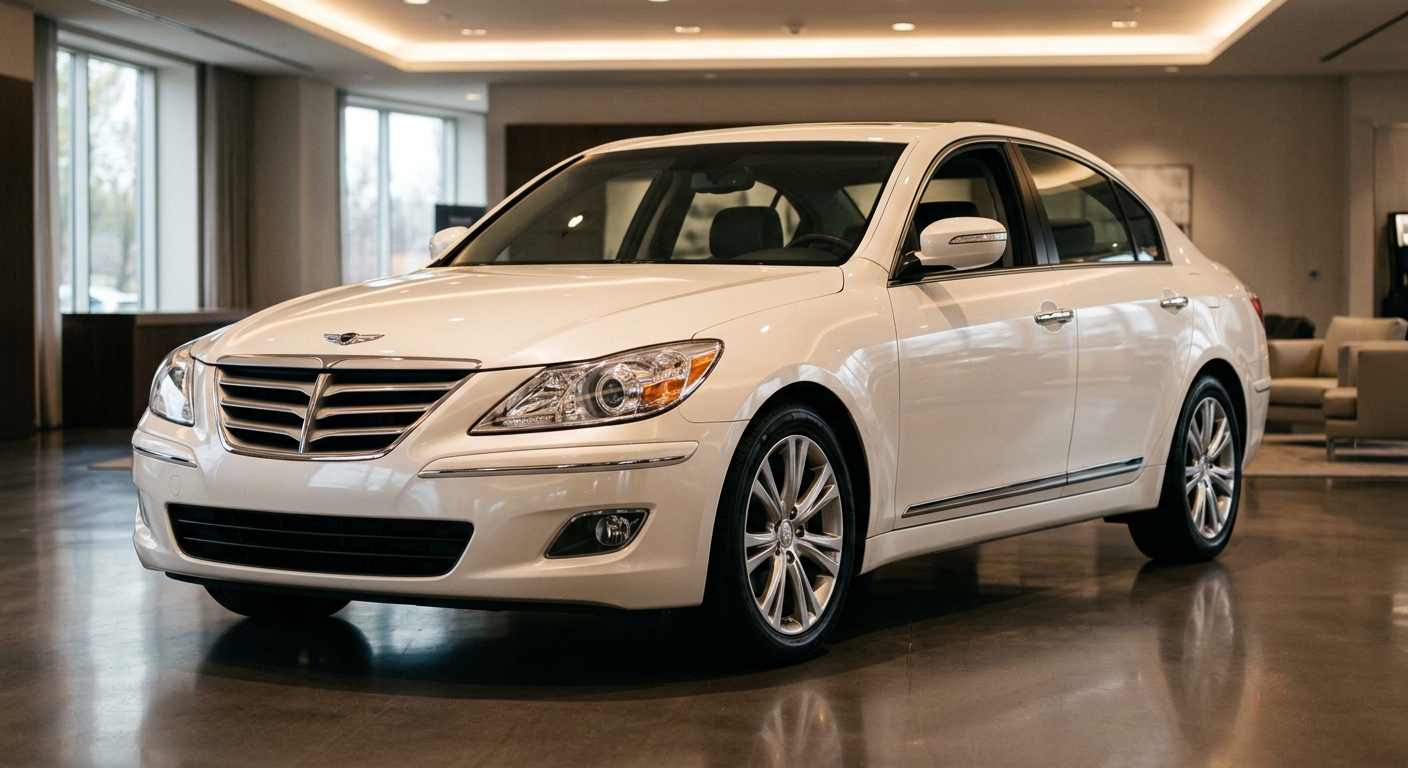
The result was a handsome, well-proportioned sedan that borrowed design cues from various European luxury cars without directly copying any single model. The Genesis featured a long hood, short overhangs, and a confident stance that announced its rear-wheel-drive architecture. Inside, Hyundai lavished attention on materials and build quality, using real wood trim, genuine leather, and soft-touch surfaces throughout.
Heart of a Lion
Under the hood, buyers could choose between two impressive engines. The base 3.8-liter V6 produced 290 horsepower and provided smooth, refined power delivery. But the star of the show was the available 4.6-liter Tau V8, which generated 375 horsepower and 333 lb-ft of torque. This all-aluminum engine featured direct injection, variable valve timing, and a sophisticated intake system that delivered both power and refinement.
Paired with a six-speed automatic transmission, the V8 Genesis could accelerate from 0-60 mph in just 5.5 seconds while maintaining the smooth, quiet character expected in a luxury sedan. The engine’s power delivery was linear and progressive, with a subtle but satisfying soundtrack that enhanced the driving experience without becoming intrusive.
Dynamics and Refinement
Perhaps most impressive was how well the Genesis drove. The rear-wheel-drive platform provided excellent balance and poise, while the multi-link suspension setup delivered a ride quality that rivaled established luxury sedans. The steering was precise and well-weighted, offering good feedback without being overly heavy. Body roll was minimal, and the car felt composed and confident through corners.
Hyundai also paid careful attention to noise, vibration, and harshness levels. The Genesis cabin was remarkably quiet at highway speeds, with excellent sound deadening and aerodynamic efficiency contributing to a serene driving environment. The attention to detail extended to the smallest elements, from the solid feel of the door handles to the precise operation of all controls.
Value Proposition
Where the Genesis truly excelled was in its value equation. Starting at around $33,000 for the V6 model and $38,000 for the V8, it offered luxury car amenities at near-premium mainstream prices. Standard equipment included leather seating, dual-zone climate control, premium audio, and numerous safety features that were often optional on German competitors.
The Genesis also came with Hyundai’s impressive warranty coverage, including a 10-year, 100,000-mile powertrain warranty that provided peace of mind that German luxury brands couldn’t match. This combination of luxury features, solid performance, competitive pricing, and comprehensive warranty coverage made the Genesis an attractive proposition for value-conscious luxury buyers.
The 2009 Hyundai Genesis succeeded brilliantly at its ambitious goal: proving that Korea could build a genuine luxury sedan that competed with the established players. While it may not have possessed the ultimate refinement of a Mercedes S-Class or the sporting edge of a BMW 5 Series, it offered 90% of their capability at 60% of the price, wrapped in Hyundai’s comprehensive warranty coverage. The Genesis marked the moment when Hyundai transformed from budget alternative to serious luxury contender.