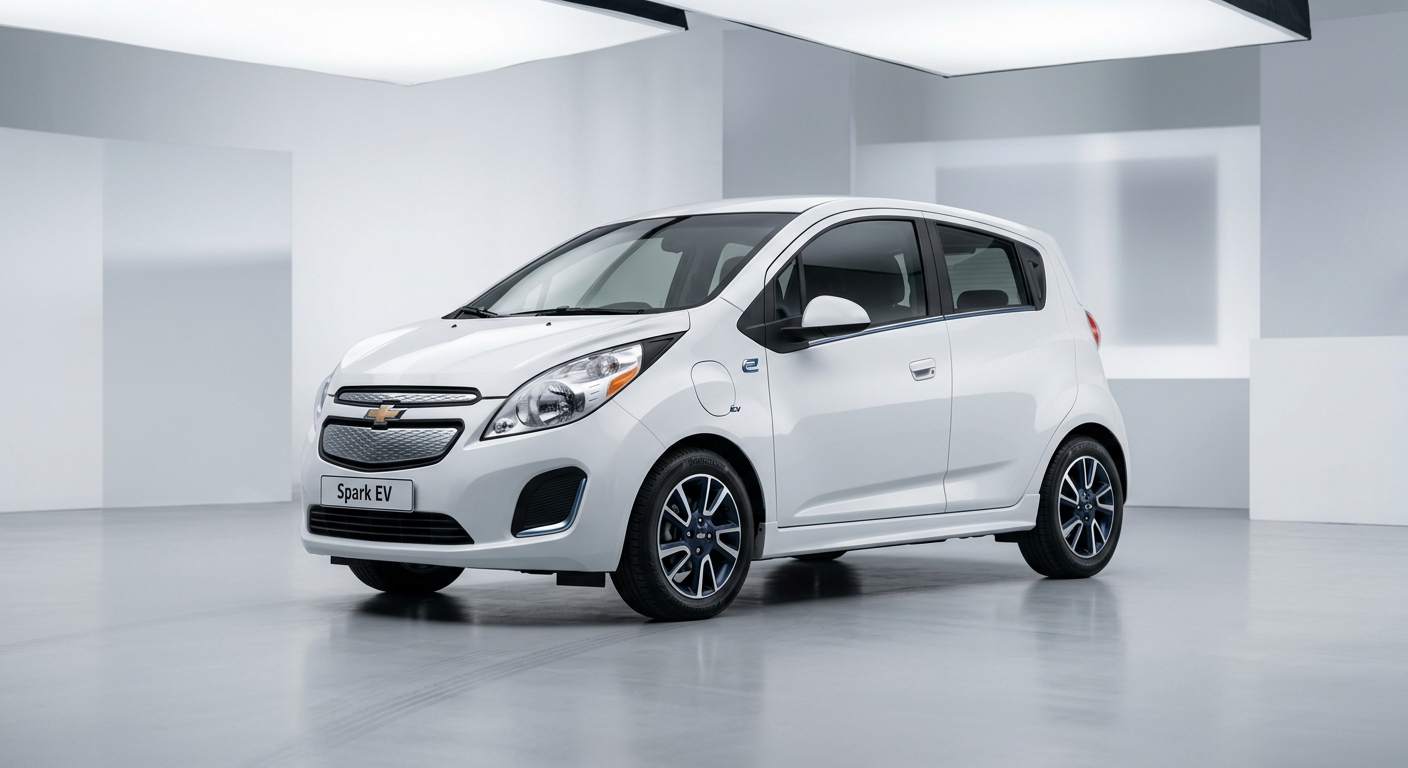
Before Tesla dominated headlines and every automaker scrambled to electrify their lineups, General Motors quietly launched one of the most overlooked electric vehicles of the 2010s. The Chevrolet Spark EV transformed GM’s smallest gasoline car into a surprisingly capable urban electric that delivered more performance per dollar than almost anything else with a plug.
Small Car, Big Performance
The Spark EV’s party trick wasn’t its 82-mile EPA range or compact dimensions, it was the shocking acceleration that caught unsuspecting drivers off guard. With 140 horsepower and an instant-delivery 400 lb-ft of torque from its permanent magnet electric motor, the little Spark could rocket from 0-60 mph in just 7.2 seconds. That made it quicker than a Honda Civic Si and put it in serious hot hatch territory, all while consuming the equivalent of 119 MPGe in the city.
The electric drivetrain transformed the character of GM’s entry-level car completely. Where the gasoline Spark felt underpowered and crude, the EV version delivered smooth, linear acceleration that made city driving genuinely enjoyable. The single-speed transmission eliminated any drivetrain lag, and the low center of gravity from the floor-mounted battery pack improved handling dynamics significantly.
Urban Electric Done Right
GM engineered the Spark EV specifically for urban environments, and it showed in every detail. The compact 143.1-inch length made parking effortless, while the tight 28.6-foot turning circle allowed U-turns in surprisingly narrow spaces. The elevated seating position provided excellent visibility in city traffic, and the quiet electric operation made stop-and-go commuting far more pleasant.
The interior featured EV-specific touches including a unique instrument cluster with power flow displays, efficiency coaching features, and charging status indicators. While materials remained budget-focused, the layout was logical and the MyLink infotainment system included smartphone integration that was advanced for 2015. The rear seats folded flat to create a surprisingly useful 27.2 cubic feet of cargo space.
Charging and Real-World Range
The 19 kWh lithium-ion battery pack provided genuine 70-80 miles of range in mixed driving, with city driving pushing closer to 90 miles thanks to regenerative braking. The included 3.3 kW onboard charger could fully replenish the battery in about seven hours from a 240V outlet, while DC fast charging capability allowed 80% charging in around 20 minutes at compatible stations.
For urban dwellers with predictable commutes, the Spark EV’s range proved perfectly adequate. The combination of efficiency, performance, and surprisingly low lease rates made it an attractive alternative to traditional economy cars, especially in California where most sales were concentrated.
Why It Disappeared
Despite its competence, the Spark EV remained a limited-production compliance car, sold only in California and Oregon to help GM meet zero-emission vehicle requirements. Production ended after just three model years as GM shifted focus to the Chevrolet Bolt EV, which offered dramatically more range but at a significantly higher price point.
Today, the Spark EV represents a fascinating what-if scenario in electric vehicle history. Had GM committed to national availability and proper marketing, this practical urban electric might have carved out a meaningful niche in the emerging EV market. Instead, it remains one of the most capable forgotten electrics of the pre-mainstream EV era.
The Spark EV proves that electric vehicles don’t need 300 miles of range or six-figure price tags to be genuinely compelling. GM created something special here: an affordable urban electric that was actually fun to drive, wrapped in a package that made perfect sense for city life. Too bad they kept it a secret from most of America.