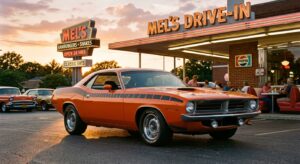
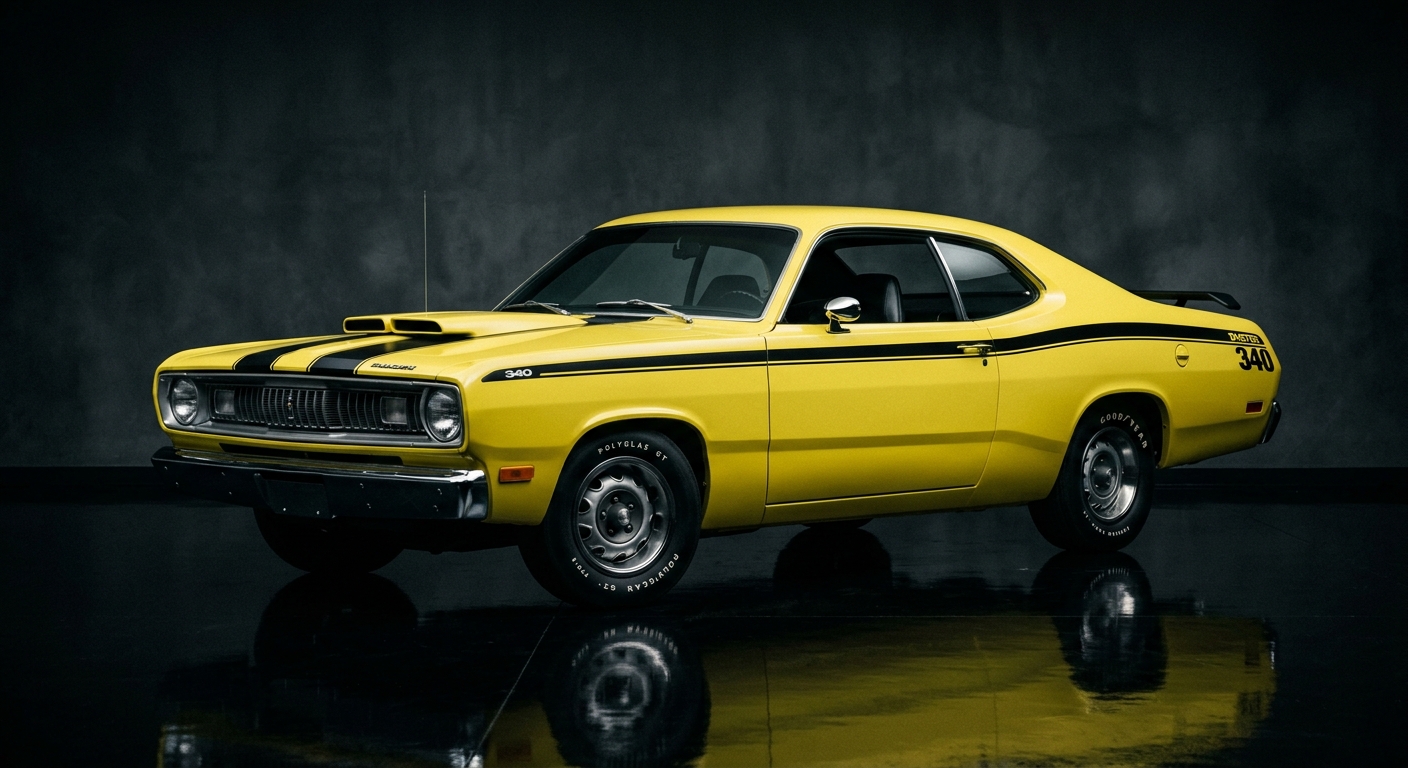
While the automotive world was mesmerized by the thunderous big-block behemoths of the early 1970s, Plymouth quietly unleashed something different: a compact muscle car that could run with the best of them without emptying your wallet. The 1970 Duster 340 proved that you didn’t need a massive engine bay or a four-figure price tag to experience genuine American muscle.
Built on Chrysler’s reliable A-body platform and sharing its DNA with the mundane Valiant, the Duster 340 was the automotive equivalent of a sleeper hit. It looked unassuming enough to fool insurance companies and unsuspecting competitors, but underneath its practical exterior beat the heart of a genuine street fighter.
Small Block, Big Attitude
The magic of the Duster 340 resided in its namesake engine: a 340 cubic inch small-block V8 that punched well above its displacement. This wasn’t some detuned family hauler motor. Plymouth’s engineers had crafted something special, with a high-compression design, aggressive cam profile, and breathing modifications that allowed it to produce a genuine 275 horsepower.
What made the 340 truly special was its willingness to rev. While big-block muscle cars relied on massive torque and low-end grunt, the 340 loved to spin, delivering power all the way to its 6,000 rpm redline. The result was a driving experience that felt more alive and engaging than many of its larger-displacement competitors.
Behind the wheel, the Duster 340 delivered a raw, mechanical connection that modern performance cars struggle to match. The four-speed manual transmission required deliberate shifts and rewarded smooth technique, while the unassisted steering provided direct feedback from every road surface irregularity.
David Among Goliaths
In the context of 1970’s muscle car landscape, the Duster 340 was refreshingly honest. While competitors were engaged in a horsepower war that would soon be curtailed by emissions regulations and insurance company backlash, Plymouth focused on creating a balanced package that emphasized real-world performance over bench-racing bragging rights.
The compact dimensions and relatively light weight meant the Duster could out-handle many of its larger siblings. Its 108-inch wheelbase provided stability without the unwieldy nature of full-size muscle cars, making it equally at home carving canyon roads or launching from traffic lights.
The interior was purposefully spartan, focusing attention on the essential elements: a full set of gauges, bucket seats, and a pistol-grip shifter that became an icon of the era. There were no pretensions of luxury here, just a focused tool designed for one purpose: going fast.
Performance Reality
Contemporary road tests consistently showed the Duster 340 running mid-14-second quarter-mile times, with some well-tuned examples dipping into the high 13s. More importantly, it delivered this performance with remarkable reliability and at a price point that made it accessible to younger buyers who were being priced out of the muscle car market.
The combination of the eager-revving 340 engine, tight suspension tuning, and lightweight construction created a driving experience that was more European sports car than traditional American muscle. It rewarded driver skill and involvement in ways that the more powerful but heavier alternatives often didn’t.
The 1970 Plymouth Duster 340 represents everything that made the muscle car era special: honest performance, mechanical purity, and accessibility to enthusiasts who prioritized driving over posing. In today’s market of increasingly sanitized performance cars, the Duster’s raw character and affordable thrills feel more relevant than ever. It remains proof that the best performance cars aren’t always the most expensive ones.