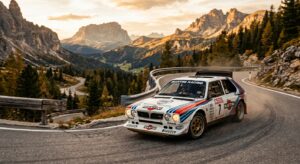
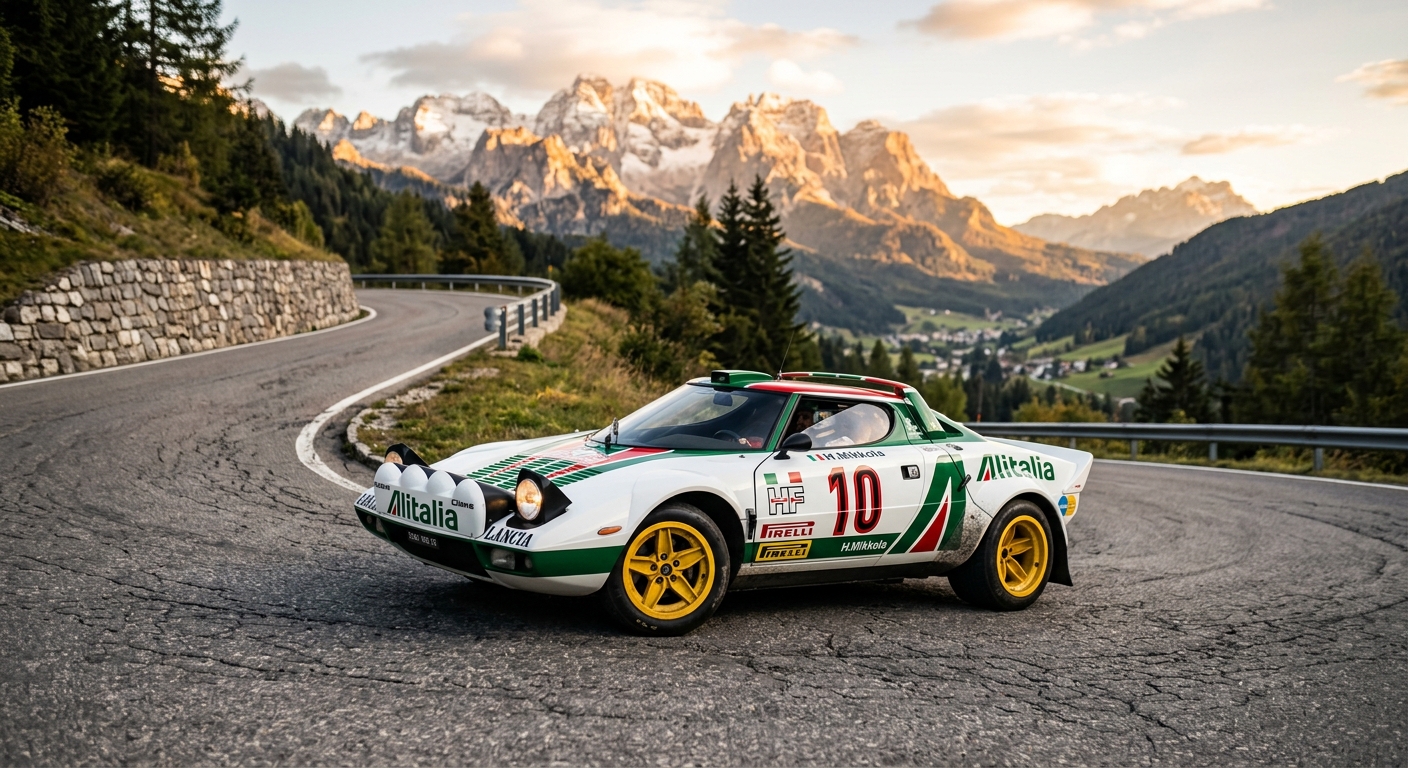
In an era when most sports cars still adhered to classical proportions, Lancia threw convention out the window and created something that looked like it had been beamed down from another planet. The Stratos wasn’t just radical in appearance, it was purpose-built from the ground up for one thing: winning rallies. And win it did, claiming three consecutive World Rally Championship constructor titles and cementing its place as one of the most successful and visually striking competition cars ever created.
The Birth of a Legend
The Stratos story begins with Lancia’s desire to replace the aging Fulvia HF as their flagship rally weapon. Rather than evolve an existing road car, they commissioned Bertone’s Marcello Gandini to create something entirely new. The result was a masterpiece of functional design, with every line dictated by aerodynamic efficiency and rally stage performance.
At just 43 inches tall, the Stratos is impossibly low, with a wheelbase shorter than a modern Mini Cooper. This radical architecture was made possible by mounting a Ferrari Dino V6 engine transversely behind the driver, creating a mid-engine layout that provided perfect weight distribution for the twisting mountain stages of European rallying.
Driving the Wedge
Climbing into a Stratos is an event in itself. The doors open upward and forward, revealing a cockpit that’s equal parts race car and sculpture. The seating position is reclined and low, with the pedals positioned high due to the front storage compartment. Visibility is challenging, with thick A-pillars and a shallow windscreen that gives the impression of peering through a letterbox.
Fire up the 2.4-liter Ferrari V6, and the Stratos announces itself with a metallic snarl that echoes off nearby buildings. This engine, borrowed from the Dino 246, produces 190 horsepower in road trim, but it’s the soundtrack that truly captivates. The exhaust note builds from a guttural idle to a spine-tingling wail as the revs climb toward the 7,000 rpm redline.
Rally-Bred Performance
On the road, the Stratos feels every inch the rally car it was designed to be. The steering is direct and unfiltered, transmitting every detail of the road surface through the thin rim. The short wheelbase makes the car incredibly agile but also twitchy at speed, requiring constant attention and respect from the driver.
The suspension is firm, bordering on harsh, with little regard for comfort. This isn’t a grand tourer; it’s a weapon designed for competition stages where milliseconds matter more than passenger comfort. The gearbox is notchy and mechanical, demanding deliberate inputs and rewarding smooth technique with crisp shifts.
In competition trim, works Stratos rally cars produced over 280 horsepower and could accelerate from 0-60 mph in under 5 seconds, remarkable figures for the early 1970s. The aerodynamic bodywork generated significant downforce at high speeds, allowing drivers to maintain incredible pace through sweeping corners.
Design Icon
Beyond its mechanical excellence, the Stratos stands as one of the greatest automotive design achievements of all time. Gandini’s wedge profile was revolutionary, influencing everything from the Lamborghini Countach to modern supercars. The dramatic air intakes, aggressive front spoiler, and distinctive rear buttresses create a silhouette that remains striking nearly five decades later.
The interior is equally purposeful, with toggle switches, aluminum panels, and minimal padding creating an atmosphere of focused intensity. Every surface serves a function, from the deeply bolstered seats to the prominent handbrake positioned for rally stages.
Racing Legacy
The Stratos dominated international rallying from 1974 to 1976, winning the World Rally Championship three consecutive times. Drivers like Sandro Munari and Björn Waldegård piloted these wedge-shaped missiles to victories on tarmac and gravel, in snow and sunshine, proving the design’s versatility and effectiveness.
Beyond official factory efforts, the Stratos became a favorite among privateer rally teams and continues to compete in historic events worldwide. Its distinctive silhouette and unmistakable exhaust note make it one of the most recognizable cars in motorsport history.
The Lancia Stratos remains the most purposeful and visually dramatic sports car ever created, a rolling sculpture that happens to be devastatingly effective on any road that twists and turns. It’s automotive art with a rally-winning pedigree, and nothing built since has matched its radical commitment to form following function. Own one if you can find it, but prepare for an experience that’s equal parts exhilarating and exhausting.