In the pantheon of 1960s grand touring cars, few machines combined exotic Italian artistry with American muscle as successfully as the Iso Grifo. Born from the brilliant mind of Giotto Bizzarrini and clothed in Bertone’s sensuous bodywork, the Grifo represented everything that made the golden age of motoring truly golden: uncompromising performance wrapped in breathtaking beauty.
While Ferrari and Lamborghini grabbed headlines, this Milan-built masterpiece quietly established itself as perhaps the most complete gran turismo of its era. The 1967 Grifo GL wasn’t just a car; it was a philosophy made manifest, proving that the perfect grand tourer needed both Continental sophistication and raw American horsepower.
The Bizzarrini Touch
The story begins with Giotto Bizzarrini, the engineering genius behind the Ferrari 250 GTO’s legendary chassis dynamics. After his exodus from Maranello, Bizzarrini brought his uncompromising pursuit of performance to Iso Rivolta, a company better known for refrigerators than racing cars. The result was a chassis that could handle whatever engine you dared install.
The Grifo’s backbone was a lightweight tubular steel spaceframe that weighed just 200 pounds yet provided exceptional rigidity. Bizzarrini’s suspension design borrowed heavily from his racing experience, with unequal-length A-arms at all four corners and carefully calculated geometry that delivered both comfort on the autostrada and precision on mountain passes.
What set the Grifo apart from its contemporaries was its remarkable weight distribution. Despite housing a massive American V8 up front, Bizzarrini positioned the engine entirely behind the front axle line, achieving an almost perfect 52/48 front-to-rear weight balance that most modern sports cars would envy.
Bertone’s Masterpiece
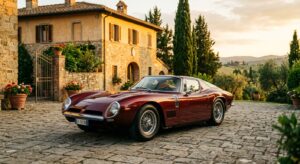
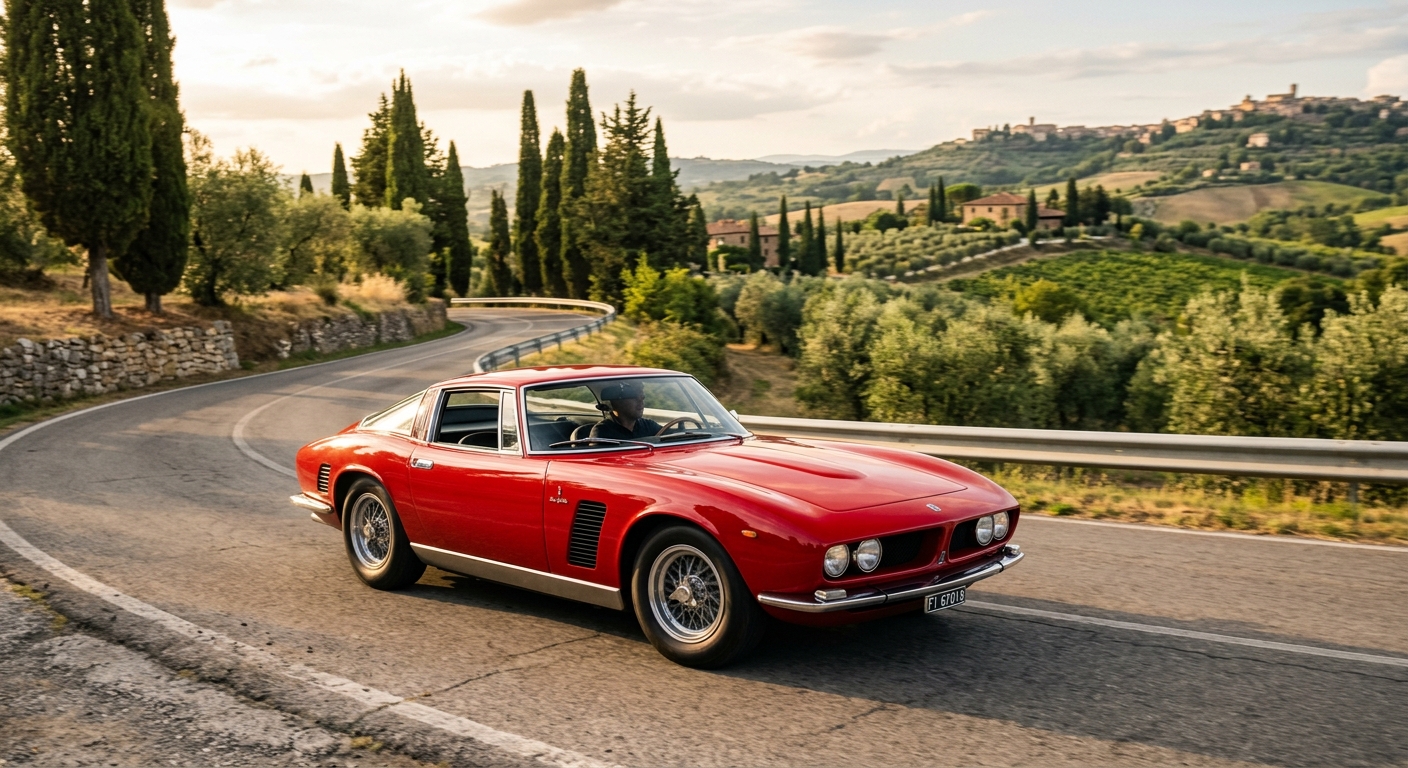
If Bizzarrini provided the soul, Giorgetto Giugiaro at Bertone delivered the body that would make angels weep. The Grifo’s design was a study in restrained aggression, with clean lines that somehow managed to look both elegant and predatory. The distinctive “shark nose” front end, with its prominent central grille flanked by recessed headlights, gave the car an unmistakable identity that looked like nothing else on the road.
The proportions were absolutely perfect: a long hood necessitated by the V8 engine, a cabin positioned well back, and muscular rear haunches that hinted at the power within. Unlike the sometimes fussy styling of period Ferraris, the Grifo’s design was remarkably clean and purposeful, aging far better than many of its more famous contemporaries.
Every detail spoke to Italian craftsmanship. The hand-formed aluminum bodywork was assembled with the precision of a Swiss watch, while the interior combined rich Connolly leather with elegant switchgear that felt substantial in the hand. This was Italian automotive artistry at its zenith.
American Heart, Italian Soul
The genius of the Grifo lay in its powertrain philosophy. While Ferrari and Lamborghini struggled with the reliability and refinement of their exotic engines, Iso took a different approach: why reinvent the wheel when Chevrolet had already perfected the V8?
The 1967 GL came standard with Chevrolet’s legendary 327-cubic-inch small block, producing 300 horsepower in a state of tune that prioritized reliability over absolute peak output. This wasn’t the fire-breathing race engine you’d find in a Corvette; instead, it was a perfectly civilized powerplant that could cruise at autobahn speeds all day without drama.
The result was intoxicating. The Grifo could accelerate from standstill to 60 mph in just 6.4 seconds, remarkable for 1967, while achieving a genuine 150 mph top speed. More importantly, it could do so repeatedly without the temperamental behavior that plagued its exotic competitors.
Driving Experience
Behind the wheel, the Grifo revealed itself as the most mature gran turismo of its generation. The driving position was absolutely perfect, with clear sightlines and controls that fell naturally to hand. The Borrani wire wheels, standard on the GL, provided precise feedback through the thin-rimmed steering wheel.
Unlike the nervous, edgy character of many 1960s supercars, the Grifo felt supremely confident and stable. The chassis delivered remarkable composure whether carving through Alpine passes or cruising across continents. This was a car you could drive hard without fear, yet it remained comfortable enough for grand touring in the truest sense.
The engine’s character perfectly matched the car’s personality. The Chevrolet V8 delivered its power in a smooth, linear fashion that made the Grifo incredibly easy to drive quickly. There was none of the peaky, temperamental behavior associated with highly-strung Italian engines; just wave after wave of torque available from idle to redline.
The Iso Grifo remains one of the most underappreciated supercars of the 1960s, combining genuine 150-mph performance with day-to-day usability that shamed more famous competitors. In a world of temperamental exotics, the Grifo was the thinking enthusiast’s choice: Italian beauty backed by American reliability and engineering excellence that still impresses today.