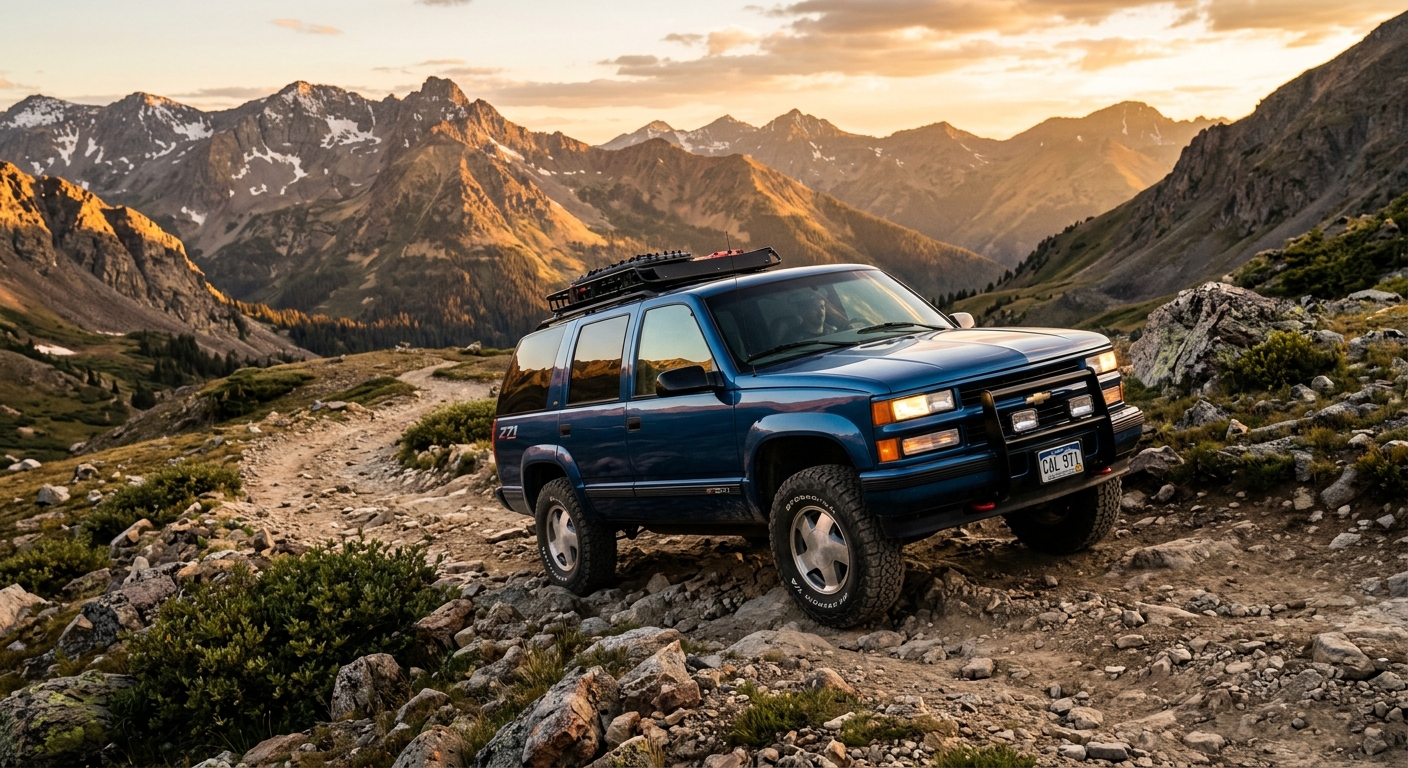
As the millennium approached, American families were trading in their station wagons for something bigger, tougher, and more capable. The 1999 Chevrolet Tahoe Z71 represented the perfect storm of practicality meeting performance, offering genuine off-road prowess wrapped in a package that could still handle school runs and weekend adventures with equal aplomb.
The Birth of the Performance SUV
The late 1990s marked a pivotal moment in automotive history when SUVs transitioned from utilitarian workhorses to mainstream family vehicles. Chevrolet’s Tahoe, introduced in 1995, had already established itself as a capable full-size SUV, but the Z71 package elevated it into something special. This wasn’t just about adding some plastic cladding and calling it sporty; the Z71 treatment brought genuine mechanical upgrades that transformed the driving experience.
Built on GM’s GMT400 platform, the 1999 Tahoe Z71 represented the culmination of four years of refinement. The engineers had worked out the early kinks while adding features that would become standard in the performance SUV segment. The result was a vehicle that could tow 7,500 pounds, seat eight passengers, and still tackle serious off-road terrain without breaking a sweat.
Heart of the Beast
Under the hood, the Z71 packed Chevrolet’s venerable 5.7-liter Vortec V8, producing 255 horsepower and 330 lb-ft of torque. While those numbers might seem modest by today’s standards, in 1999 they provided more than adequate motivation for the 5,200-pound Tahoe. The engine’s broad torque curve made it ideal for both highway cruising and low-speed rock crawling.
The real magic happened when you engaged the Autotrac four-wheel-drive system. Unlike basic part-time setups, Autotrac allowed drivers to leave the system in auto mode, automatically transferring power to all four wheels when slip was detected. For serious off-roading, manual 4-High and 4-Low modes provided the control enthusiasts demanded.
Off-Road Credentials
What separated the Z71 from lesser Tahoes was its comprehensive off-road package. Bilstein monotube shocks replaced the standard units, providing better damping and heat dissipation during extended off-road sessions. The suspension geometry was revised with a higher ride height and improved approach angles, while skid plates protected vital components underneath.
The Z71’s Goodyear Wrangler tires, wrapped around 16-inch aluminum wheels, provided the grip needed to tackle everything from muddy trails to rocky climbs. The limited-slip differential helped maintain forward progress when traction became scarce, while the low-range transfer case offered a 2.72:1 reduction ratio for crawling over obstacles.
Behind the wheel, the Z71 felt surprisingly refined for such a capable off-roader. The steering was direct without being twitchy, and the suspension struck an excellent balance between on-road comfort and off-road capability. Road noise was well-controlled, making long highway journeys pleasant for all occupants.
Interior and Practicality
Inside, the 1999 Tahoe Z71 offered a spacious cabin that could accommodate up to eight passengers across three rows. The build quality was typical GM of the era, solid if not spectacular, with hard plastics dominating the dashboard. However, the seats were comfortable and supportive, even during extended drives.
Cargo capacity was generous with the rear seats folded, making the Tahoe an excellent choice for families who needed to haul both people and gear. The high seating position provided excellent visibility, a key safety advantage that helped drive SUV popularity during this period.
The 1999 Chevrolet Tahoe Z71 stands as a watershed moment in automotive history, bridging the gap between utility vehicles and family transportation while establishing the template for performance SUVs that followed. It proved that Americans didn’t have to choose between capability and comfort, creating a new market segment that continues to dominate today. For those seeking a taste of this pioneering era, clean Z71s remain excellent values in the classic SUV market.