When General Motors announced the death of the Hummer brand in 2010, it marked the end of an era that began with military surplus and evolved into the ultimate expression of American automotive excess. The H3T pickup, launched as the brand’s final new model, represented both Hummer’s last stand and perhaps its most practical interpretation of go-anywhere capability.
Unlike its massive H1 and H2 predecessors, the H3T was built on GM’s midsize truck platform, sharing bones with the Chevrolet Colorado and GMC Canyon. Yet it retained every ounce of Hummer’s uncompromising character, wrapped in bodywork that looked like it rolled straight off a military base.
Military Precision Meets Pickup Practicality
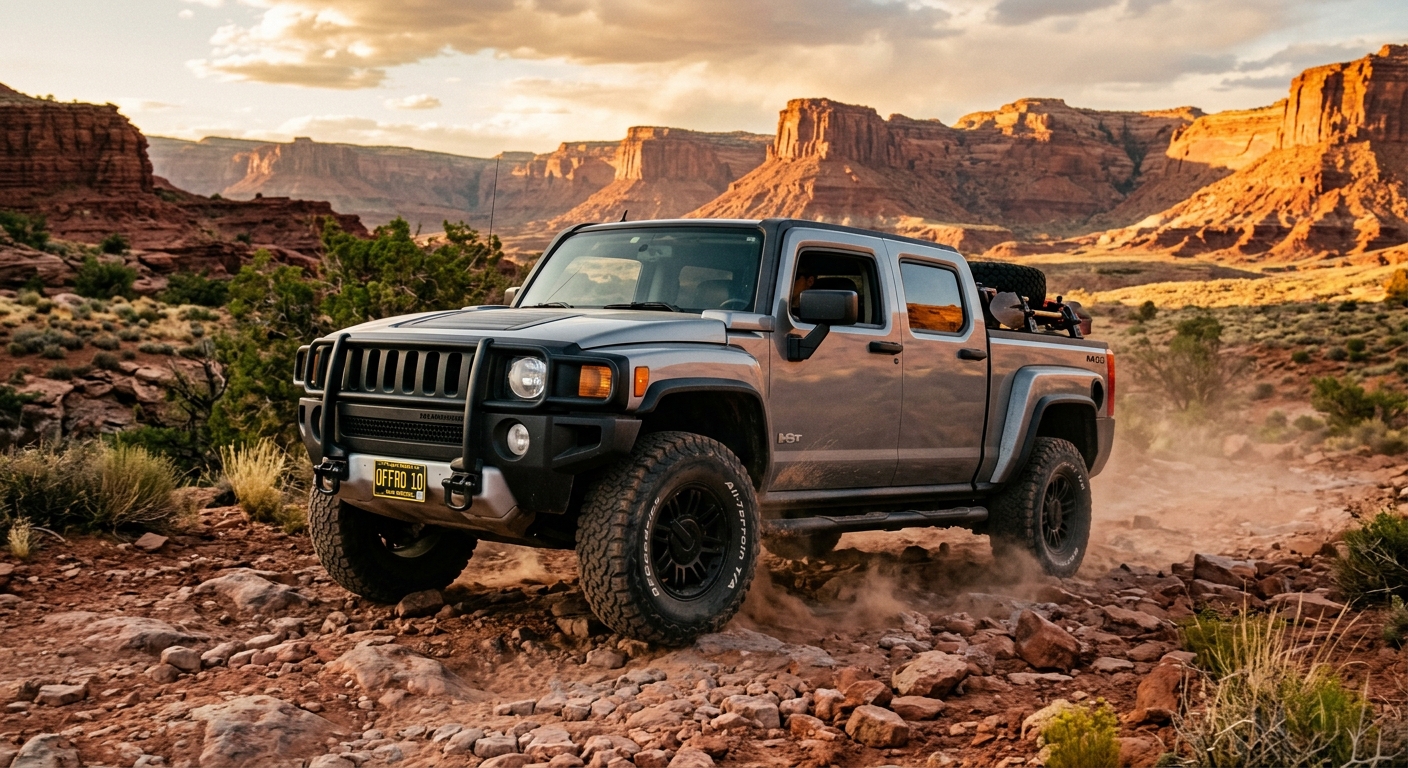
The H3T’s design language spoke fluent military. Its angular fender flares, vertical grille slots, and aggressive stance communicated serious intent. The pickup bed added genuine utility to Hummer’s typically form-over-function approach, creating a vehicle that could haul gear while conquering terrain that would leave conventional trucks stranded.
Inside, the H3T maintained Hummer’s distinctive aesthetic with industrial-grade switchgear and purposeful design. The cabin felt more like a command center than a luxury lounge, with durable materials chosen for function over flash. Every control felt substantial, designed to work even with gloved hands in harsh conditions.
Off-Road Supremacy
Where the H3T truly excelled was off the beaten path. Its advanced four-wheel-drive system included low-range gearing and a rear differential lock, enabling the truck to crawl over obstacles that would challenge dedicated rock crawlers. The approach and departure angles were exceptional, while ground clearance of over 9 inches meant few terrain features could stop progress.
The suspension combined comfort with capability, soaking up highway miles while maintaining composure over the roughest trails. Skid plates protected vital components underneath, and the truck’s narrow width, relative to its H2 sibling, made it more manageable on tight trails.
The End of an Era
Production ended in May 2010 as GM shuttered the Hummer brand, making the H3T an instant collectible. Only about 15,000 H3Ts were built during its brief production run, with the pickup representing just a fraction of that number. The timing was unfortunate, as the H3T finally delivered the practicality that could have broadened Hummer’s appeal.
Today, the H3T stands as automotive archaeology from a different time, when fuel prices seemed manageable and environmental concerns hadn’t yet dominated the conversation. It represents the last gasp of unapologetic American excess, built without compromise for those who needed maximum capability regardless of the consequences.
The H3T wasn’t built for efficiency or refinement, it was engineered for places where other trucks fear to tread. As the final chapter in Hummer’s story, it stands as both a fascinating piece of automotive history and a supremely capable off-road machine that’s only getting rarer by the year.