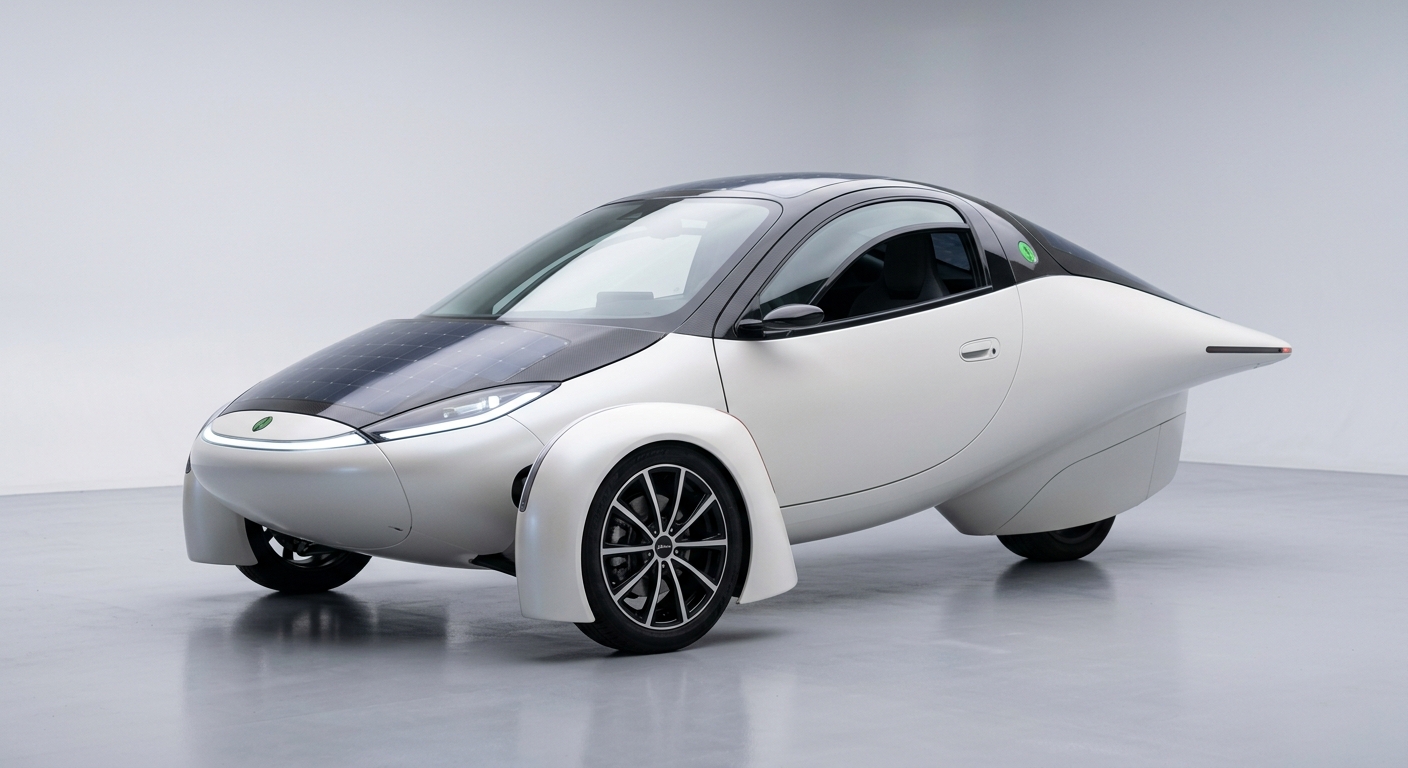
The Aptera Launch Edition looks like it rolled straight out of a science fiction movie and into our driveways. This three-wheeled solar electric vehicle promises to rewrite the rules of personal transportation with its impossible-sounding claim of over 1,000 miles of range and built-in solar charging that could theoretically eliminate the need to plug in. After decades of false starts in the solar car space, Aptera might just be the company to finally deliver on the promise of truly sustainable mobility.
Aerodynamics Over Everything
The Aptera’s teardrop shape isn’t just for show, it’s the result of obsessive attention to aerodynamic efficiency. With a drag coefficient of just 0.13, it slips through the air more cleanly than any production vehicle ever made. The carbon fiber and hemp composite body weighs less than 1,800 pounds, while the three-wheel configuration reduces rolling resistance compared to traditional four-wheeled cars.
The Launch Edition features a 100 kWh battery pack and dual in-wheel motors producing a combined 201 horsepower. But the real magic happens on the roof and body panels, where integrated photovoltaic cells can generate up to 45 miles of range per day in ideal conditions. For many daily commuters, that solar input could mean never needing to plug in at all.
Living in the Future
Step inside the Aptera and you’re greeted by a minimalist interior that prioritizes efficiency and forward vision. The dashboard curves around the driver, dominated by a large touchscreen that controls most vehicle functions. The seating position is low and reclined, more like a fighter jet than a traditional car, with excellent visibility through the expansive windscreen.
Build quality feels surprisingly solid for a startup vehicle, though some interior materials reflect the Aptera’s focus on lightweight construction over luxury appointments. The two-seat configuration limits passenger capacity, but the large rear storage area provides decent cargo space for daily use.
Driving the Impossible
On the road, the Aptera feels unlike anything else on four wheels, mainly because it’s on three. The front wheels handle steering and regenerative braking, while a single rear wheel houses the primary drive motor. Initial concerns about three-wheel stability prove unfounded, the Aptera tracks straight and true at highway speeds, though crosswinds can require more steering correction than in a conventional car.
Acceleration is surprisingly brisk, with the Launch Edition reaching 60 mph in under six seconds. More impressive is the efficiency, with the Aptera consuming just 100 watt-hours per mile in optimal conditions. That translates to over 1,000 miles of range from the largest battery pack, a figure that seemed impossible just a few years ago.
The regenerative braking system is aggressive, allowing true one-pedal driving in most situations. Road noise is minimal thanks to the aerodynamic shape, though wind noise becomes noticeable at higher speeds. The ride quality is firm but not harsh, with the independent front suspension soaking up most road imperfections.
Solar Reality Check
While the solar charging capability is genuinely impressive, real-world conditions rarely match the ideal scenarios used in Aptera’s marketing materials. Cloud cover, parking orientation, and seasonal variations all impact solar generation significantly. In practice, most owners will still need to plug in occasionally, but the solar boost meaningfully extends range and reduces charging frequency.
The Aptera can also charge conventionally at up to 57 kW DC fast charging speeds, sufficient for road trips when solar power isn’t enough. The vehicle’s extreme efficiency means even modest charging rates provide significant range quickly.
The Aptera Launch Edition represents a bold leap toward truly sustainable personal transportation, even if it requires some compromises in practicality and conventional driving dynamics. This solar-powered space pod delivers on its efficiency promises while offering a genuinely unique driving experience that feels decades ahead of everything else on the road. For early adopters willing to embrace the future of mobility, the Aptera offers something no other vehicle can: the tantalizing possibility of never needing to charge again.