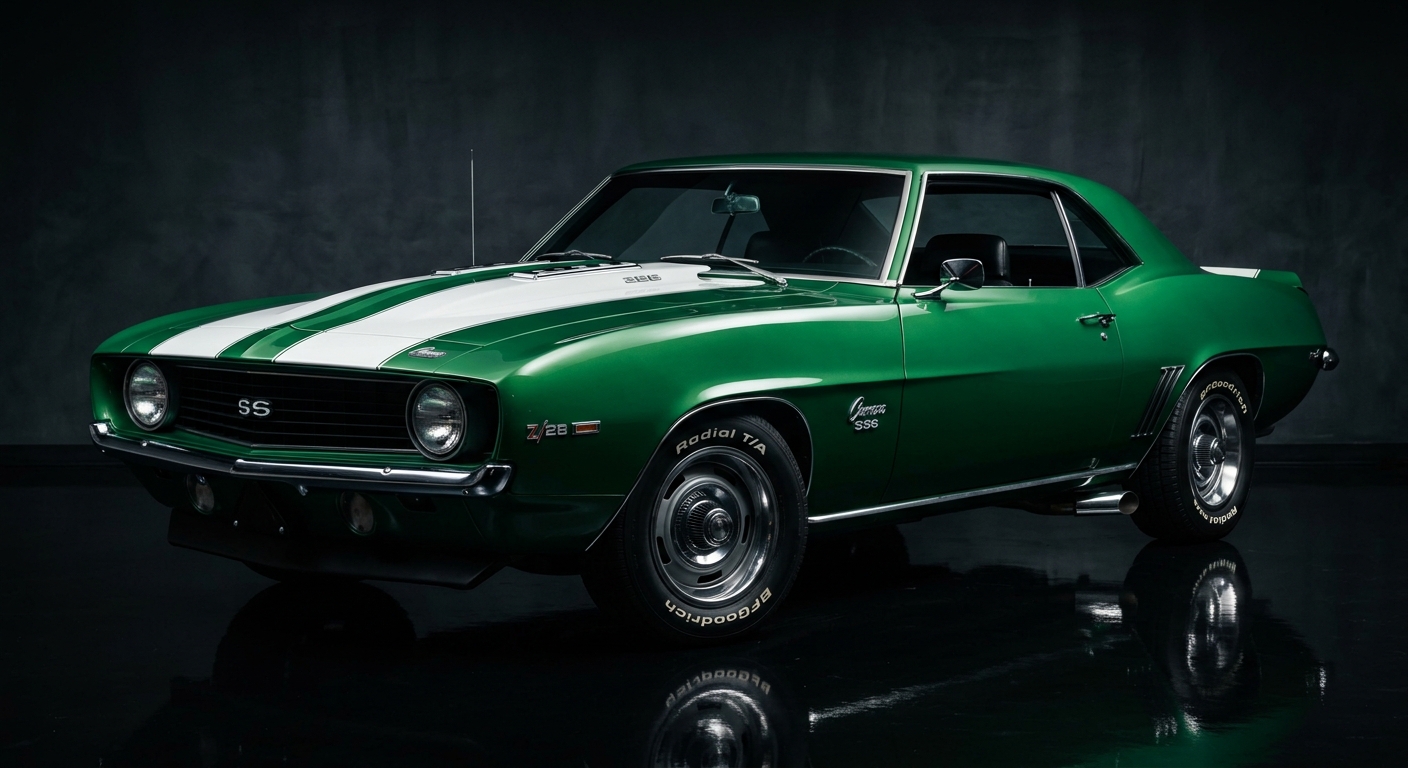
In 1969, the muscle car wars were raging at full throttle, and Chevrolet’s response was the Camaro SS 396. While Ford’s Mustang had started the pony car revolution, the Camaro SS took things to an entirely different level with big-block power wrapped in one of the most beautiful bodies ever to emerge from Detroit. This wasn’t just transportation: it was a statement of intent, a blue-collar bruiser that could run with the best of them.
The Big Block Difference
What separated the SS 396 from lesser Camaros wasn’t just the numbers on the fender badges. Under that distinctive power-bulge hood sat Chevrolet’s legendary 396 cubic inch big-block V8, available in three different states of tune. The base L35 produced a healthy 325 horsepower, while the L78 cranked out an advertised 375 horses that was almost certainly underrated for insurance purposes.
The sound alone was worth the price of admission. Fire up that 396, and the world knows you mean business. The rumbling idle transitions into a deep, authoritative roar under acceleration that’s pure American muscle poetry. This is the soundtrack that launched a thousand dreams and defined a generation’s relationship with horsepower.
Form Follows Function
Chevrolet’s designers got everything right with the first-generation Camaro’s proportions. The long hood, short deck profile was perfect for housing that big-block engine, while the wide stance and muscular haunches hinted at the performance potential within. The SS package added functional details like the cowl-induction hood, bold striping, and distinctive badging that left no doubt about this car’s intentions.
Inside, the Camaro SS was all business. The optional gauge package provided proper instrumentation including a tachometer that would sweep well into the red zone with enthusiasm. The bucket seats held you in place during spirited driving, while the Hurst shifter (when equipped with the four-speed manual) provided crisp, mechanical gear changes that connected you directly to the drivetrain.
Performance That Mattered
On the street, the SS 396 delivered the kind of straight-line performance that built legends. The combination of big-block torque and relatively light weight meant impressive acceleration numbers, with the L78-equipped cars capable of high 13-second quarter-mile times when properly tuned and driven.
The handling was typical of its era: fantastic in a straight line, requiring respect in the corners. The front-heavy weight distribution and bias-ply tires meant that aggressive cornering was an adventure, but that wasn’t really the point. This was a car built for stoplight battles and weekend cruising, not carving mountain roads.
Cultural Impact
The 1969 Camaro SS 396 arrived at the perfect moment in automotive history. It combined the youthful appeal of the pony car with genuine big-block performance at a price that young buyers could actually afford. This accessibility helped spread muscle car fever far beyond the traditional hot rod community, creating lifelong enthusiasts who would pass their passion down to future generations.
Today, the ’69 SS 396 remains one of the most sought-after muscle cars, with pristine examples commanding serious money at auction. But even more importantly, it represents a time when American automakers were willing to stuff their biggest engines into relatively affordable cars and let customers sort out the consequences.
The 1969 Camaro SS 396 represents everything that made the original muscle car era special: accessible performance, distinctive style, and the kind of visceral driving experience that creates lifelong memories. Sure, it guzzles gas and requires constant attention, but that’s missing the point entirely. This is pure American automotive soul, distilled into 3,500 pounds of steel, chrome, and attitude.