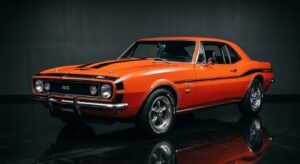
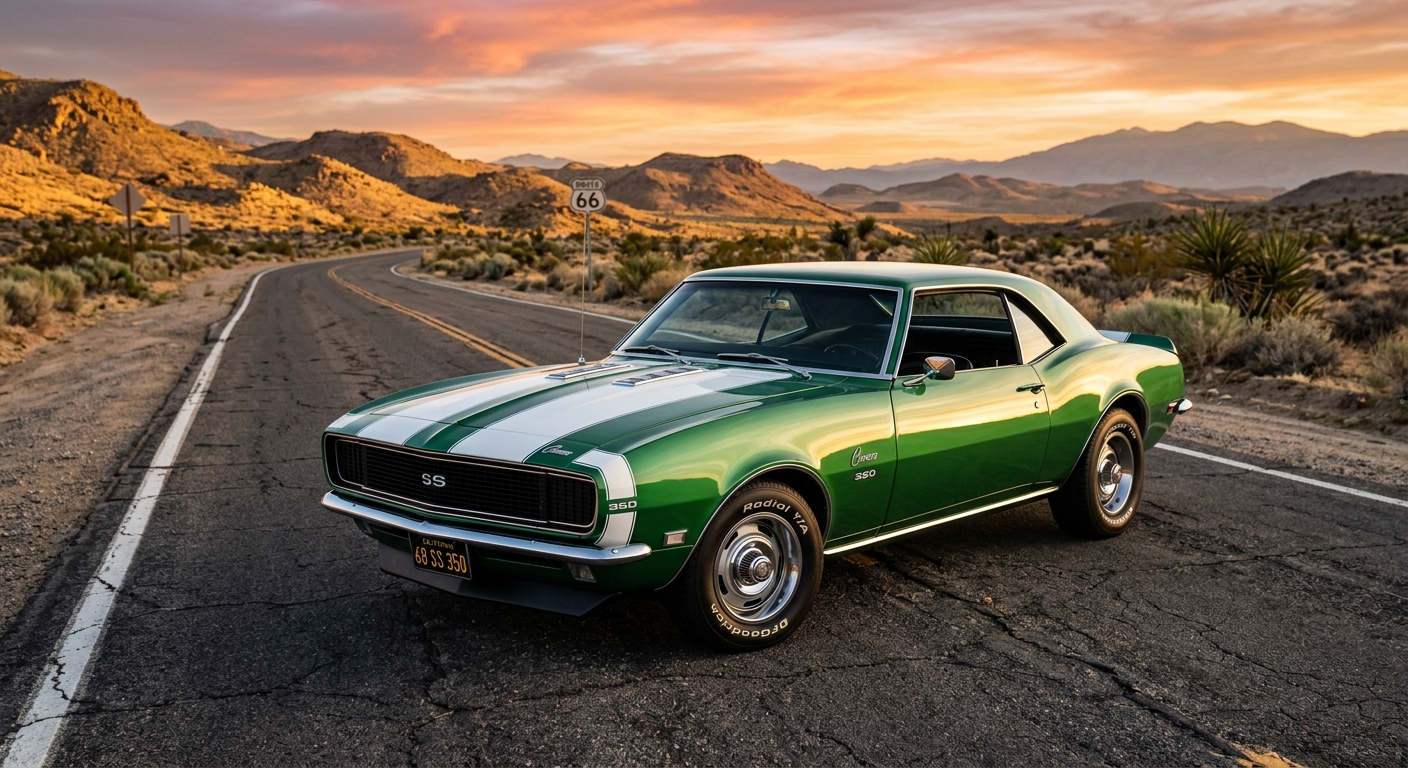
While its big-block SS 396 sibling grabbed headlines with raw horsepower figures, the 1968 Camaro SS 350 represented something more nuanced: a muscle car that prioritized balance over brute force. This was the thinking enthusiast’s choice, delivering genuine performance wrapped in daily-drivable civility.
The small-block 350 may have produced ‘only’ 295 horsepower compared to the 396’s earth-moving torque, but in the real world, this translated to a car that was actually faster in many situations. The lighter nose improved weight distribution, the engine revved more freely, and crucially, you could actually use all that performance without fearing for your license.
The Sweet Spot of Muscle
Sliding behind the wheel of a well-preserved SS 350 today reveals why this configuration was so beloved by those who actually drove their muscle cars rather than just posing with them. The 350 small-block fires up with a purposeful burble that promises performance without the intimidating rumble of its big-block cousins. The engine pulls cleanly from idle, building power in a linear fashion that makes it accessible to drivers of all skill levels.
The four-speed manual transmission shifts with the mechanical precision that defined the era, each gear change accompanied by a satisfying snick. Unlike some period muscle cars that felt like barely-tamed wild animals, the SS 350 demonstrates remarkable composure. The steering is direct and communicative, the suspension strikes a reasonable compromise between handling and ride quality, and the brakes actually inspire confidence.
Performance That Made Sense
On paper, the L48 350 cubic inch V8 produced 295 horsepower and 380 lb-ft of torque, figures that might seem modest by today’s standards but were more than adequate in a car weighing just over 3,200 pounds. The 0-60 mph sprint took around 6.5 seconds, making it quicker than many modern family sedans, while the quarter-mile passed in the high 14-second range.
More importantly, this performance was usable. The 350’s broad torque curve meant strong acceleration from virtually any rpm, making it ideal for street driving. The engine’s relatively compact size and lower weight compared to the big-blocks resulted in better front-to-rear weight distribution, translating to more neutral handling characteristics and improved braking performance.
Design That Defined an Era
The 1968 model year brought subtle but significant updates to the Camaro’s design, with revised side marker lights and grille details that enhanced the car’s aggressive stance. The SS package added distinctive hood stripes, SS badges, and unique wheels that clearly identified the car’s performance intentions without being ostentatious.
Inside, the SS 350 could be optioned with everything from basic vinyl seats to luxurious leather appointments, allowing buyers to tailor the car to their specific needs. The instrument panel, with its round gauges and driver-focused layout, created an environment that felt purposeful and engaging.
The Goldilocks Formula
What made the SS 350 special was its position in the Camaro hierarchy. It offered significantly more performance than the base models while remaining more civilized and affordable than the big-block SS 396. This made it the perfect choice for buyers who wanted genuine muscle car performance without the compromises that came with the more extreme engines.
The 350 small-block would go on to become one of Chevrolet’s most successful and long-lived engines, powering everything from Corvettes to pickup trucks for decades. But in 1968, wrapped in the Camaro’s stunning bodywork and backed by the SS package’s performance upgrades, it created what many consider the most balanced muscle car of the era.
The 1968 Camaro SS 350 represents the golden mean of American muscle: powerful enough to satisfy any enthusiast’s cravings, yet civilized enough to serve as reliable daily transportation. In a world of extremes, sometimes the middle path proves to be the most rewarding journey.