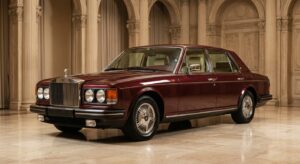
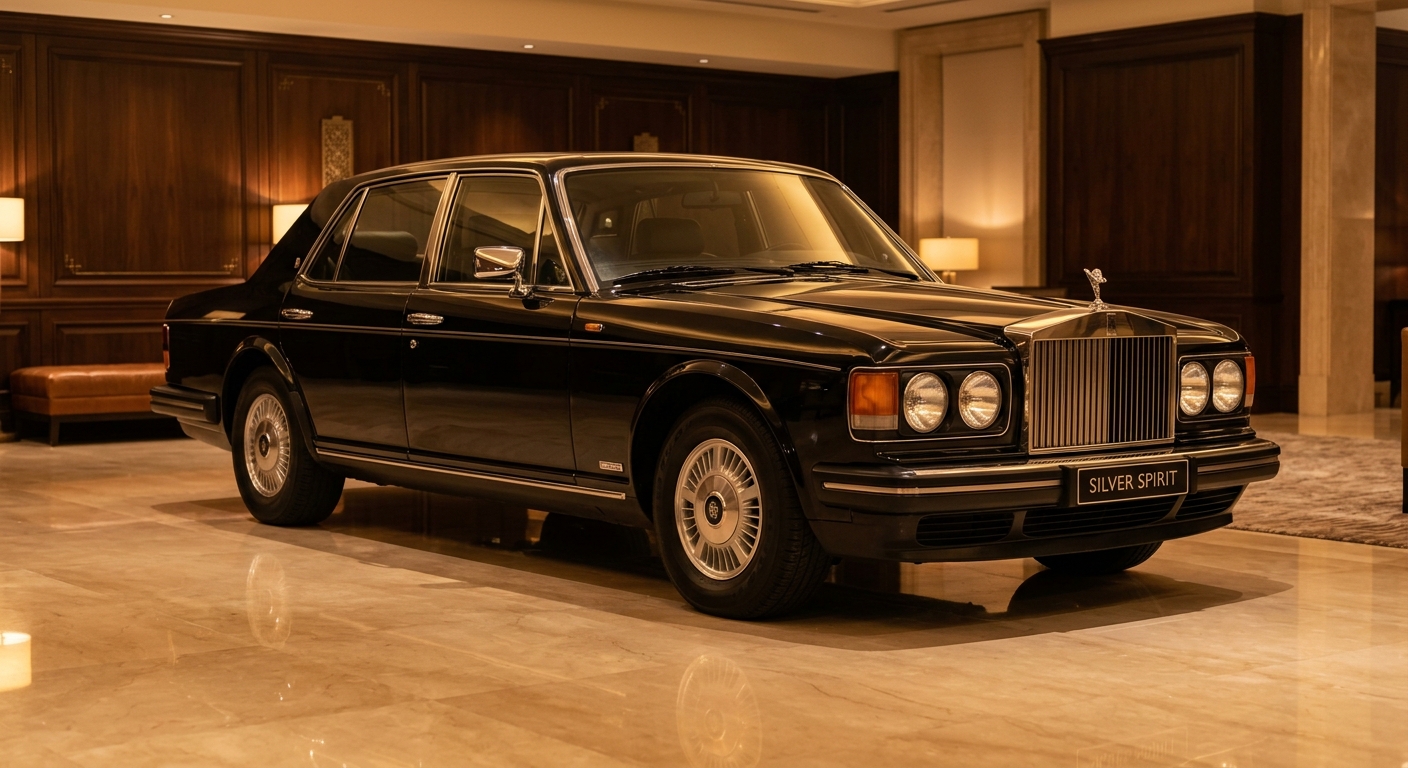
In 1986, Rolls-Royce stood at a crossroads between its storied past and an uncertain future. The Silver Spirit represented the marque’s ambitious attempt to modernize without sacrificing the handcrafted excellence that made it the choice of royalty, titans of industry, and discerning drivers worldwide. This wasn’t just another luxury sedan; it was a rolling statement of British engineering prowess wrapped in Connolly leather and Wilton carpets.
The Art of Engineered Serenity
Beneath the Silver Spirit’s imposing hood lies Rolls-Royce’s legendary 6.75-liter V8, a powerplant that traces its lineage back to the 1960s but had been thoroughly refined by 1986. The engine produces what Rolls-Royce diplomatically calls “adequate” power, though independent testing suggests around 220 horsepower. More important than raw output is how this power is delivered: with the seamless, whisper-quiet refinement that has become synonymous with the Flying Lady.
The three-speed automatic transmission shifts so imperceptibly that passengers might wonder if the car is actually accelerating at all. This is entirely by design. In a Silver Spirit, drama is reserved for the theater; the driving experience should be as serene as floating on a cloud, yet as commanding as piloting a luxury yacht.
Handcrafted Excellence in the Digital Age
What set the 1986 Silver Spirit apart from its predecessors was Rolls-Royce’s careful integration of modern technology with traditional craftsmanship. While the body panels were still hand-formed and the interior was stitched by master craftsmen at the Crewe factory, the car featured advanced (for 1986) electronic fuel injection and sophisticated climate control systems.
The interior remains a masterclass in luxury appointments. Every surface that a passenger might touch is covered in the finest materials: hand-selected Connolly leather, burled walnut veneer, and deep-pile Wilton carpets. The seats are more akin to armchairs from a gentleman’s club, offering support and comfort for transcontinental journeys.
A Driving Experience Unlike Any Other
To drive a Silver Spirit is to understand why Rolls-Royce has remained the standard-bearer for luxury motoring. The car isolates its occupants from the outside world so effectively that conversation can be conducted in whispers even at highway speeds. The suspension, a sophisticated independent setup, absorbs road imperfections with the grace of a ballet dancer, while the steering provides just enough feedback to remind you that you are, indeed, in control of nearly two and a half tons of British luxury.
The Silver Spirit’s road presence is commanding without being ostentatious. Other drivers instinctively show respect, not out of intimidation, but from recognition of automotive royalty. This is a car that announces its arrival not with noise or flash, but with an unmistakable aura of quality and refinement.
The 1986 Silver Spirit stands as testament to an era when luxury meant something different: substance over flash, craftsmanship over technology, and presence over performance. In a world increasingly dominated by digital interfaces and artificial enhancement, this Rolls-Royce reminds us why some things are worth preserving exactly as they were meant to be. It’s not just transportation; it’s a rolling piece of British heritage that happens to get you there in unparalleled comfort.