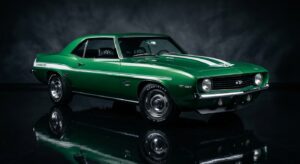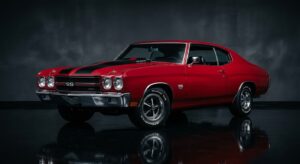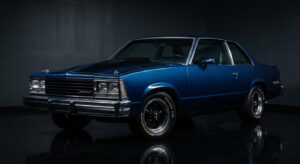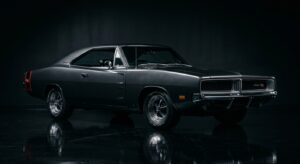
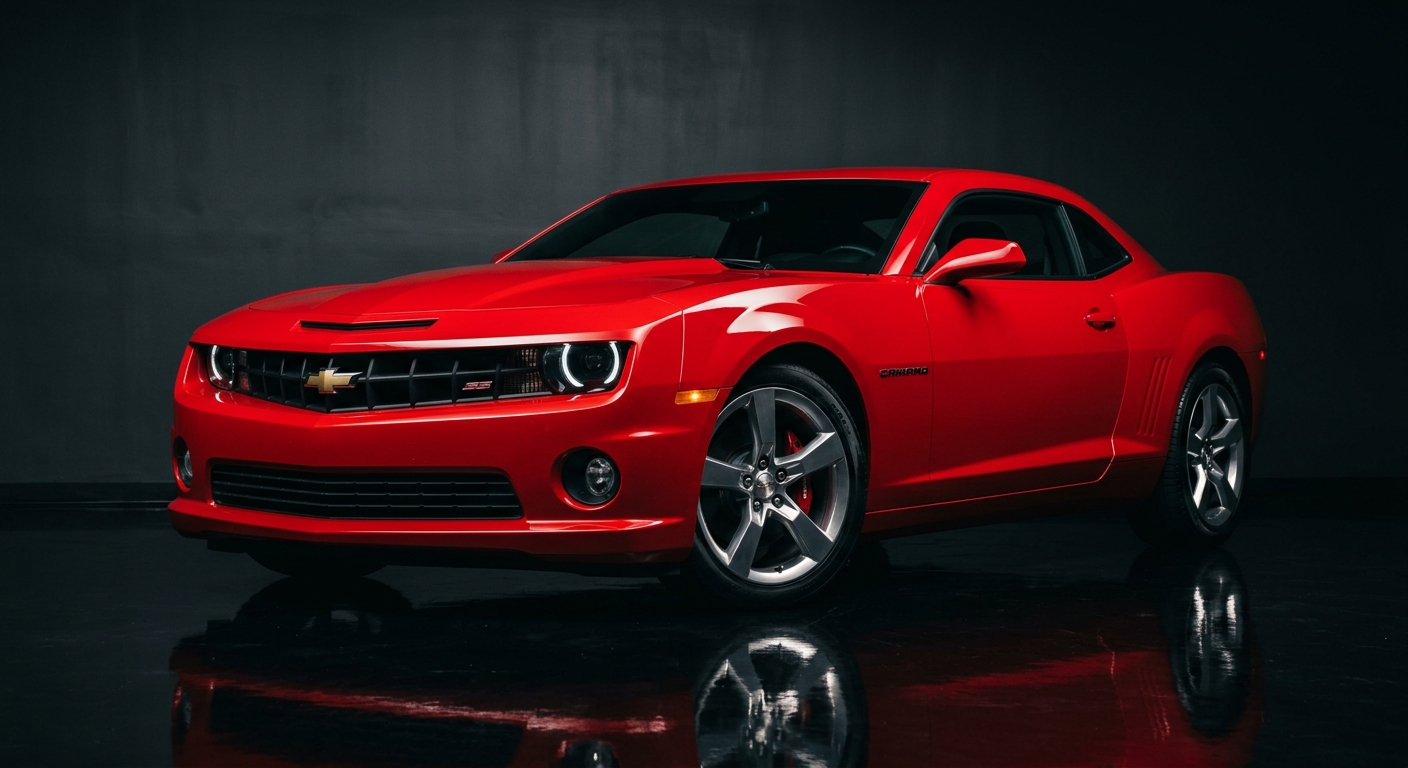
After seven years in automotive purgatory, Chevrolet’s most storied nameplate returned in 2010 with a vengeance. The fifth-generation Camaro SS didn’t just fill the void left by its predecessor: it arrived as a fully-formed statement of American muscle car intent, packing 426 horsepower and the kind of road presence that stops traffic.
The Return of an Icon
The 2010 Camaro SS marked more than just the return of a beloved nameplate. It represented Chevrolet’s commitment to performance in an era when many manufacturers were scaling back their muscle car ambitions. Built on GM’s Zeta platform (shared with the Pontiac G8 and Cadillac CTS), the fifth-gen Camaro brought modern engineering to classic muscle car proportions.
The design team, led by Tom Peters, created something that looked unmistakably Camaro while moving the brand firmly into the 21st century. The aggressive front fascia, pronounced hood bulges, and that distinctive “floating” C-pillar design created visual drama that the previous generation could never match.
LS3 Power Plant
Under the hood lies the legendary LS3 6.2-liter V8, a powerhouse that would become synonymous with modern American performance. Producing 426 horsepower at 5,900 rpm and 420 lb-ft of torque at 4,600 rpm, the LS3 delivered the kind of effortless power that made highway merging an exercise in restraint rather than planning.
The engine’s character perfectly matched the Camaro’s personality: smooth and refined at idle, building to a thunderous crescendo under full throttle. Unlike the peaky, high-strung nature of some competing powerplants, the LS3 delivered useable torque across its entire rev range.
Handling the Modern Muscle
What separated the 2010 Camaro SS from its 1960s ancestors was its sophisticated chassis dynamics. The independent rear suspension, four-wheel disc brakes, and available magnetic ride control transformed the muscle car formula from straight-line terror to genuine all-around performer.
The steering, while not the most communicative, offered decent feedback and reasonable precision for a car of this size and mission. Body roll was well-controlled, and the SS could genuinely carve corners with surprising composure. This wasn’t just a quarter-mile warrior; it was a muscle car you could actually enjoy on a winding road.
Interior and Daily Usability
Inside, the 2010 Camaro SS struck a balance between retro styling cues and modern functionality. The dual-cockpit design created an appropriately sporty atmosphere, while the available leather-appointed seats provided genuine comfort for longer drives. However, the dramatic roofline that looked so striking from the outside created some real-world compromises, particularly in rear visibility and back-seat space.
The trunk, while adequately sized for weekend getaways, wasn’t particularly practical for daily hauling duties. But then again, practicality wasn’t really the point of the exercise.
The 2010 Camaro SS proved that American muscle could evolve without losing its soul. With a perfect blend of nostalgic styling, modern performance, and surprising refinement, it set the stage for a new golden age of factory muscle cars. This was the phoenix rising from the ashes, and it was glorious.