In 2003, GMC took a bold gamble that would reshape the pickup truck landscape forever. While competitors focused purely on work capability or basic comfort, GMC introduced the Sierra Denali, a truck that dared to ask: why can’t a pickup be genuinely luxurious? The result was a vehicle that bridged two worlds, offering Cadillac-level refinement in a package ready for serious work.
Luxury Meets Capability
The Sierra Denali wasn’t just a trim level upgrade; it was a fundamental reimagining of what a pickup truck could be. GMC wrapped their proven Sierra platform in premium materials and features that were previously unthinkable in the truck world. Heated leather seats, automatic climate control, and a premium Bose audio system transformed the cabin into a mobile luxury lounge.
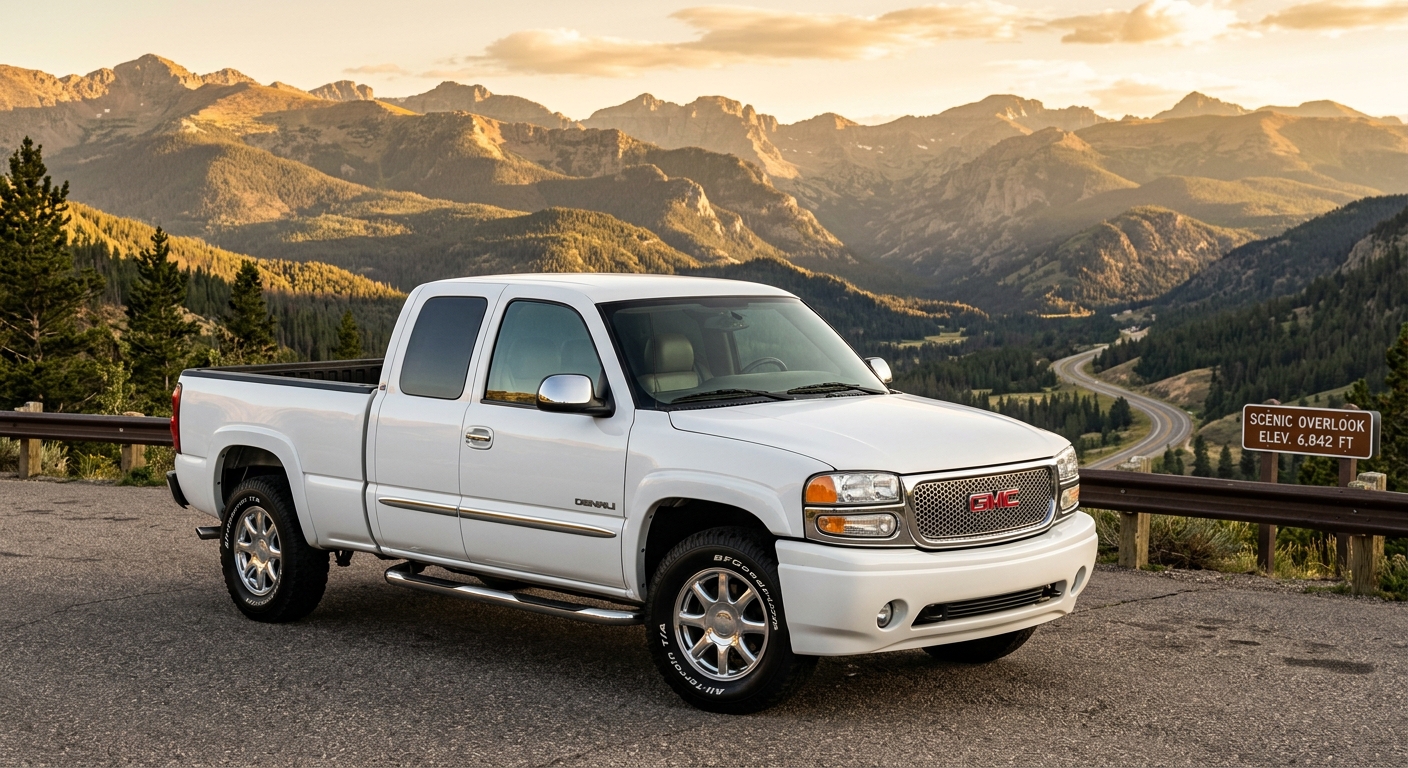
But this wasn’t mere badge engineering. The Denali featured unique styling cues that set it apart from lesser Sierras. Chrome dominated the front end, with a distinctive grille that commanded attention. Body-colored bumpers and door handles, along with chrome side steps and mirror caps, created a cohesive premium appearance that looked equally at home in a corporate parking garage or at a job site.
The Heart of a Workhorse
Under the hood lived GMC’s proven 6.0-liter Vortec V8, generating 300 horsepower and 360 lb-ft of torque. This wasn’t the most powerful engine in the segment, but it delivered the kind of broad, usable power that truck buyers appreciated. Paired with a four-speed automatic transmission, the powertrain emphasized smooth delivery over outright aggression.
The Denali’s capability credentials remained intact despite its luxury aspirations. With an 8,100-pound towing capacity and payload ratings that satisfied most commercial needs, this truck could handle serious work duties. The available all-wheel-drive system provided confident traction in challenging conditions, making the Denali a genuine year-round workhorse.
Interior Revolution
Step inside the 2003 Sierra Denali, and the transformation becomes immediately apparent. Rich leather appointments covered not just the seats, but door panels and dashboard surfaces. The attention to detail extended to soft-touch materials throughout the cabin, a stark contrast to the hard plastics that dominated most trucks of the era.
The front seats offered both heating and power adjustment, while the rear accommodated three passengers in genuine comfort. Storage solutions abounded, from the large center console to clever door pockets designed for both tools and business accessories. GMC understood that Denali buyers might transition seamlessly from construction meetings to client dinners.
Driving Character
Behind the wheel, the Sierra Denali struck an impressive balance between truck capability and car-like refinement. The steering was precise enough for confident highway cruising, while the suspension managed to absorb road imperfections without compromising payload capacity. This was a truck you could drive across the country in comfort, then hook up a trailer upon arrival.
The Vortec V8 delivered its power with a satisfying growl that never became intrusive. Acceleration was adequate rather than thrilling, with 0-60 mph times hovering around 8.5 seconds. But the engine’s real strength lay in its mid-range torque delivery, providing confident passing power and effortless towing performance.
Market Impact
The Sierra Denali’s introduction marked a pivotal moment in pickup truck evolution. It proved that buyers were hungry for genuine luxury in their work vehicles, paving the way for today’s premium truck market. While $37,000 seemed expensive for a pickup in 2003, the Denali delivered value by combining multiple vehicle roles into one compelling package.
This truck influenced an entire generation of premium pickups, from Ford’s King Ranch to Ram’s Laramie Longhorn. The Denali name became synonymous with GMC luxury, eventually expanding across the brand’s entire lineup. Today, finding a clean 2003 Denali requires patience and deep pockets, as collectors recognize its historical significance.
The 2003 GMC Sierra Denali wasn’t just a luxury truck; it was a paradigm shift that redefined what pickup buyers could expect from their vehicles. Twenty years later, its influence permeates every corner of the premium truck market, proving that sometimes the most important vehicles are those that dare to be different. For collectors seeking the origin story of today’s luxury truck boom, few machines tell that tale more compellingly than the original Sierra Denali.