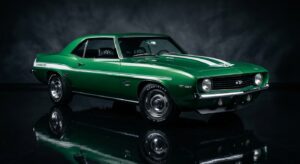
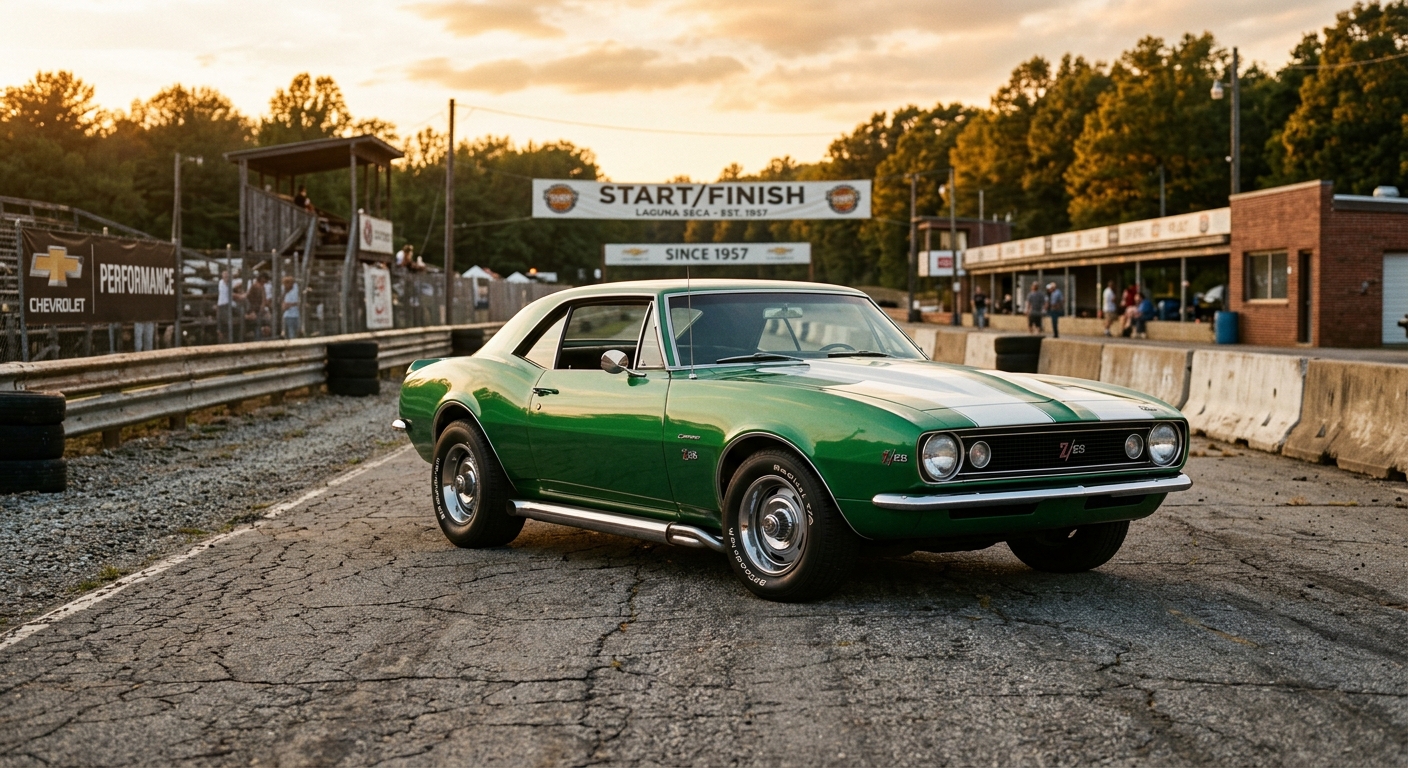
In 1967, while other manufacturers were building dragstrip heroes with big-block engines, Chevrolet took a different approach. The Z/28 wasn’t about straight-line bragging rights or quarter-mile times. Instead, it was Chevy’s scalpel-sharp response to Ford’s Mustang domination in Trans-Am racing, a purpose-built weapon that would redefine what American performance could achieve on a road course.
Born to Race
The Z/28 story begins with Trans-Am racing regulations that limited engine displacement to 305 cubic inches. Chevrolet’s solution was brilliantly simple: mate the bottom end of a 327 small-block with the cylinder heads from the legendary 283 “fuelie” engine. The result was a 302-cubic-inch powerhouse that produced 290 horsepower, though industry insiders knew the real figure was closer to 350.
This wasn’t your typical muscle car engine. The solid-lifter cam, 11:1 compression ratio, and free-flowing exhaust created a powerplant that loved to rev. Unlike the torquey big-blocks of its contemporaries, the Z/28’s 302 demanded to be worked, rewarding skilled drivers with a screaming soundtrack and explosive top-end power.
Track-Bred Chassis
The Z/28 package went far beyond just the engine. Chevrolet fitted heavy-duty suspension components, including stiffer springs and larger anti-roll bars. The close-ratio Muncie four-speed transmission featured shorter gears that kept the engine in its sweet spot, while the 3.73:1 Positraction rear end delivered lightning-quick acceleration.
Perhaps most importantly, the Z/28 rode on wider F70-14 tires mounted on 14×6-inch Rally wheels. This was cutting-edge rubber technology for 1967, providing grip levels that transformed the Camaro’s handling characteristics. The result was a car that could outmaneuver anything Detroit had previously produced.
Racing Success
The Z/28’s track credentials were proven immediately. Mark Donohue and Roger Penske campaigned Z/28s to Trans-Am championship victories in 1968 and 1969, establishing the model’s racing pedigree. These weren’t just showroom stock cars with numbers on the doors; they were genuinely competitive race machines that could run with the best from Europe.
On the street, the Z/28 offered a driving experience unlike any other American car of its era. The high-strung 302 required careful throttle work and precise shifting, rewarding skilled drivers with performance that felt more European than domestic. This was muscle car driving as a martial art rather than a blunt instrument.
Rarity and Recognition
Chevrolet built just 602 Z/28s in 1967, making it one of the rarest first-year pony cars ever produced. The package wasn’t heavily advertised, and many dealers didn’t even know it existed. Those in the know could order RPO Z28 for just $358 over the base SS 350, making it one of the greatest performance bargains in automotive history.
Today, the 1967 Z/28 is recognized as the beginning of Chevrolet’s most successful performance legacy. Every Z/28 that followed, from the wild 1970s models to today’s track-focused variants, traces its lineage back to this original track rat.
The 1967 Z/28 represents American performance at its most focused, a purpose-built machine that proved Detroit could build more than just straight-line monsters. With only 602 examples produced and racing pedigree that spans decades, it remains the most historically significant Camaro ever built. For enthusiasts seeking the purest expression of Trans-Am racing heritage, nothing else comes close.