When Jaguar announced they were going electric, skeptics wondered if the storied British marque could translate their heritage of snarling V8s and refined luxury into the silent world of electrons and batteries. The 2018 I-PACE answered those doubts emphatically, delivering a thoroughly convincing electric vehicle that feels unmistakably Jaguar while pioneering new territory for the brand.
Electric Evolution
The I-PACE represents more than just Jaguar’s first production electric vehicle; it’s a fundamental reimagining of what a luxury SUV can be. Built on a bespoke electric platform rather than adapting an existing chassis, the I-PACE benefits from ground-up EV design. The result is a vehicle that looks and feels purpose-built for electric propulsion, with proportions that would be impossible with a traditional powertrain.
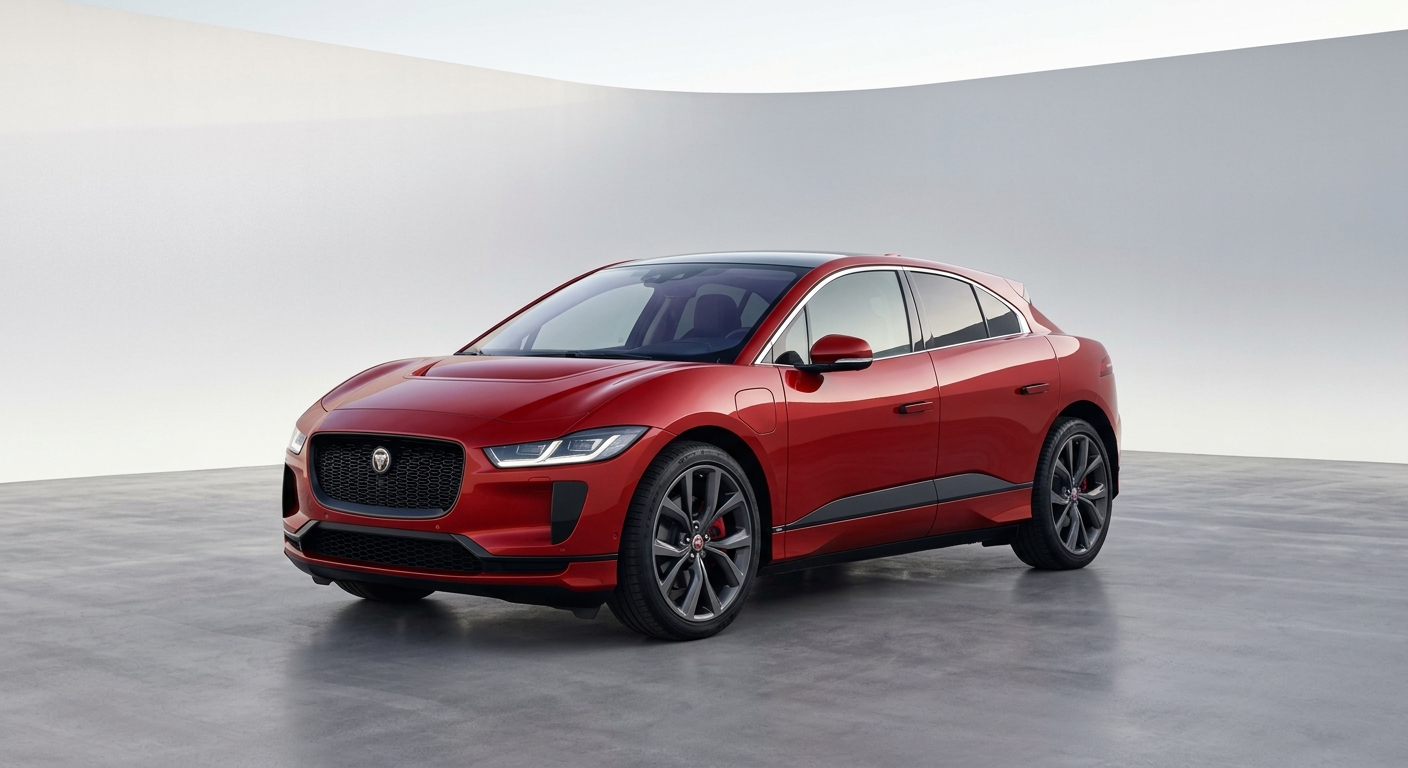
Visually, the I-PACE is striking. The coupe-like roofline and muscular haunches give it an athletic stance that distinguishes it from both traditional SUVs and the increasingly common electric crossover crowd. The closed-off grille and flush door handles hint at the aerodynamic attention to detail, while the distinctive LED lighting signature ensures it’s recognizable as a Jaguar from any angle.
Dual Motor Symphony
Beneath the sculptural bodywork lies a sophisticated dual-motor setup that produces 394 horsepower and 512 lb-ft of torque. The instant delivery of that torque is intoxicating, launching the I-PACE from standstill to 60 mph in just 4.5 seconds. But it’s not just about straight-line performance; the motors are mounted at each axle, providing intelligent all-wheel drive that can vector torque between wheels in milliseconds.
The 90 kWh lithium-ion battery pack is mounted low in the floor, creating a low center of gravity that benefits handling while maximizing interior space. Jaguar’s engineers worked extensively on the suspension tuning, employing adaptive dampers and air suspension to deliver the ride quality expected in a luxury vehicle while maintaining the dynamic character that defines the brand.
Interior Innovation
Step inside, and the I-PACE reveals one of the most thoughtfully executed electric vehicle interiors of its era. The cabin feels spacious and airy, benefiting from the flat floor and absence of a transmission tunnel. Premium materials abound, from the soft leather surfaces to the real aluminum trim, maintaining Jaguar’s reputation for luxury appointments.
The infotainment system centers around dual touchscreens: a 10-inch upper display for navigation and entertainment, and a 5.5-inch lower screen for climate and vehicle settings. While the interface can be finicky at times, the system includes comprehensive charging network integration and route planning that factors in charging stops, essential features for long-distance electric travel.
Real-World Electric Performance
With an EPA-rated range of 234 miles, the I-PACE offers respectable real-world usability for an early electric SUV. The 100 kW DC fast charging capability allows for rapid top-ups on long journeys, though charging speeds have advanced significantly since the I-PACE’s introduction. Around town, the vehicle’s efficiency and quiet operation make it an ideal luxury conveyance.
The regenerative braking system is well-calibrated, offering multiple levels of regen that can be adjusted via steering wheel paddles. In the highest setting, the I-PACE approaches one-pedal driving, though it never feels as aggressive as some electric vehicles in this regard.
Market Impact
The I-PACE arrived at a crucial moment in automotive history, proving that established luxury brands could create compelling electric vehicles that didn’t sacrifice the refinement and character their customers expected. While Tesla dominated early EV headlines with raw performance and technology, Jaguar demonstrated that traditional automaker expertise in ride, handling, and interior quality remained valuable in the electric era.
The I-PACE proved that Jaguar could adapt their DNA to the electric age without losing what made them special in the first place. While newer EVs may offer longer range or faster charging, the I-PACE remains a compelling choice for those who value traditional luxury craftsmanship in an electric package. It’s the rare early EV that feels like it was designed by people who understood both electricity and elegance.