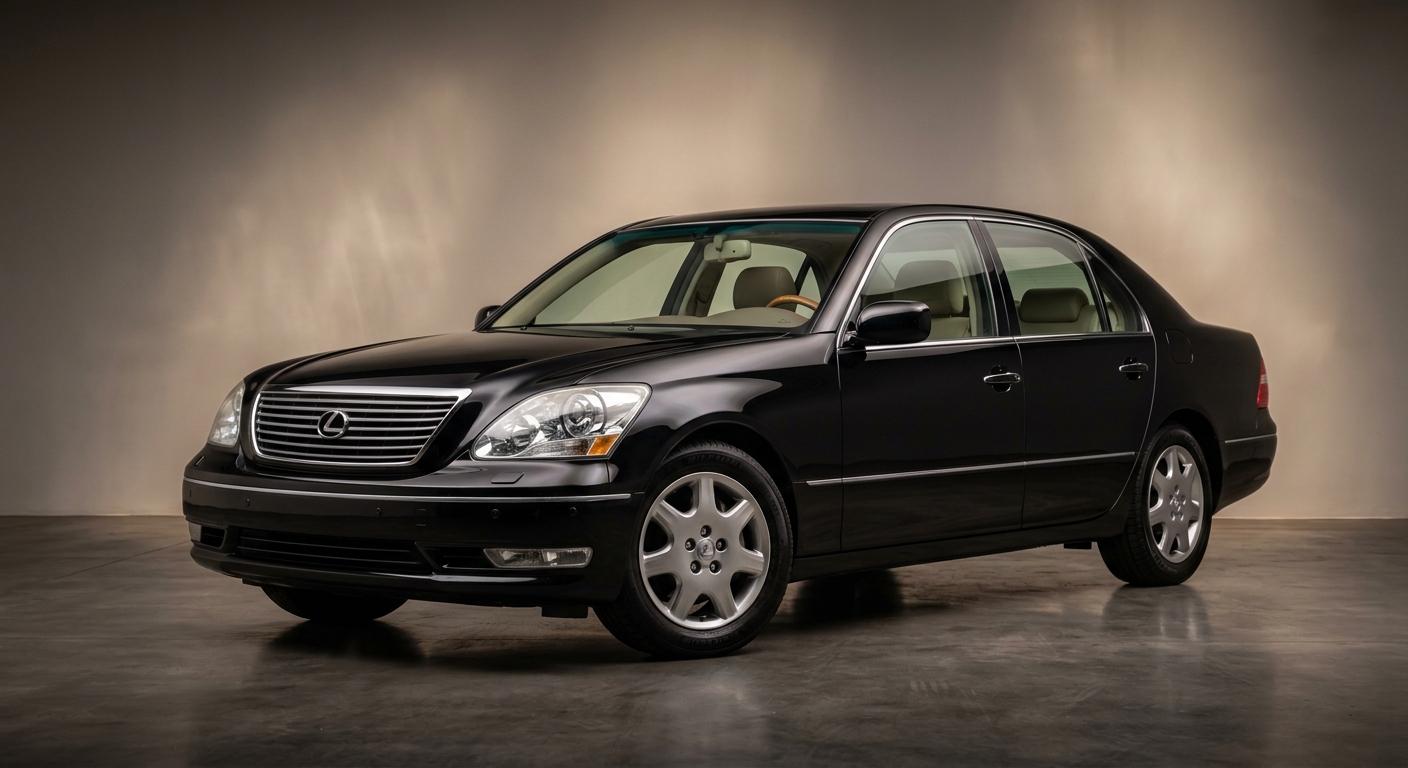
When Lexus engineers set out to create the third-generation LS, they didn’t just want to match the German luxury establishment. They wanted to obliterate it with a level of refinement and reliability that bordered on the obsessive. The result was the 2001 LS 430, a flagship sedan that redefined what buyers could expect from a luxury car in terms of both initial quality and long-term dependability.
This wasn’t just another luxury sedan launch. It was Toyota’s declaration that Japanese engineering philosophy could produce not just the most reliable luxury car, but arguably the best one, period.
The Pursuit of Perfection
The LS 430’s development story reads like a masterclass in automotive perfectionism. Lexus engineers spent over five years and $1 billion developing this flagship, testing prototypes in conditions ranging from Death Valley heat to Finnish arctic cold. They obsessed over details that other manufacturers might overlook: the way door handles felt in sub-zero temperatures, how cabin materials aged under UV exposure, the precise sound signature of the engine at idle.
The result was a sedan that felt hewn from a single piece of granite. Panel gaps were measured in fractions of millimeters. Paint quality surpassed even Rolls-Royce standards. The famous Lexus ball bearing test, where a steel ball rolled along the hood of an idling LS without falling off, became the stuff of automotive legend.
Engineering Marvel Under the Hood
At the heart of the LS 430 sat Toyota’s 3UZ-FE V8, a 4.3-liter masterpiece that produced 290 horsepower and 320 lb-ft of torque. But raw numbers told only part of the story. This engine was engineered for smoothness above all else, with internal tolerances typically reserved for racing engines and a level of refinement that made Mercedes’ V8s seem agricultural by comparison.
The five-speed automatic transmission shifted with the imperceptible smoothness of cream being poured. At highway speeds, the LS 430 created an environment so serene that passengers often couldn’t tell if the engine was running. Wind noise was virtually nonexistent, road noise was banished to another dimension, and the suspension absorbed road imperfections with the compliance of a magic carpet.
Interior Excellence
Step inside the LS 430, and you entered a realm where Japanese attention to detail reached its zenith. California walnut wood trim was hand-selected and book-matched across the dashboard. Leather was sourced from premium suppliers and treated to resist fading and wear for decades. Every switch, every button, every surface was engineered to feel substantial and operate with mechanical precision.
The front seats offered heating, cooling, and memory functions that were light years ahead of contemporary luxury cars. Rear passengers enjoyed limousine-like space and comfort, with available massage functions and individual climate zones. The Mark Levinson audio system delivered concert-hall acoustics that put most home stereo systems to shame.
Driving the Dream
Behind the wheel, the LS 430 delivered a driving experience that prioritized serenity over sportiness. The steering was light and accurate, the brakes strong and progressive, and the ride quality simply sublime. This wasn’t a car for carving canyon roads; it was a vehicle designed to transport its occupants in absolute comfort across continents.
On the highway, the LS 430 transformed into a private jet for the road. Triple-sealed doors created an oasis of calm, while the advanced suspension system smoothed even the roughest pavement. The V8 engine provided effortless acceleration when needed but remained whisper-quiet during normal driving.
The Reliability Revolution
What truly set the LS 430 apart wasn’t just its initial quality, but its legendary long-term reliability. While German luxury cars began showing electrical gremlins and mechanical quirks after a few years, the LS 430 continued operating with Swiss watch precision for decades. Stories of LS 430s reaching 300,000, 400,000, even 500,000 miles with only routine maintenance became common, cementing Lexus’ reputation for building bulletproof luxury cars.
The LS 430 stands as perhaps the greatest achievement in luxury sedan engineering, a car that redefined what buyers could expect in terms of refinement, reliability, and long-term satisfaction. While Germans built luxury cars with impressive performance and badge prestige, Lexus built the luxury car you’d actually want to own for decades. Two decades later, pristine LS 430s continue to deliver that magic carpet ride, proving that true luxury isn’t just about initial impressions, but lasting excellence.