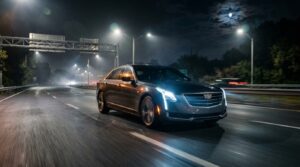
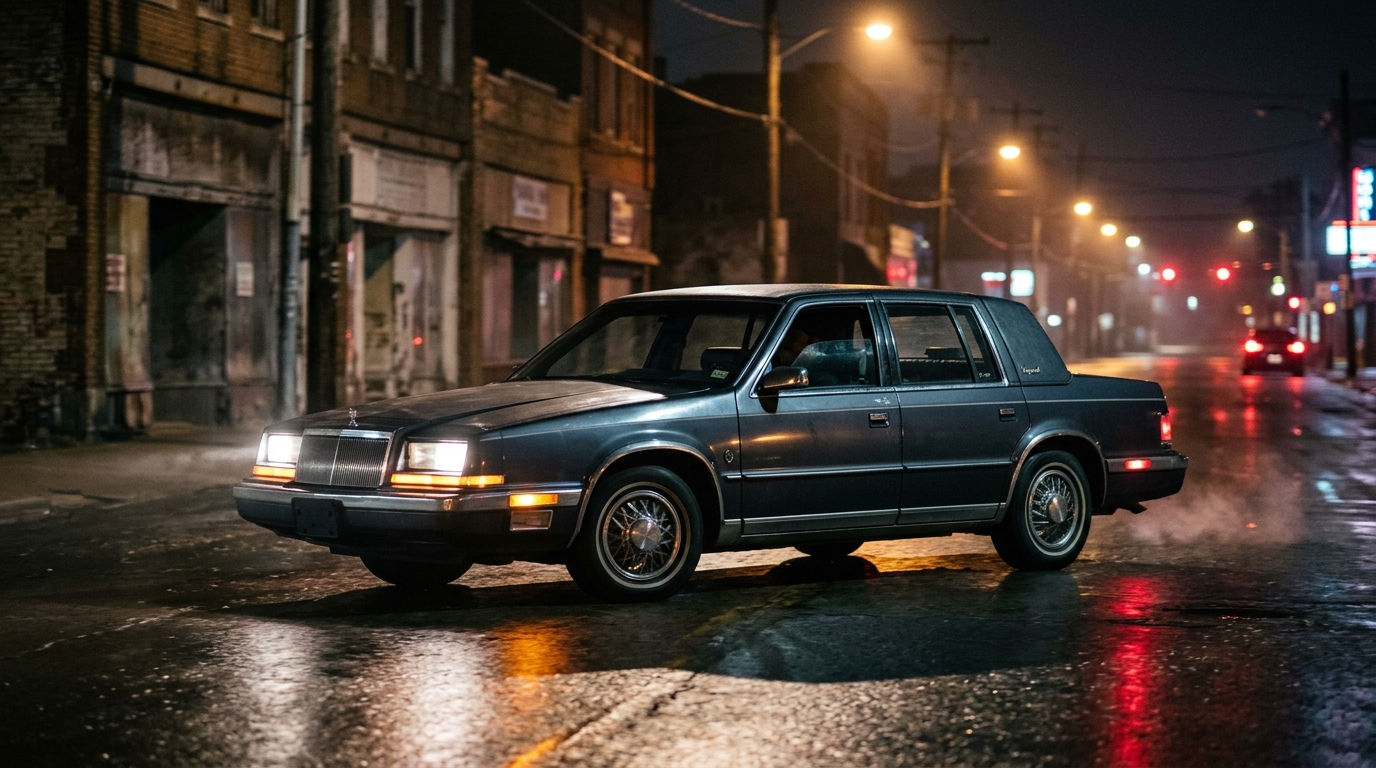
It is 11:40 p.m., the avenues have emptied out, and the only sound inside the cabin is the faint hush of a V6 and the soft hiss of the climate control. The 1990 Chrysler Imperial was never going to win a street race, but under sodium light with the seat heaters warming your back, it makes a different kind of argument: that the best way to end a day is to cruise, not to sprint.
The Last Flagship Standing
The Imperial nameplate stretches back to 1926, when Chrysler used it to challenge Cadillac and Lincoln at the very top of the American market. The name went through a long run, was spun off as its own marque in the mid-1950s, then folded back into Chrysler. The 1990 model belongs to the final act. The Imperial was reintroduced for 1981 as a personal luxury coupe, then relaunched for 1990 as a front-wheel-drive four-door built on Chrysler’s Y-body platform, the same basic architecture that underpinned the New Yorker Fifth Avenue. It was built at the Jefferson Avenue plant in Detroit and was positioned above the New Yorker as the brand’s price and prestige leader.
Fair warning: this was a car caught between eras. The Imperial arrived as Lexus and Infiniti were rewriting the luxury playbook, and Chrysler answered with what it knew best: plush seating, acres of standard equipment, and a ride tuned to feel like a lounge chair.
Driving Impressions After Dark
The Imperial’s party piece after sunset is how effortlessly it lets you disengage from the day. The 3.3-liter V6 is smooth and unobtrusive, and the four-speed Ultradrive automatic, Chrysler’s electronically controlled unit, shifts with a quiet, mostly seamless character once it is warm. Power figures are modest by today’s standards, but at 40 to 50 mph on an empty boulevard the car never feels strained. There is enough torque to slip past a slow truck and settle back into the lane without drama.
Ride quality is the headline. The suspension soaks up pavement seams, manhole covers, and the patched asphalt that every city sprouts after winter. Steering is light and numb, and the body leans in corners with the dignified slowness of a boat swinging at anchor, but that is entirely the point. On a late run along a river road, the Imperial felt less like a machine you drive and more like a room you inhabit.
Lights, Glow, and Visibility
Headlight technology in 1990 meant sealed composite lamps, and the Imperial’s setup is adequate rather than inspiring. Output is warm and slightly yellow compared with modern LED or HID systems, and the pattern throws a decent wash on the road ahead but lacks the sharp cutoff and long reach we take for granted today. On dark rural stretches you will want to keep your speed reasonable. The upside is that the glow is easy on the eyes, and the tall greenhouse and thin pillars give excellent outward visibility in the dark, which is a quiet luxury of its own.
Inside, the cabin takes on a nostalgic glow after dark. The instrument cluster uses a classic analog layout with soft backlighting, and the plush, button-tufted seating looks even more inviting under the dome light. The interior is trimmed in thick carpeting and velour or optional leather depending on configuration, with generous standard equipment including power seats, automatic climate control, and a premium audio system. At night, the whole cabin feels like a private lounge.
Sound and Mood
The V6 does not sing, but it does not need to. It murmurs. Wind and road noise are well suppressed for the era, and the stereo becomes the main event. Roll the windows up, tune to a late-night jazz station, and the Imperial delivers an old-school sense of occasion that few modern luxury cars manage.
Where It Falls Short
Be realistic: this is not a sports sedan. Braking is adequate but unremarkable, body roll is pronounced, and the quality of some interior plastics and switchgear reflects Chrysler’s cost pressures at the time. Reliability, particularly around the early Ultradrive transmission, is a known weak point, so a well-documented service history matters enormously if you are shopping for one today. Fuel economy is also unremarkable for a V6 of this size.
Why It Matters Now
The 1990 Imperial represents the last gasp of a certain American luxury formula, soft, quiet, and loaded with equipment, before the segment was reshaped by import competition. It survived through the 1993 model year before the nameplate went dormant. Today it is a bargain way to experience that vanishing philosophy, and as a midnight cruiser it holds a charm that faster, sharper cars cannot replicate.
Editor’s verdict: The 1990 Chrysler Imperial is no performance car, and it never pretended to be. As a quiet, plush, time-capsule midnight cruiser, it is a rolling reminder of what American luxury once meant, and it is cheap enough now to enjoy without guilt.