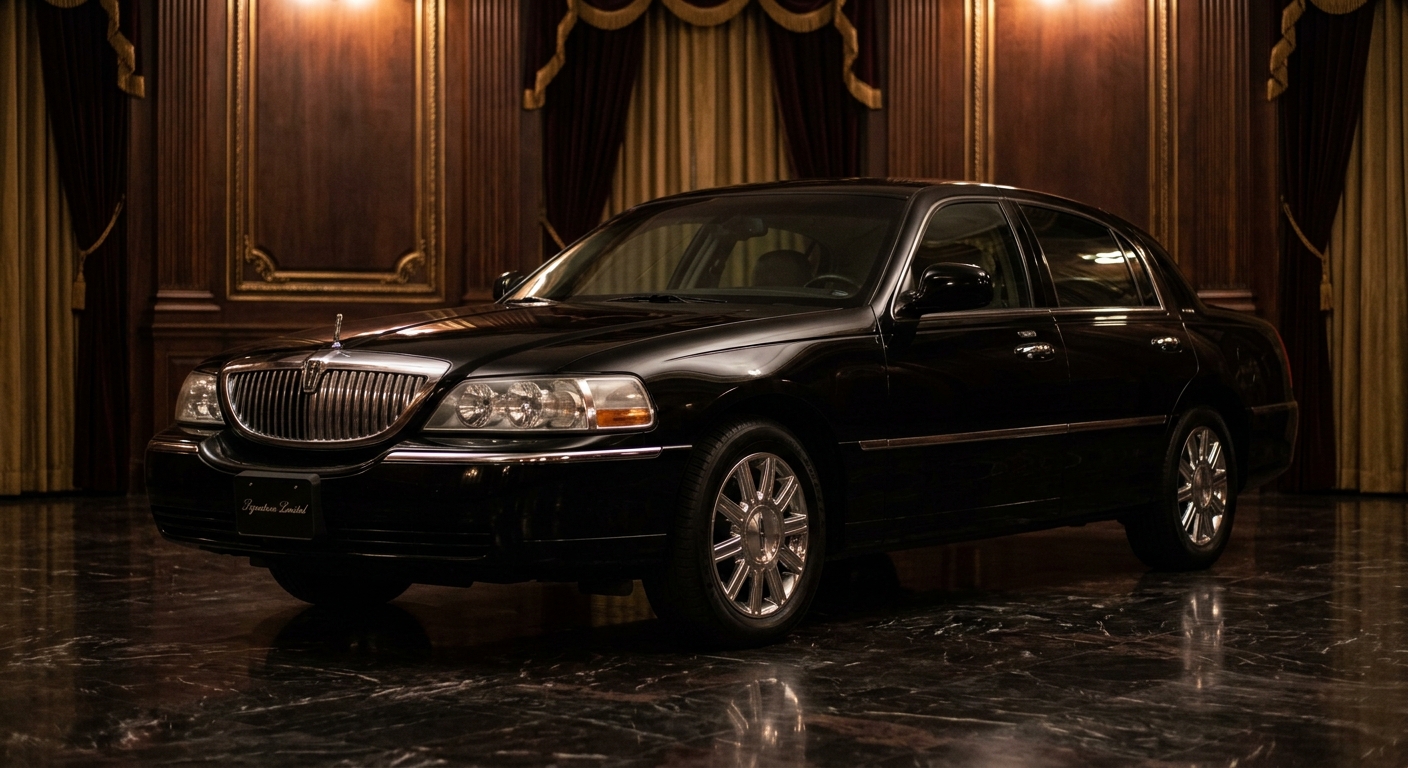
In 2011, Lincoln closed the book on one of America’s most enduring luxury sedans with the final Town Car. For over three decades, the Town Car had served as the gold standard for traditional American luxury, ferrying dignitaries, executives, and anyone who appreciated the comfort of a living room on wheels. The Signature Limited represented the pinnacle of this philosophy, offering unapologetic size, comfort, and presence in an automotive landscape increasingly dominated by European sport sedans and emerging crossovers.
The Final Chapter
The 2011 Town Car Signature Limited was built on Ford’s venerable Panther platform, a body-on-frame architecture that traced its roots back to the late 1970s. While critics often dismissed this as outdated, the platform delivered exactly what Town Car buyers valued: a smooth, isolated ride quality that modern unibody sedans struggled to match. The car’s 4.6-liter V8 produced a modest 239 horsepower, but power was never the point. This was about effortless cruising, whisper-quiet cabins, and the kind of stately presence that announced your arrival without saying a word.
At nearly 19 feet long and riding on a 117.7-inch wheelbase, the Town Car commanded attention through sheer size alone. The Signature Limited trim added chrome accents, premium leather seating, and wood grain trim that harked back to luxury car traditions of the past. While European competitors focused on sport-tuned suspensions and aggressive styling, Lincoln remained committed to the pillowy ride and serene cabin that had defined American luxury for generations.
Interior Sanctuary
Step inside the Town Car’s cabin, and you’re transported to an era when luxury meant space, comfort, and quietude above all else. The Signature Limited’s leather-appointed seats were designed for cross-country comfort, not lateral support during spirited driving. The rear seat offered limousine-like legroom, making this a chauffeur’s dream and an executive’s mobile office. Premium features included heated and cooled front seats, a premium audio system, and Lincoln’s SYNC infotainment technology.
The build quality reflected Ford’s decades of experience with the platform. Materials felt substantial, switches operated with satisfying precision, and the overall ambiance conveyed solidity and permanence. This wasn’t cutting-edge luxury in the German sense, but rather a refined expression of American comfort and convenience.
Driving Experience
Behind the wheel, the Town Car delivered exactly what its buyers expected: effortless progress with minimal driver involvement. The 4.6-liter V8, paired with a four-speed automatic transmission, provided adequate acceleration for highway merging and confident passing. The engine’s 287 lb-ft of torque delivered its power in a smooth, linear fashion that prioritized refinement over excitement.
The Town Car’s steering was light and detached, perfect for navigating parking lots and making three-point turns manageable despite the car’s substantial dimensions. The suspension absorbed road irregularities with remarkable effectiveness, though body roll in corners reminded you that this was a comfort-first vehicle. On long highway stretches, few cars could match the Town Car’s combination of stability, quietness, and passenger comfort.
Market Position and Legacy
By 2011, the Town Car faced a challenging market reality. Luxury buyers had largely migrated to SUVs and crossovers, while those still interested in large sedans often preferred the sport-oriented dynamics of German competitors. The Town Car’s traditional approach to luxury, while beloved by its loyal customer base, seemed increasingly out of step with contemporary preferences.
However, certain market segments continued to value what the Town Car offered. Fleet operators appreciated its durability and low maintenance costs. Livery services valued its spacious interior and commanding presence. Senior buyers, in particular, remained loyal to the Town Car’s traditional luxury values and intuitive controls.
The 2011 Town Car Signature Limited stands as a testament to a different philosophy of luxury, one that prioritized passenger comfort over driver engagement and traditional elegance over contemporary flash. While it may have seemed anachronistic in its final year, its unwavering commitment to old-school American luxury values makes it a fascinating capstone to an automotive era that will likely never return. For those who understood what it represented, the final Town Car was perfect exactly as it was.