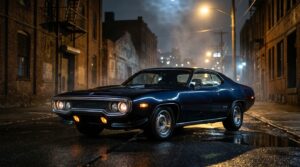
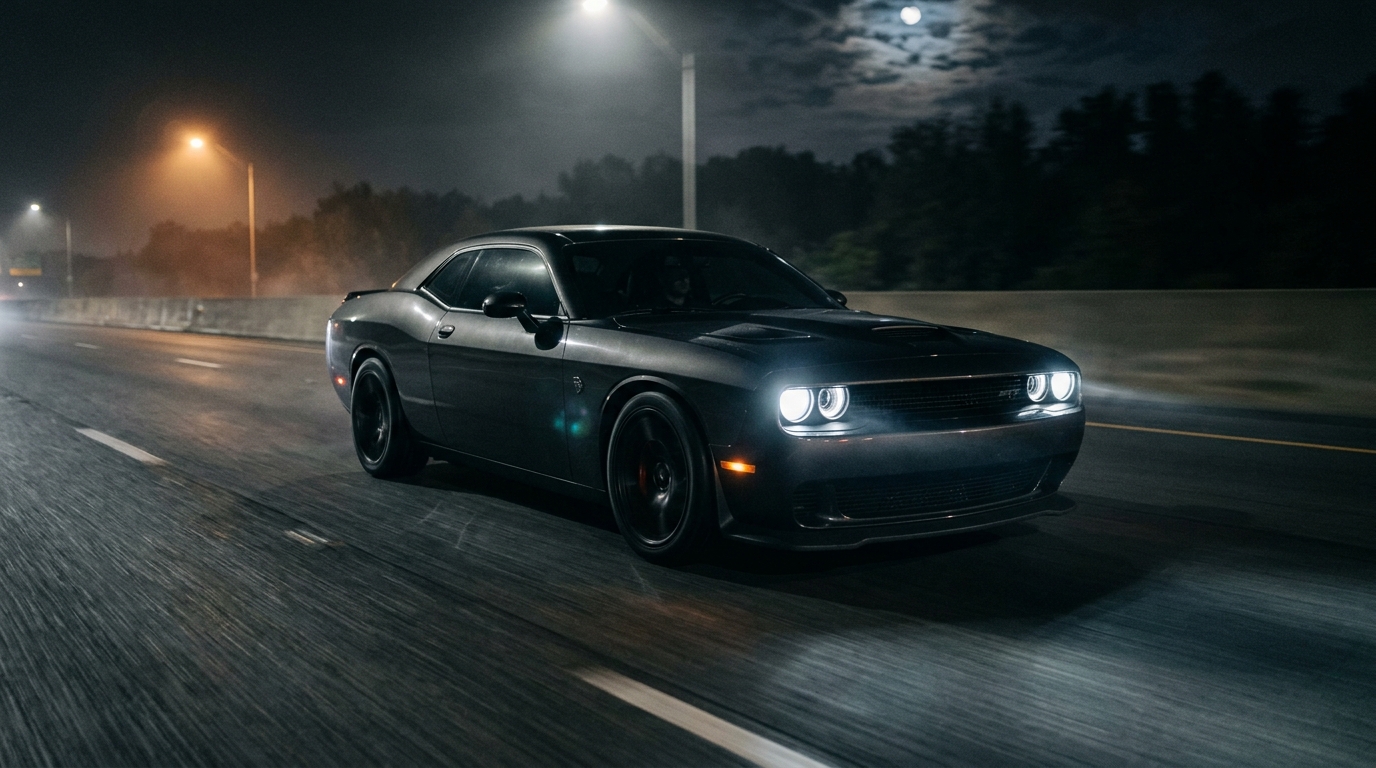
It is 1 a.m. and the highway is empty in both directions. Somewhere behind the grille of a 2015 Dodge Challenger SRT Hellcat, a supercharger is spinning up with a sound like a jet turbine that learned to hate the speed limit. This is not a car you sneak out of the neighborhood in. It announces itself the moment you touch the start button, and at night, in the dark, it feels like the whole world is listening.
The Car That Broke the Muscle Car Scoreboard
When Dodge unveiled the Challenger SRT Hellcat for 2015, the number on the spec sheet seemed like a typo: 707 horsepower. Dodge pulled that figure from a supercharged 6.2-liter HEMI V8, an all-aluminum engine with a 2.4-liter IHI twin-screw supercharger pushing around 11.6 psi of boost. It made the Hellcat the most powerful production muscle car in history at launch, and it triggered a horsepower war that Detroit is still fighting. Torque is rated at 650 lb-ft, which is enough to cook the rear tires in a good portion of the first three gears if you are not careful with your right foot.
Dodge built it as a proper factory halo car. The model arrived with a larger hood with a dual-intake system, Brembo brakes, a unique front fascia and a rear differential built to handle the abuse. Dodge also introduced the Hellcat with a unique key fob system: a black key limited power to 500 hp, while the red key unlocked the full 707. If you wanted to loan the car to your nephew, that was a very good idea.
Driving It After Dark
Night is when the Hellcat makes the most sense. Daylight shows you a heavy, wide, two-ton coupe. After sunset, the highway empties and the car becomes something more elemental. The supercharger whine climbs in the cabin as the revs build, layered over the deep burble of the HEMI through the quad exhaust tips. In the dark, with no visual references to the speed except the white dashes flicking past, the sound becomes the speedometer.
Acceleration is staggering even by modern standards. Dodge quoted a 0-60 time of around 3.6 seconds in the right conditions, though most testers found that traction, not power, was the limit. The standard car runs the quarter mile in the low 11-second range, and a claimed top speed of 199 mph in manual form, 195 mph with the automatic. On a dark, empty road, you feel that thrust in your chest and the car squirms under power, the rear tires working for every ounce of grip. With the traction control on and the launch control engaged, the car is surprisingly composed. With it off, it is a bar fight.
Headlights and Visibility
The Hellcat came with HID projector headlights as standard on the SRT trims, and they do a respectable job punching down a dark road. They are bright and well-focused, with a wide spread that helps on twisty sections. Forward visibility is good, but the Challenger’s high beltline, thick roof pillars and tall rear deck mean the view out is more bunker than panorama. You sit low and look out through a slot. At night, when you cannot rely on a quick glance over the shoulder, the blind spot monitoring system proves its worth, and the rearview camera is a genuine help in tight parking lots.
Handling the Corners
Make no mistake: this is a straight-line car first. The Challenger platform dates back to the Mercedes-derived LX architecture, and the Hellcat carries about 4,449 lbs of curb weight. It leans in corners, and the steering is light and a bit numb. But the adaptive suspension, the beefy Pirelli P Zero tires and the 15.4-inch front Brembo rotors give it more composure than the numbers suggest. Point it down a sweeping highway on-ramp and it grips and rotates with surprising grace. Push too hard on a tight road and you will remember how much car you are steering.
Living With a Beast
The cabin is wide and comfortable, with supportive front seats and a rear bench that actually fits adults. The Uconnect 8.4-inch touchscreen is one of the better infotainment systems of its era, easy to use and bright at night without being distracting. The big gauge cluster with its red and white illumination looks properly retro and sporty after dark. Fuel economy is what you would expect: the EPA rates it at around 13 mpg city and 22 mpg highway with the automatic, and you will see numbers closer to the low end when you are having fun. The 18.5-gallon tank empties quickly.
Then there is the price. The Challenger SRT Hellcat started at around $60,990 in 2015, plus a gas guzzler tax. For 707 horsepower, that was a staggering bargain, and dealers quickly added markups that made the car a collector’s item the moment it hit showrooms. Today, clean first-year examples hold their value remarkably well.
Editor’s verdict: The 2015 Challenger Hellcat is loud, heavy, thirsty and wildly impractical, and that is exactly the point. On a dark, empty highway with the supercharger screaming, it delivers an experience no modern car can match for the money. It is the muscle car at its most gloriously unreasonable.