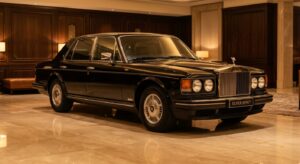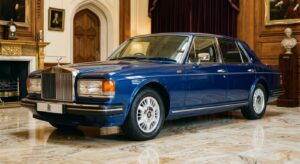
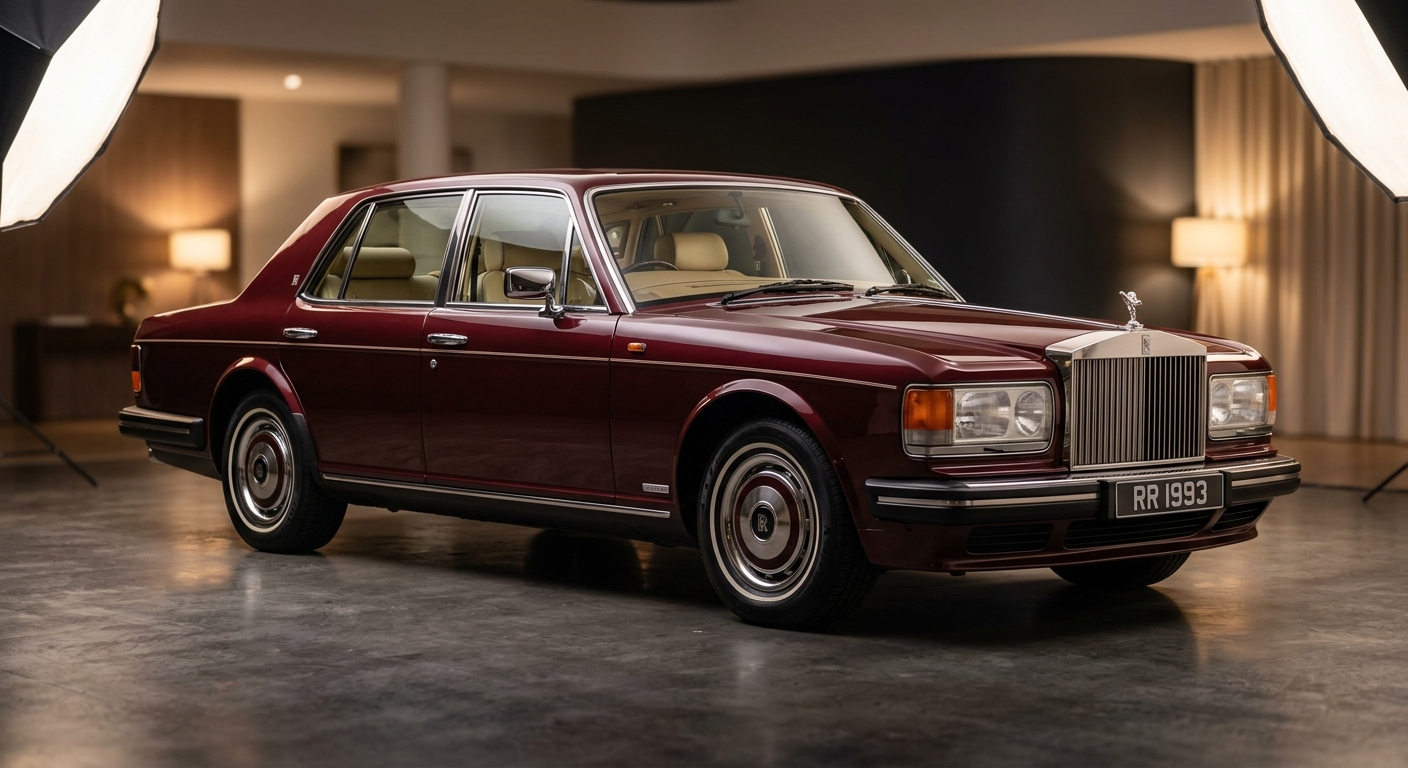
In 1993, the world was changing rapidly. The internet was emerging, mobile phones were shrinking, and the automotive industry was racing toward computerization. Yet in Crewe, England, craftsmen were still hand-stitching leather and polishing walnut veneer for what would become the final chapter of an era: the Silver Spur III, the last of the analog Rolls-Royce sedans before digital technology fundamentally transformed the brand.
The Twilight of Analog Luxury
The Silver Spur III represented the culmination of decades of refinement to Rolls-Royce’s traditional formula. Built on the same fundamental architecture that had underpinned the Silver Shadow since 1965, this final iteration incorporated nearly three decades of evolutionary improvements while maintaining the marque’s commitment to handcrafted excellence.
Under the imposing hood sat Rolls-Royce’s venerable 6.75-liter V8, an engine that traced its lineage back to 1959. By 1993, this aluminum powerplant had been refined to produce 240 horsepower and, more importantly, massive torque delivery from just above idle. The engine’s character perfectly matched the car’s mission: effortless propulsion with cathedral-like quietness.
Craftsmanship as Art Form
What set the Silver Spur III apart wasn’t its performance figures but its construction philosophy. Each car required over 450 hours to build, with craftsmen selecting wood veneers by hand and matching leather hides with the precision of a master tailor. The interior featured acres of Connolly leather, hand-polished Circassian walnut, and deep-pile Wilton carpeting that felt more appropriate for a gentleman’s club than a motor car.
The attention to detail bordered on obsessive. Door handles were weighted to provide the perfect tactile response. The gear selector moved through its gates with the precision of a Swiss watch. Even the ashtrays were crafted from crystal, because Rolls-Royce believed that every touchpoint should reflect the car’s extraordinary price tag.
The Driving Experience
Behind the wheel, the Silver Spur III delivered an experience fundamentally different from any modern luxury sedan. The steering was light but not particularly precise, the suspension absorbed imperfections with supernatural composure, and the entire car moved with the stately grace of an ocean liner rather than the urgency of a sports sedan.
This was intentional. Rolls-Royce engineers tuned every system to prioritize serenity over sportiness. The four-speed automatic transmission shifted so smoothly that passengers often couldn’t detect gear changes. Road noise was virtually non-existent, and the cabin remained library-quiet even at highway speeds.
A Vanishing Philosophy
The Silver Spur III’s significance extends beyond its mechanical specifications. It represented the end of an automotive philosophy that prioritized craftsmanship over technology, character over capability. By the mid-1990s, even Rolls-Royce would embrace electronic systems, eventually leading to BMW ownership and a fundamental shift in the brand’s approach to luxury.
Contemporary buyers paid approximately $180,000 for this privilege, making the Silver Spur III one of the most expensive sedans available. That investment bought exclusivity, hand-crafted quality, and membership in a very small club of individuals who valued traditional British luxury above all else.
The Silver Spur III stands as automotive archaeology, preserving techniques and philosophies that vanished when the industry embraced digital efficiency. Today, these handcrafted titans serve as rolling reminders of when luxury meant something fundamentally different. In a world of touchscreens and algorithms, the analog Rolls remains gloriously, stubbornly analog.