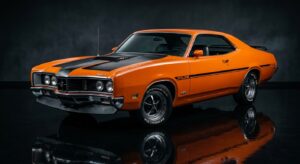
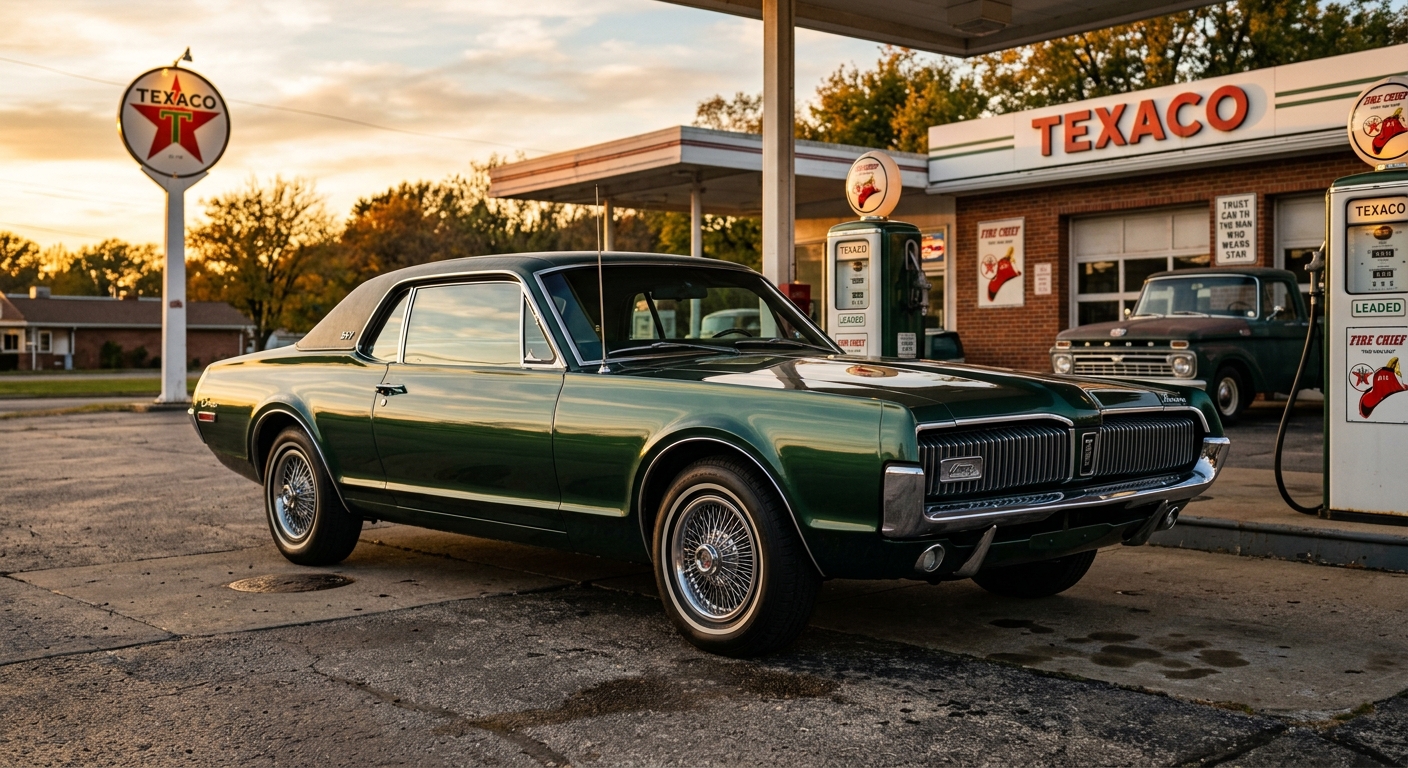
In 1967, while Chevrolet was building raw, straightforward Camaros and Ford was cranking out no-nonsense Mustangs, Mercury took a different approach. The Cougar XR-7 represented something more refined: a muscle car that wouldn’t embarrass you at the country club, yet could still lay rubber with the best of them.
This was Mercury’s masterstroke in the pony car wars, a machine that bridged the gap between European sophistication and American horsepower. With its hidden headlights, sequential turn signals, and luxury appointments that put contemporary Mustangs to shame, the XR-7 carved out its own unique territory in the muscle car landscape.
The Gentleman’s Hot Rod
Step inside a 1967 Cougar XR-7 and you’re immediately struck by how upscale everything feels compared to its Ford cousin. The XR-7 package brought leather-appointed bucket seats, a wood-grain dashboard, and a full complement of gauges housed in a distinctive “dogbone” cluster that would become a Cougar trademark.
But the real magic happened when you turned the key. The standard 289 V8 was adequate, but savvy buyers opted for the 390 cubic inch big block that transformed the Cougar from refined cruiser into legitimate street fighter. With 320 horsepower on tap, this engine gave the XR-7 the grunt to back up its sophisticated looks.
European Influences, American Heart
Mercury’s designers drew heavy inspiration from European grand touring cars when crafting the Cougar’s proportions. The result was a longer, lower silhouette than the Mustang, with more dramatic fender flares and a distinctive “Coke bottle” waist that gave the car genuine presence on the road.
The hidden headlight setup wasn’t just a styling gimmick, it was a statement of intent. When the Cougar’s eyes opened, they revealed a predator ready to hunt. Combined with the sequential rear turn signals borrowed from the Thunderbird, these details elevated the XR-7 above typical muscle car fare.
Performance That Matched the Promise
On the road, the 1967 XR-7 delivered a driving experience that was both civilized and exciting. The longer wheelbase compared to the Mustang provided better stability at highway speeds, while the more sophisticated suspension tuning struck an excellent balance between comfort and control.
With the 390 engine and optional four-speed manual transmission, the XR-7 could run with anything Detroit was building in 1967. Zero to 60 mph came up in the mid-six-second range, impressive numbers that were delivered with a smoothness that set the Cougar apart from more brutish competitors.
The 1967 Mercury Cougar XR-7 remains one of the most undervalued classics in the muscle car universe, offering genuine style and performance at a fraction of what comparable Mustangs or Camaros command. It proved that American muscle could have genuine sophistication without sacrificing any of the thrills that made the era so special.