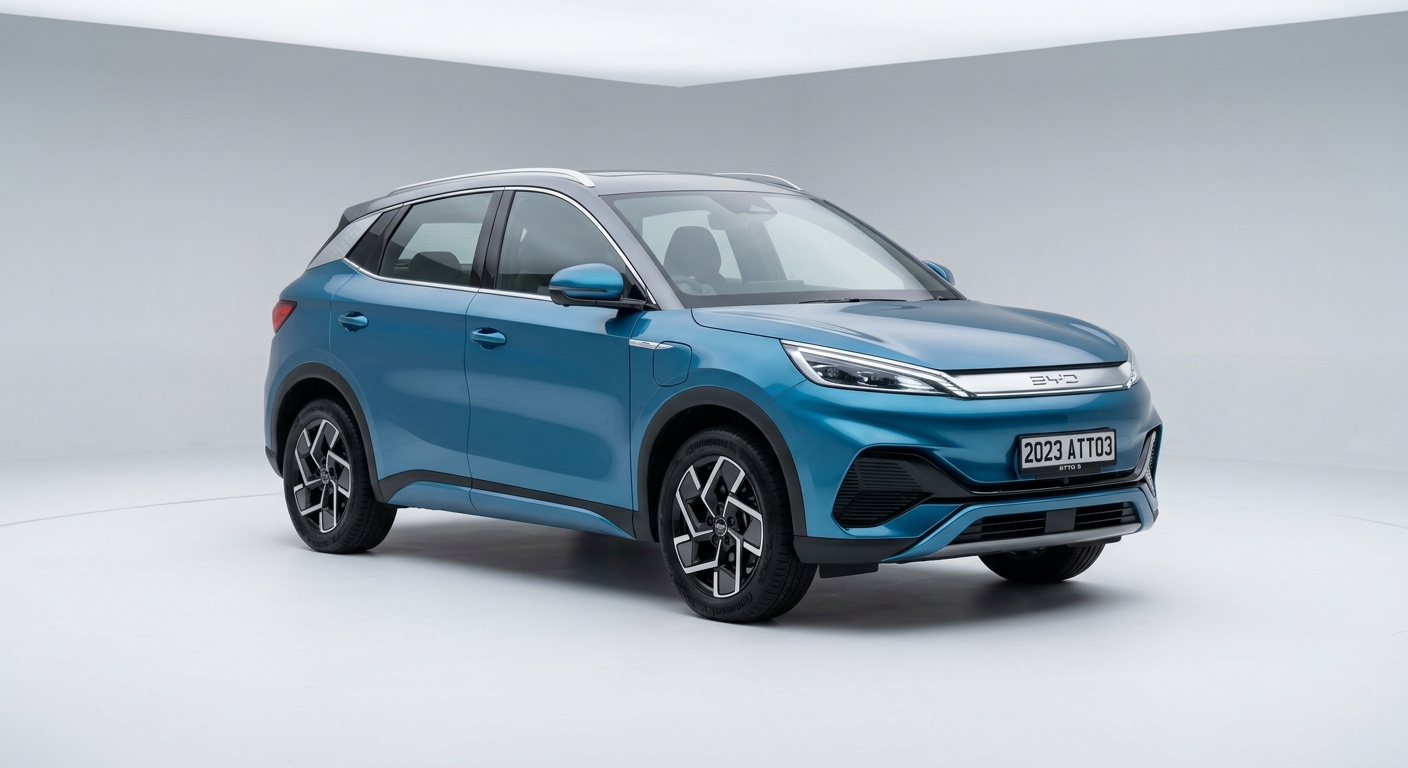
While European and American manufacturers wrestled with battery supply chains and production delays, Chinese automaker BYD quietly became the world’s second-largest EV producer. The 2023 Atto 3 represents their first serious push into global markets, bringing proven technology and aggressive pricing to the competitive compact crossover segment.
Behind the wheel, the Atto 3 reveals itself as a surprisingly mature product. The immediate torque delivery and smooth acceleration feel refined rather than aggressive, prioritizing efficiency over excitement. BYD’s Blade Battery technology, a structural lithium iron phosphate design, promises exceptional safety and longevity while keeping costs reasonable.
Design and Interior Philosophy
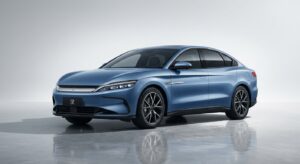
The Atto 3’s exterior strikes a balance between mainstream appeal and distinctive character. Clean lines avoid the polarizing designs of some Chinese EVs, while subtle details like the closed-off grille and aerodynamic wheels signal its electric nature. The proportions work well, creating a substantial presence without appearing oversized.
Inside, BYD takes a playful approach that sets the Atto 3 apart from German rivals. The rotating 12.8-inch touchscreen can switch between portrait and landscape modes depending on the application. Guitar string-inspired door handles and athletic shoe-designed air vents add personality, though build quality varies across different trim pieces.
Technology Integration
The infotainment system runs BYD’s DiLink interface, which proves more intuitive than many European alternatives. Physical climate controls remain thankfully present, while wireless charging and multiple USB ports accommodate modern connectivity needs. The system supports over-the-air updates, keeping the vehicle current with evolving software features.
Driving Dynamics and Performance
BYD tuned the Atto 3 for comfort rather than sport, resulting in a composed but uninspiring driving experience. The single front-mounted motor delivers adequate acceleration for daily use, while the suspension prioritizes ride quality over handling precision. Road noise remains well-controlled, creating a serene cabin environment during highway cruising.
Regenerative braking offers multiple settings, though the transition between regen and friction braking could be smoother. The steering lacks feedback but provides accurate control, suitable for the target audience prioritizing practicality over engagement. In urban environments, the Atto 3 feels right-sized and maneuverable.
Range and Efficiency
Real-world testing reveals range figures that closely match official estimates, a refreshing change from some optimistic manufacturer claims. The LFP battery chemistry means slightly lower energy density compared to NCM alternatives, but improved thermal stability and cycle life offset this compromise. DC charging speeds prove competitive if not class-leading.
Market Positioning
The Atto 3 arrives at a crucial moment for Chinese automotive exports. Quality perceptions continue improving while pricing remains aggressive compared to established brands. BYD’s vertical integration, including battery production, allows margins that traditional manufacturers struggle to match while maintaining profitability.
Safety ratings from Euro NCAP validate the structural integrity, while the Blade Battery’s nail penetration test results demonstrate BYD’s commitment to thermal management. These credentials prove essential for consumer acceptance in safety-conscious markets.
The BYD Atto 3 succeeds as a compelling value proposition rather than an emotional purchase. Its combination of proven battery technology, practical packaging, and aggressive pricing positions it well against established rivals. While enthusiasts might find the driving experience uninspiring, the Atto 3 delivers exactly what mainstream EV buyers actually need: reliable electric mobility at an accessible price point.