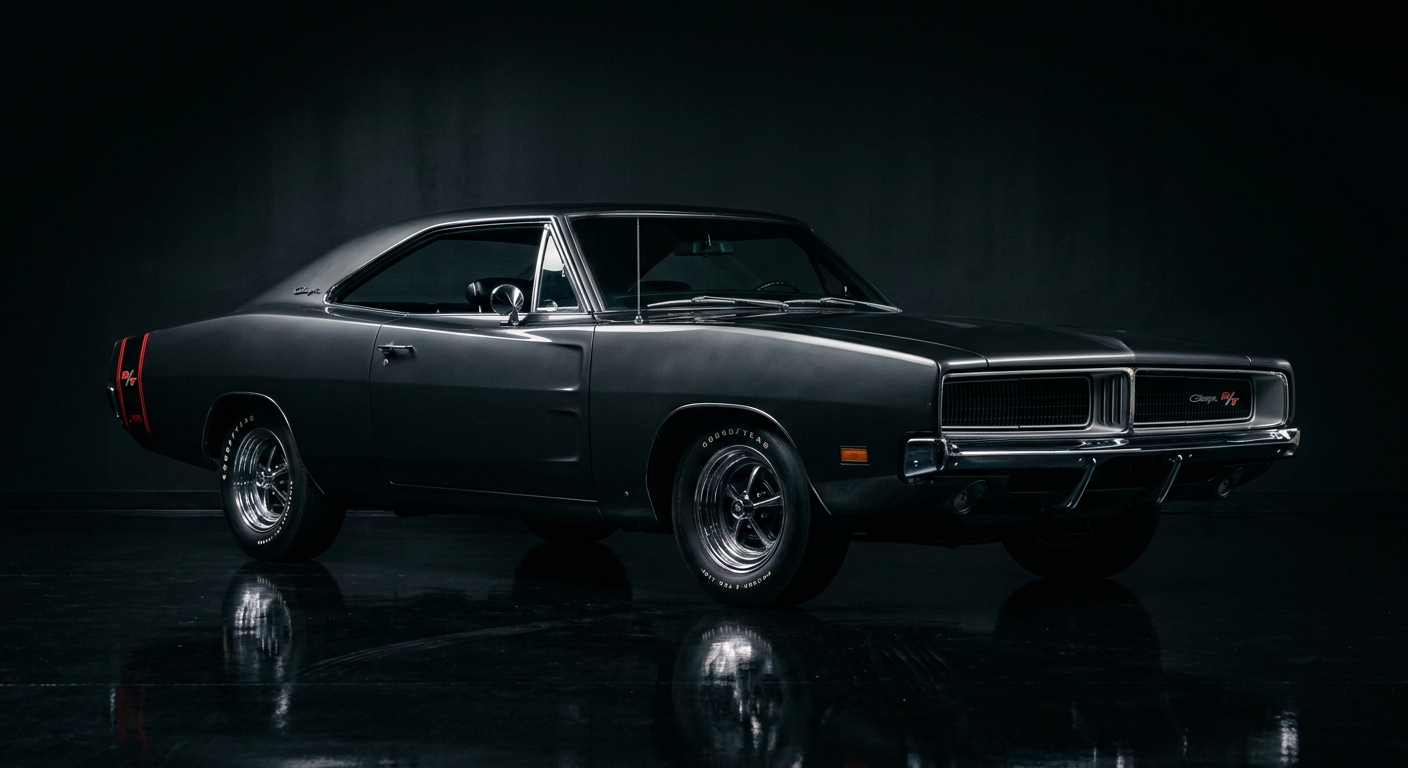
In 1969, the muscle car wars reached their zenith, and few combatants were as formidable as the Dodge Charger R/T. With its swooping Coke-bottle silhouette and thunderous 440 Magnum V8, this was Mopar’s answer to the Chevelle SS and GTO Judge. More than half a century later, it remains the definitive expression of American automotive aggression.
Design That Defined a Generation
The 1969 Charger represented the second generation of Dodge’s flagship muscle car, and it was a quantum leap from its predecessor. Gone was the fastback roofline that had limited rear visibility and practicality. In its place came one of the most perfectly proportioned muscle cars ever created, with a graceful C-pillar that flowed seamlessly into the rear deck.
The front end was pure menace: four round headlights nestled behind a split grille, flanked by aggressive fender bulges that hinted at the power lurking beneath. The rear featured a distinctive light treatment with four round taillights that would become a Charger trademark. Every line on the car suggested speed, even when standing still.
The Heart of the Beast
Under the hood of our featured R/T lies the legendary 440 Magnum V8, a 7.2-liter monument to American engineering excess. This wasn’t the hairiest engine available (that honor went to the 426 Hemi), but the 440 struck the perfect balance between outright performance and streetability. With 375 horsepower and a massive 480 lb-ft of torque, it delivered the kind of low-end grunt that could light up the rear tires at will.
The engine’s character is intoxicating: a lumpy idle that announces its presence from blocks away, building to a thunderous roar under acceleration. This is visceral, analog power delivery that connects driver to machine in a way that modern cars, for all their sophistication, struggle to match.
Driving the Legend
Behind the wheel, the Charger R/T is an exercise in controlled violence. The steering is heavy and unassisted, requiring real muscle to maneuver at parking lot speeds but weighting up beautifully at highway pace. The suspension, tuned for the era’s smooth highways rather than today’s potholed streets, delivers a surprisingly composed ride when the road cooperates.
Acceleration is the Charger’s party trick. Mash the throttle and the big Mopar launches forward with a fury that still impresses today. The four-speed manual transmission requires deliberate inputs, its long throws and heavy clutch serving as reminders that this car demands respect and attention from its pilot.
Cultural Icon
The 1969 Charger R/T transcended its role as mere transportation to become a cultural touchstone. While the General Lee made the basic Charger famous, the R/T represented the breed at its most potent. It appeared in countless films and TV shows, often cast as either the hero’s ride or the villain’s weapon of choice.
This cultural significance has helped maintain strong collector interest. Clean examples command serious money today, with numbers-matching 440 cars often exceeding six figures. Hemi cars, when they surface, can bring multiples of that figure.
The Competition
In 1969, the Charger R/T faced stiff competition from GM’s A-body muscle cars and Ford’s resurgent performance lineup. The Chevelle SS 396 offered similar performance in a slightly smaller package, while the Plymouth Road Runner provided comparable thrills at a lower price point. But none matched the Charger’s distinctive styling or sheer presence on the road.
The 1969 Dodge Charger R/T remains one of the most charismatic muscle cars ever built, combining stunning looks with thunderous performance in a package that still stops traffic today. While it may lack the refinement modern drivers expect, its raw character and undeniable presence make it a worthy automotive icon. This is American muscle at its most pure and unapologetic.