Full Spec Motors

The Purist’s Electric GT, 2020 Polestar 1

3 min read

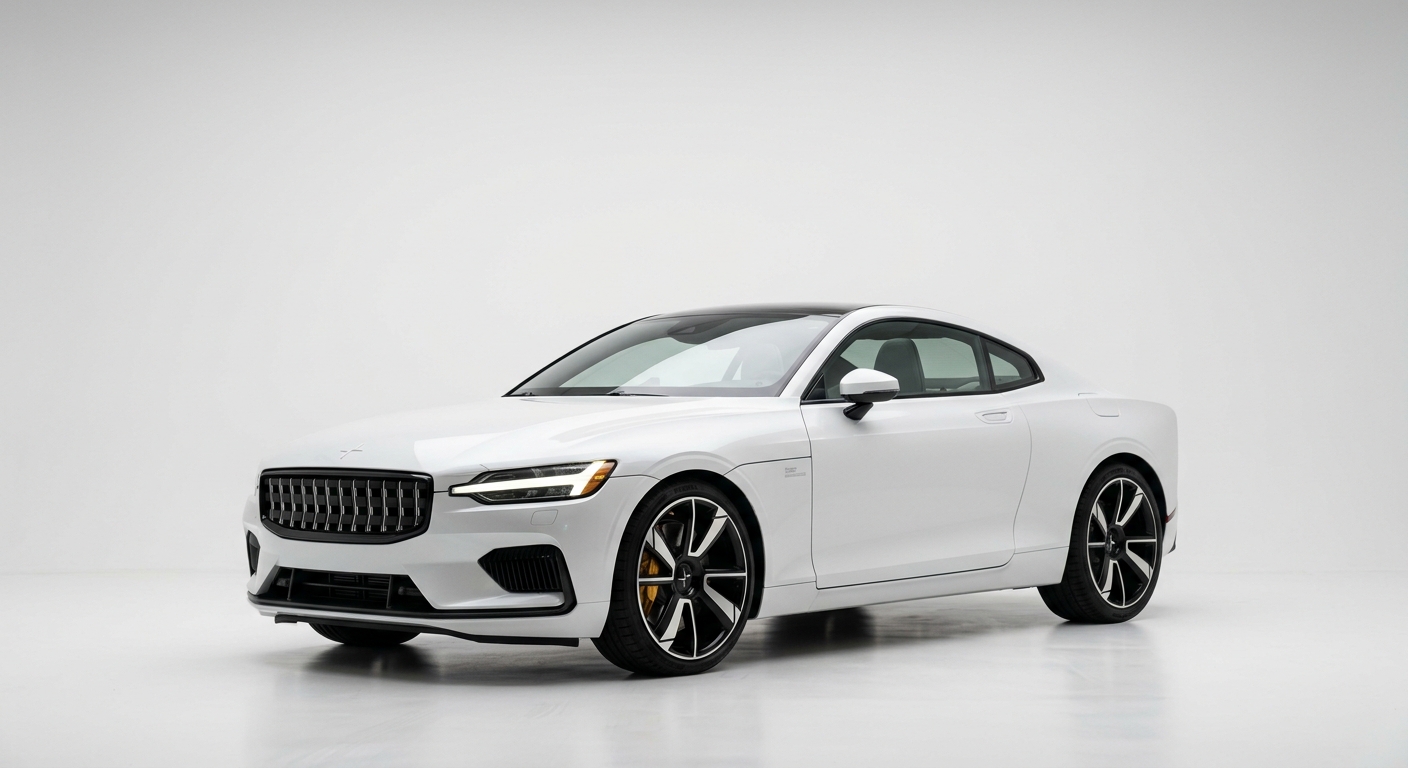
There’s something profoundly different about the 2020 Polestar 1. While other manufacturers rush toward pure electric powertrains, Polestar’s debut model takes a more considered approach, blending a twin-charged four-cylinder with dual electric motors in a carbon fiber body that screams exclusivity. With only 1,500 units planned for production, this Swedish grand tourer represents a fascinating bridge between the combustion and electric eras.

A Different Kind of Electric Experience

The Polestar 1’s powertrain is wonderfully complex in an age of increasing simplification. The 2.0-liter supercharged and turbocharged four-cylinder engine works in harmony with two rear-mounted electric motors, delivering a combined 619 horsepower and 738 lb-ft of torque. But raw numbers only tell part of the story.

What makes the Polestar 1 special is how it uses electricity. With 78 miles of pure electric range, this isn’t just a hybrid that occasionally runs on battery power. In Electric mode, the combustion engine shuts off completely, transforming the character from muscular grand tourer to whisper-quiet cruiser. The transition between modes is seamless, managed by sophisticated software that learns your driving patterns.

Carbon Fiber Craftsmanship

Step inside the Polestar 1 and you’re surrounded by evidence of its hand-built nature. The carbon fiber body isn’t just for weight savings, though it does help keep mass to a reasonable 5,170 pounds despite the complex drivetrain. Every panel is meticulously crafted, with exposed carbon fiber elements throughout the interior serving as functional art.

The cabin blends Scandinavian minimalism with premium materials. Nappa leather covers the seats and dashboard, while the center console features a crystal gear shifter that catches light beautifully. The 12.3-inch infotainment screen runs Android Automotive, providing seamless smartphone integration and over-the-air updates.

Driving Dynamics That Surprise

Behind the wheel, the Polestar 1 reveals its true character. The chassis, developed with input from racing engineers, provides remarkable balance despite the weight. Öhlins dampers and Akebono brakes, both developed specifically for this application, deliver performance that justifies the GT positioning.

The steering is precise without being overly aggressive, perfectly suited to the car’s grand touring mission. In Hybrid mode, there’s a satisfying growl from the four-cylinder when you demand acceleration, but switch to Electric and the car glides with near-silent authority. The all-wheel-drive system can send up to 100% of power to the rear wheels, enabling controlled slides for those who seek them.

Exclusivity With Purpose

At $155,000, the Polestar 1 commands serious money, but the price reflects its limited production nature and hand-built quality. Every example is assembled at Polestar’s dedicated facility in Chengdu, China, where craftspeople spend hours on details that mass-produced cars simply cannot match.

The exclusivity extends beyond build quality to the ownership experience. Polestar handles sales directly, with no traditional dealers involved. Service is handled by select Volvo locations, and owners receive white-glove treatment throughout the process.

Electric Vehicles

2020 Polestar 1

Plug-in Hybrid Grand Tourer

MSRP: $155,000

0-60 MPH 4.2 SEC
EV Range 78 MI
Total Power 619 HP
DC Charge 50 KW
Powertrain
Engine 2.0L I4 Twin-Charged
Electric Motors Dual Rear-Mounted
Battery 34 kWh Lithium-ion
Total Output 619 hp / 738 lb-ft
Transmission
Type 8-Speed Automatic
Drive Type All-Wheel Drive
Torque Vectoring Rear Axle
Dimensions
Length 180.9 in
Width 78.2 in
Weight 5,170 lbs
Body Carbon Fiber
Range & Charging
EV Range 78 miles EPA
Total Range 520+ miles
DC Fast Charge 50 kW max
AC Charging 11 kW onboard
Our Ratings
Performance

8

Handling

8

Daily Usability

7

Value

6

Sound

7

Character

9

The Polestar 1 succeeds as both a technological showcase and a desirable grand tourer, proving that the transition to electrification doesn’t require abandoning craftsmanship or driving pleasure. With only 1,500 examples built, it’s destined to become a fascinating footnote in automotive history, representing a brief moment when complexity and simplicity coexisted beautifully.
6 thoughts on “The Purist’s Electric GT, 2020 Polestar 1”

  1. The Polestar 1 is definitely more about driving purity than utility – it’s a grand tourer built for roads, not towing, which honestly makes sense for a 2-seater coupe! That said, you’re touching on something real about EVs where people compare apples to oranges… the 1 is a plug-in hybrid anyway so it’s got that gas engine for longer range (around 440 miles combined), but you’re right that spec sheets can be misleading if they don’t match your actual needs.

    Log in or register to reply
    • Eric’s got it right – the Polestar 1 is honestly a lifestyle car not a utility vehicle, and that’s fine because it never pretended to be a truck. But Tyler’s point about spec sheets being misleading hits different for hybrids, since the 619 hp figure doesn’t really tell you the efficiency story (EPA rates it around 54 mpge combined, which is solid for a 4,400 lb coupe with a gas engine). I’ve got a spreadsheet tracking this stuff and the real win with the 1 is the carbon fiber chassis cutting weight, which does way more for efficiency than just stacking horsepower numbers.

      Log in or register to reply
      • yo grant thats actually the real talk right there, ngl the weight reduction is what actually matters for launch performance and overall efficiency like you said. 619 hp is cool but a 4400 lb coupe with that carbon fiber chassis probably gets some pretty respectable 60 foot times compared to heavier competitors, and thats where the purist argument actually holds up imo. would love to see how it stacks up quarter mile wise against some of its rivals cuz thats where chassis stiffness really shows you’re doing something right.

        Log in or register to reply
        • look i get what you’re saying about weight and efficiency but tbh this whole discussion is missing the point – you’re talking about a 2-seater that cant tow anything meaningful, so wheres the real world application? chassis stiffness matters when you’re actually pushing a vehicle to do something useful, not just 0-60 times on a closed track, and ngl quarter mile bragging rights dont translate to anything when you cant haul a trailer or payload. real performance means your truck can handle 14k lbs towing AND keep you safe, not just feel nimble on a dyno.

          Log in or register to reply
          • Tyler, I hear you on practicality, but the Polestar 1 isn’t designed to compete in the truck/hauling space, so comparing towing capacity is kind of a category mismatch. That said, if we’re talking real-world application and efficiency, the carbon fiber chassis actually matters for emissions over the vehicle’s lifecycle, not just performance, and a 4400 lb coupe will have dramatically lower lifetime carbon output than a truck that weighs 5500+ lbs empty. Different tools for different jobs, and the data shows this one’s genuinely efficient at what it’s built for.

  2. ngl this is cool and all but 619 hp doesnt mean much without knowing the towing capacity and payload lol, a real purist would be looking at what this thing can actually haul not just horsepower numbers. crossovers and these fancy hybrids are nice for city driving but they’re never gonna replace a proper truck when you’re actually trying to get work done, tbh. whats the curb weight on this thing anyway?

    Log in or register to reply

Leave a Comment