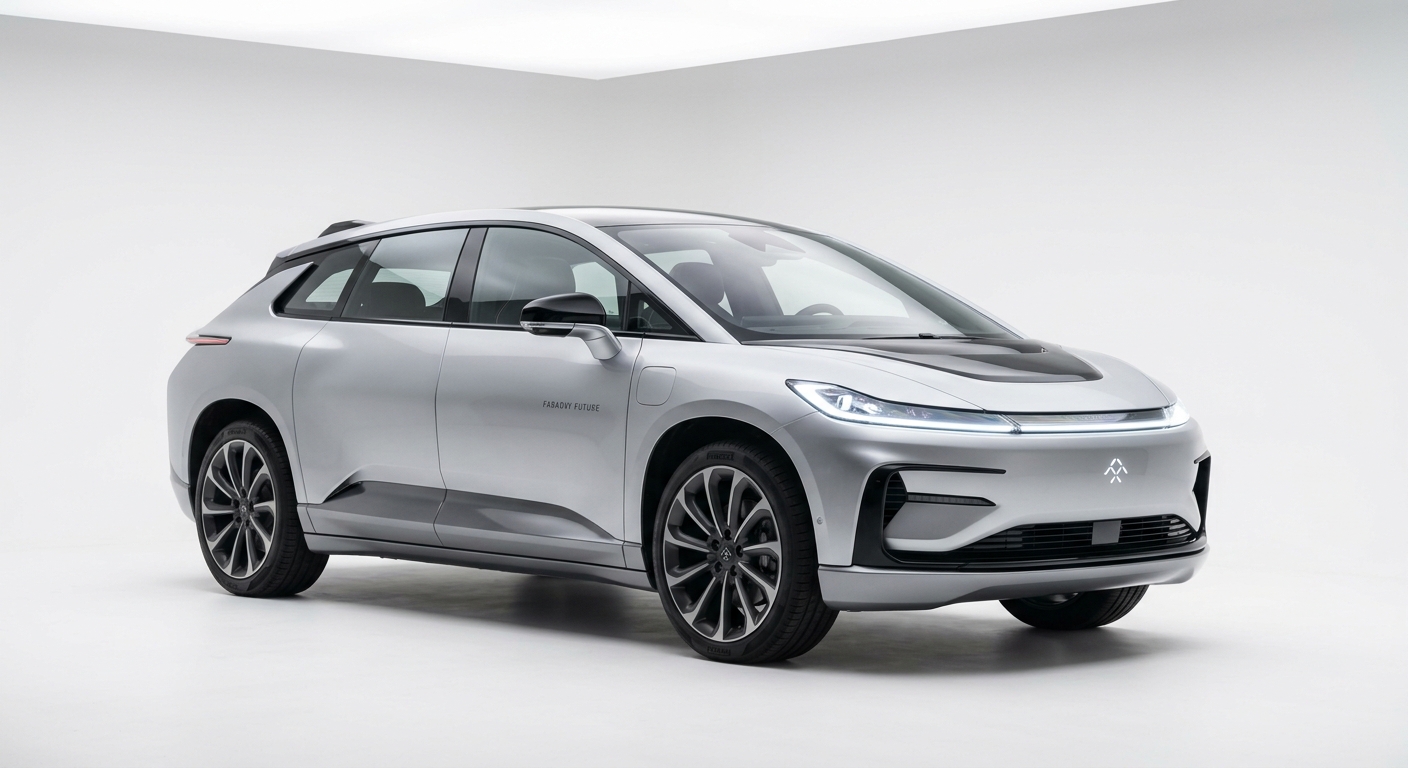
In the wild west of electric vehicle startups, few burned as brightly or as briefly as Faraday Future. The company’s flagship FF 91 represented everything ambitious about the EV revolution: supercar acceleration, autonomous driving capability, and luxury appointments that challenged Tesla’s dominance. Yet behind the impressive specifications lay a cautionary tale of overambition and corporate dysfunction.
The Rise and Fall of Electric Ambition
Faraday Future burst onto the scene in 2014 with grand promises and even grander funding from Chinese billionaire Jia Yueting. The FF 91 was to be their halo car, a flagship that would establish the brand as a serious Tesla competitor while pushing the boundaries of what an electric vehicle could achieve. With 1,050 horsepower from a tri-motor setup and a claimed 0-60 mph time of 2.39 seconds, it promised hypercar performance in a luxury SUV package.
The vehicle’s party trick was its autonomous valet parking system, which could summon the car from a parking spot using a smartphone app. Interior appointments rivaled the most luxurious traditional automakers, with premium leather, real wood trim, and a 15.4-inch central display that controlled nearly every vehicle function.
Driving the Dream
Behind the wheel, the FF 91 delivered on many of its performance promises. The instant torque from three electric motors created a sensation unlike anything in the luxury SUV segment at the time. Acceleration was genuinely shocking, with the massive vehicle launching toward the horizon with supercar urgency while maintaining the refined ride quality expected from a luxury flagship.
The regenerative braking system was particularly sophisticated, offering multiple levels of energy recovery that could be adjusted through the steering wheel paddles. In its most aggressive setting, the FF 91 approached one-pedal driving, making city commuting both efficient and engaging.
Innovation Meets Reality
Where the FF 91 truly impressed was in its attention to luxury details. The panoramic glass roof created an airy cabin atmosphere, while the rear seats offered airline first-class levels of comfort with massage functions and individual climate zones. The sound system, developed in partnership with premium audio specialists, delivered concert-hall acoustics that transformed the cabin into a mobile sanctuary.
However, production realities proved far more challenging than the engineering demonstrations suggested. Quality control issues plagued early prototypes, while the complex manufacturing process required massive capital investment that the company struggled to secure. By 2018, production delays and financial difficulties had effectively stalled the program.
Legacy of What Could Have Been
Today, the FF 91 exists primarily as a footnote in EV history, though a small number of vehicles have finally reached customers after years of delays and restructuring. The technology demonstrated in the prototype influenced numerous production EVs that followed, particularly in the areas of fast charging and luxury appointments.
The vehicle’s 378-mile EPA range was impressive for its era, while the 150kW fast charging capability promised to address range anxiety concerns. These specifications would be competitive even by today’s standards, highlighting just how advanced Faraday Future’s engineering team was despite the company’s operational challenges.
The FF 91 stands as a fascinating glimpse into what might have been in the early days of the EV revolution. While Faraday Future’s corporate struggles prevented it from becoming the Tesla challenger it was intended to be, the vehicle’s ambitious engineering and luxury appointments influenced an entire generation of electric vehicles. For those lucky enough to experience one, it remains a compelling reminder that sometimes the most interesting cars are the ones that almost made it.