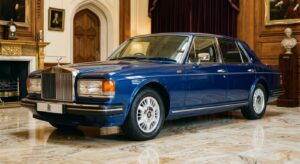
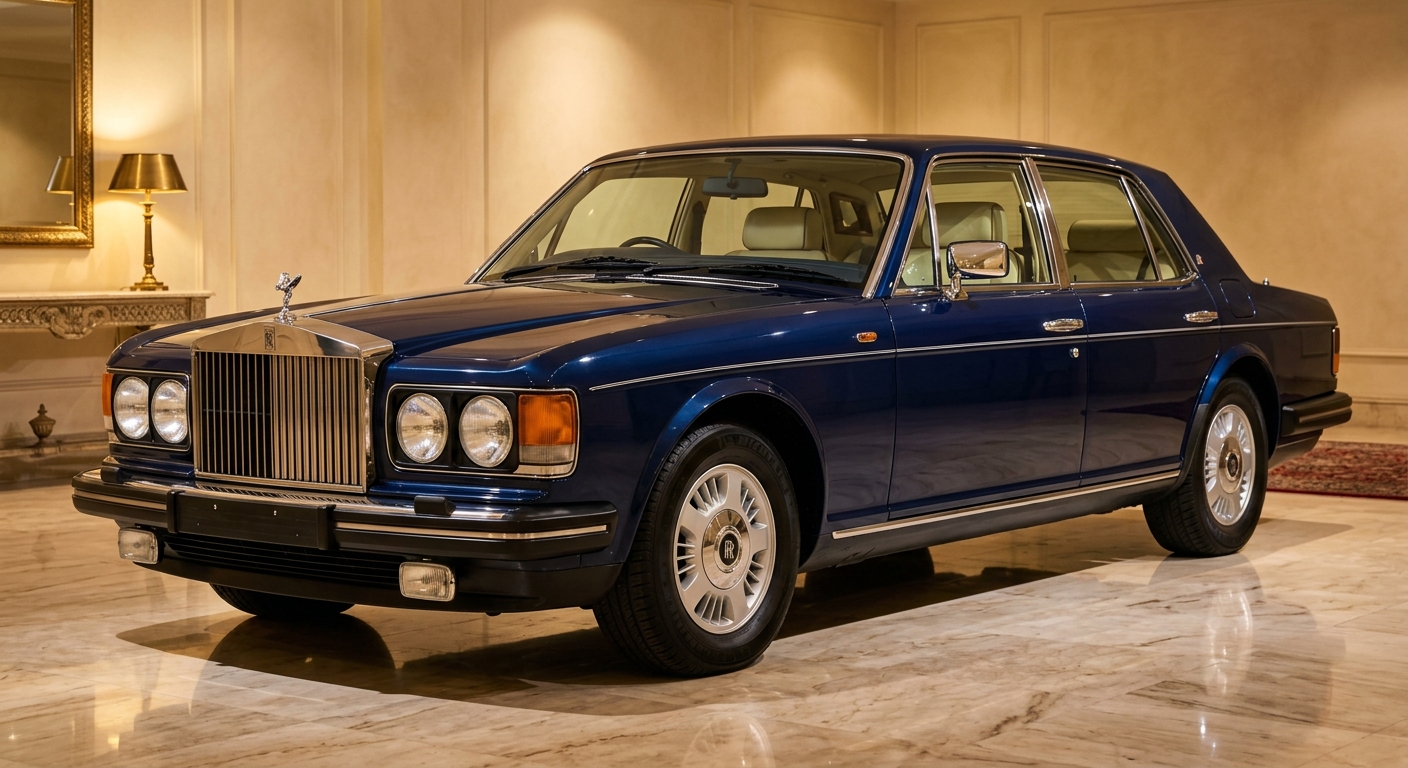
By 1993, the Rolls-Royce Silver Spirit had reached the pinnacle of its evolution. This was the final iteration of a design language that stretched back to the early 1980s, representing the last hurrah of traditional Crewe craftsmanship before BMW’s acquisition would forever change the brand’s trajectory. The Silver Spirit III stood as a monument to everything Rolls-Royce had perfected over decades: uncompromising luxury, whisper-quiet refinement, and the kind of presence that commanded respect from every angle.
The Pinnacle of Traditional Luxury
Sliding behind the wheel of a Silver Spirit III is like entering a different era of automotive luxury. The cabin wraps you in acres of Connolly leather, genuine burr walnut veneers, and deep-pile Wilton carpets. Every surface bears the hallmarks of traditional British craftsmanship, from the hand-polished chrome switches to the impossibly smooth action of every control. This isn’t the clinical perfection of modern luxury cars; it’s the warm, lived-in opulence of a gentleman’s club transported into automotive form.
The driving position speaks to a different philosophy entirely. You don’t drive a Silver Spirit so much as conduct it, with light inputs through the thin-rimmed steering wheel translating into graceful direction changes. The view over the long, chrome-adorned hood is commanding, while the Spirit of Ecstasy stands proudly as a visual reminder of the heritage beneath your right foot.
Engineering Excellence Beneath the Elegance
Under the expansive hood lies Rolls-Royce’s legendary 6.75-liter V8, a powerplant that traces its lineage back to the 1950s but had been thoroughly modernized by 1993. The engine produces what Rolls-Royce diplomatically describes as “adequate” power, though independent tests suggest around 240 horsepower and 330 lb-ft of torque. More important than raw numbers is the engine’s character: it delivers power with the smoothness of an electric motor and the silence of a Swiss watch.
The four-speed automatic transmission shifts with the deliberation of a butler serving afternoon tea. This isn’t about quick acceleration; it’s about effortless progression. The Silver Spirit III will reach 60 mph in about 9.5 seconds, which feels entirely appropriate for a car designed to cruise rather than race. The top speed of 125 mph represents more capability than most owners will ever explore.
What truly impresses is the ride quality. The adaptive suspension system, advanced for its time, provides a magic carpet ride that insulates occupants from all but the most severe road imperfections. Yet the car never feels wallowy or disconnected; there’s a solid, planted quality that speaks to the substantial engineering beneath the luxury appointments.
The Final Chapter of an Era
The 1993 model year marked significant changes for the Silver Spirit line. Updated electronics, revised suspension tuning, and detail improvements throughout represented Rolls-Royce’s commitment to continuous refinement. More importantly, it represented the end of an era. BMW’s purchase of the Rolls-Royce name rights would soon usher in a new chapter of Germanic precision and modern technology.
In many ways, the Silver Spirit III represents the purest expression of what Rolls-Royce had always been: uncompromisingly luxurious, traditionally British, and utterly confident in its own identity. While later models would offer more power, better fuel economy, and modern conveniences, none would quite capture the same sense of occasion that comes with piloting a Silver Spirit III.
For collectors and enthusiasts, the Silver Spirit III offers a unique proposition. It’s the last Rolls-Royce built entirely according to the old company’s philosophy, before outside influence began shaping the brand’s direction. Values have remained relatively stable, making these cars accessible to those who appreciate traditional luxury without the stratospheric prices of earlier classics.
The Silver Spirit III represents the end of an era and the perfection of a philosophy. It’s not the fastest luxury sedan ever built, nor the most advanced, but it may well be the most characterful. For those who appreciate traditional British luxury executed without compromise, few cars deliver the same sense of occasion and timeless elegance.