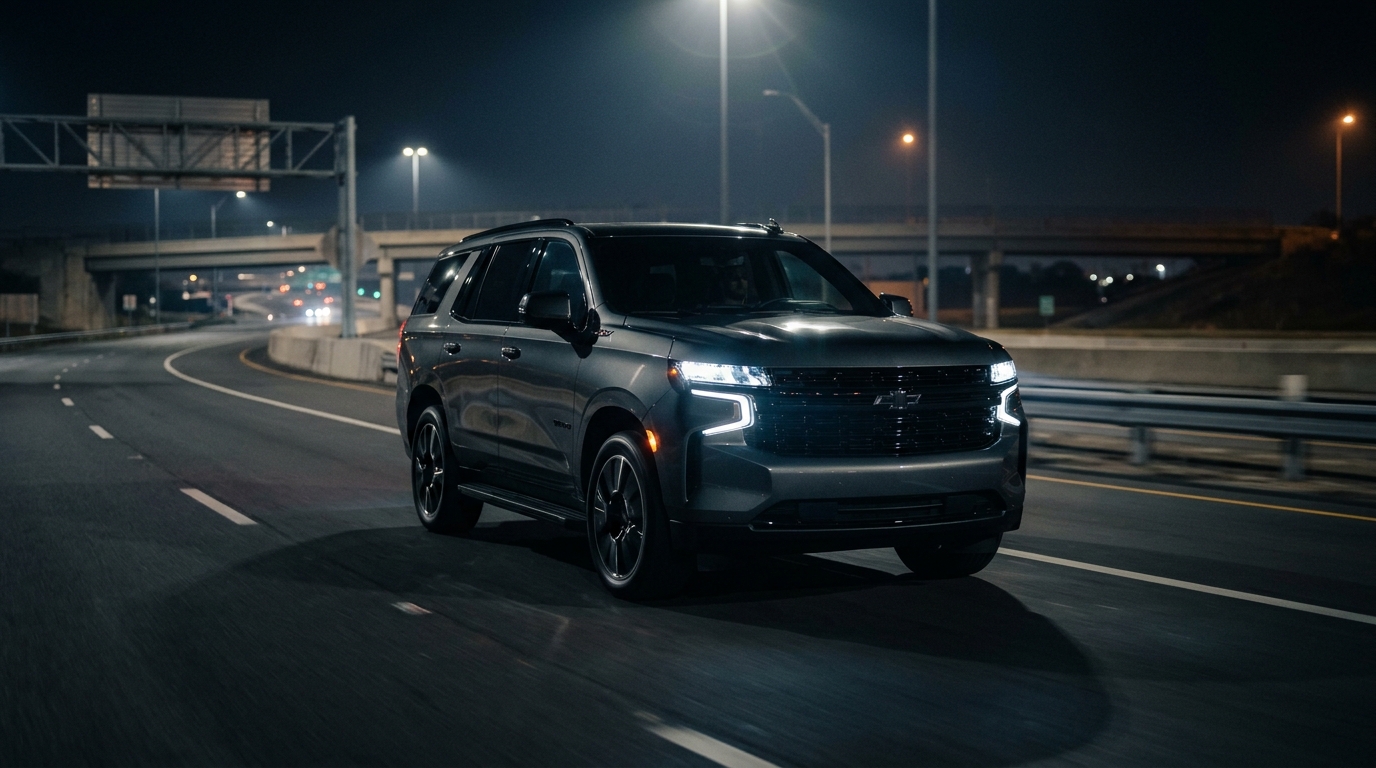
It is 11:40 p.m., the interstate is nearly empty, and the only light ahead comes from the Tahoe’s own LED headlamps carving a clean white lane through the dark. Inside, the cabin hums with almost no wind or road noise, the dash glows a soft blue, and the digital cluster shows a steady 72 mph. This is where a full-size SUV makes the most sense: long miles, few distractions, and a family asleep in the back.
A Fresh Start for an American Icon
The Tahoe nameplate dates back to 1995, when Chevrolet introduced a two-door and four-door SUV based on the C/K pickup platform. For decades it carried a solid rear axle and a rugged, truck-first reputation. That changed with the fifth generation, launched for the 2021 model year. The 2022 Tahoe carries that generation forward with its biggest leap yet: an independent rear suspension, a longer wheelbase, and a dramatically larger third row and cargo area. For a vehicle that lives on interstates and in suburban driveways, that change matters far more than any spec sheet number.
The RST trim sits in the middle of the range, a sport-appearance package aimed at buyers who want a sharper look without stepping up to the pricier High Country or Premier. It adds body-color exterior accents, a blacked-out grille treatment, and 22-inch wheels on many configurations. In 2022 the RST is also the trim where the optional 6.2L V8 and the Duramax diesel can be paired with a more aggressive look.
The Drive After Dark
Our test truck carried the standard 5.3L EcoTec3 V8, rated at 355 horsepower and 383 lb-ft of torque, paired with a 10-speed automatic. At night, with traffic thin and the speed limit steady, this is the engine that makes the most sense. It settles into a muted rumble at highway speed, and Active Fuel Management quietly drops cylinders when you lift off the throttle. The 10-speed keeps revs low, sitting around 1,500 rpm at 70 mph, which keeps the cabin hushed enough to hear a conversation without raising your voice.
The ride is where the new generation earns its keep. The independent rear suspension, plus the available Magnetic Ride Control and air ride adaptive setups on higher trims, smooths out expansion joints and patched asphalt that would rattle a solid-axle truck. Our RST on standard steel-spring suspension was still composed, with a floaty-but-controlled feel that suits long straight stretches. Steering is light and a bit numb, but that is exactly what you want at 70 mph with a tired driver.
Headlights and Visibility
The RST comes with full LED headlamps and LED daytime running lights, and the beam pattern is excellent. High beams throw a wide, even pool of light that reaches well down the road, and the automatic high-beam assist dips quickly for oncoming traffic. The tall seating position gives a commanding view over guardrails and into the dark shoulders where deer like to lurk. The large side mirrors and available surround-view camera system help with lane changes and tight parking after a long drive.
Cabin at Night
The interior is a clear step up from the previous generation. A 10.2-inch infotainment touchscreen and 12.3-inch digital instrument cluster are standard on the RST, both with clear graphics and a dimming mode that never washes out your night vision. The ambient lighting is subtle rather than flashy. Chevrolet’s physical climate controls remain, which means you never have to hunt through menus to turn down the heat at 2 a.m. The Bose audio system, optional on this trim, delivers clean sound at low volumes, ideal for late-night podcasts.
Space, Practicality, and the Third Row
The big headline for this generation is the third row. With the independent rear suspension, the floor sits lower, and Chevrolet claims 60 percent more third-row legroom than the outgoing model. Adults can actually sit back there without a negotiation. Behind the third row, cargo space is 25.5 cubic feet, and with both rows folded it grows to a cavernous 122.9 cubic feet. For a family road trip, that means luggage, a cooler, and a sleeping bag for a spontaneous overnight stop.
Towing and Capability
Properly equipped, the Tahoe can tow up to 8,400 pounds with the 5.3L and the right axle ratio. The available Duramax 3.0L inline-six diesel, new for 2021, delivers 277 horsepower and a hefty 460 lb-ft of torque with a strong EPA rating, while the 6.2L V8 offers 420 horsepower and 460 lb-ft for those who want more shove. Four-wheel drive with a two-speed transfer case is optional on the RST and worth the upgrade for winter trips or rough access roads.
Rivals and Value
The Ford Expedition and Jeep Wagoneer are the closest competitors, along with the Toyota Sequoia and the GMC Yukon, which shares the Tahoe’s platform. The Tahoe undercuts most of them on base price while delivering more cargo room than the Expedition and a more refined ride than the older Sequoia. Starting around the mid-$60,000 range for a well-equipped RST, it is not cheap, but it offers an honest level of capability and comfort for the money.
Editor’s verdict: The 2022 Tahoe RST is the full-size SUV that finally got the basics right: a real third row, a smooth independent rear suspension, and a V8 that purrs rather than shouts. For a quiet night highway cruise with the family asleep in the back, few vehicles at this price do it better.