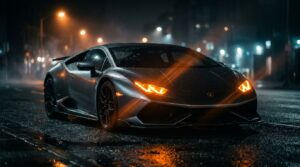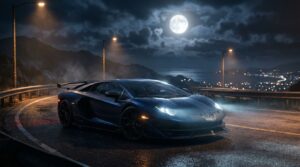
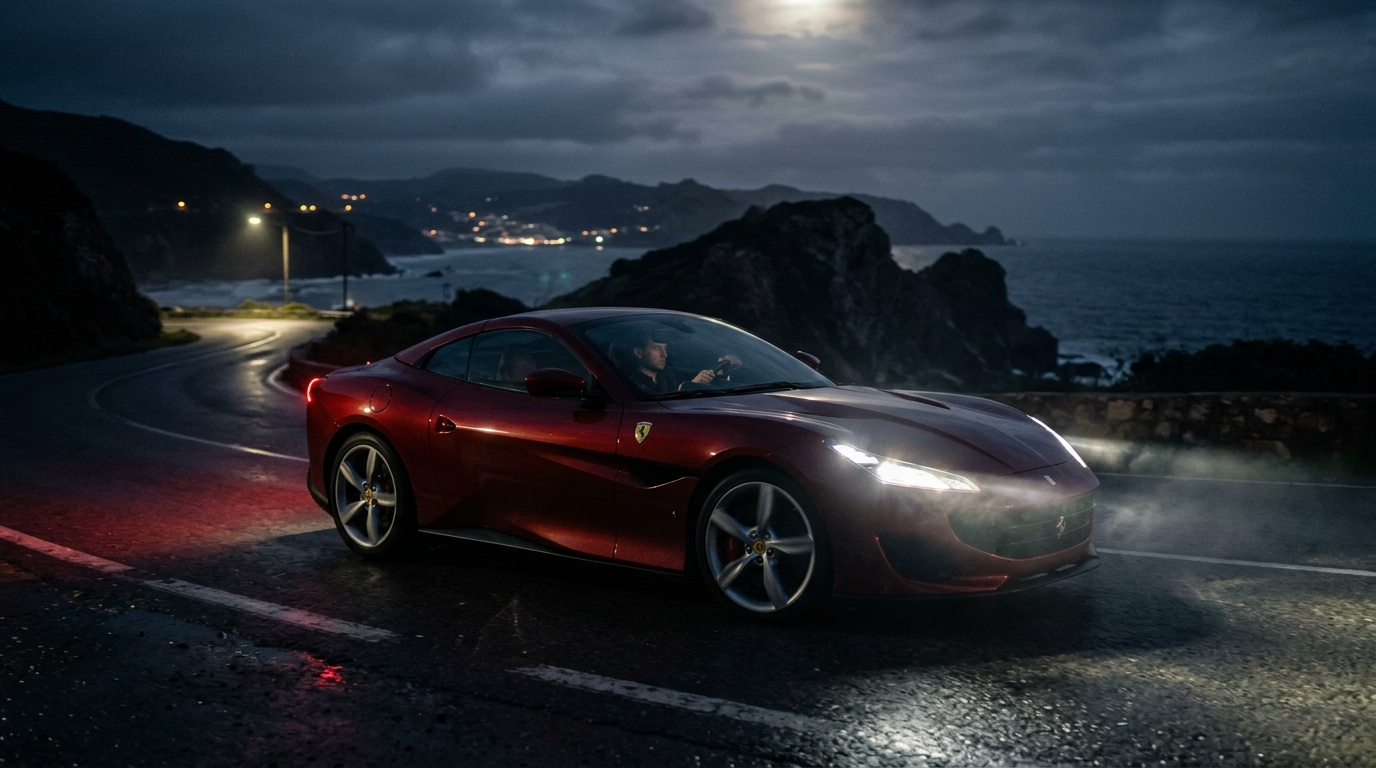
It is a little past midnight, the top is folded away, and the only sounds are a twin-turbo V8 murmuring at idle and the tick of cooling asphalt. The Portofino does not announce itself like a screaming mid-engine Ferrari. It sits there glowing under the streetlights, relaxed, expensive, and quietly confident, like a tailored suit that happens to do 199 mph. This is a car built for the long, empty road home after dark.
The Car That Replaced the California T
The Portofino debuted at the 2017 Frankfurt Motor Show and arrived for the 2018 model year as the successor to the California T. Ferrari named it after the glamorous Italian fishing village on the Ligurian coast, a place synonymous with moonlit harbors and late dinners. That naming is no accident. This is Ferrari’s entry-level front-engine grand tourer, but entry-level at Maranello still means 591 horsepower and a base price north of $215,000. For the 2019 model year the car carried over largely unchanged, with the big news being what it had already improved over its predecessor: a stiffer aluminum chassis, an electric power steering system, and 20 more horsepower.
Driving Impressions After Dark
Fire it up and the 3.9-liter twin-turbo V8 settles into a deep, burbling idle. It is the same basic engine family that has won International Engine of the Year awards, and in the Portofino it makes 591 hp at 7,500 rpm and 561 lb-ft of torque from 3,000 to 5,250 rpm. Press the throttle at night with the roof down and the soundtrack bounces off tunnel walls and guardrails in a way no daytime drive can match. Ferrari fitted a new exhaust note tuned to be rich without being obnoxious, and with the top down you hear every crackle on the overrun.
Pull away through town and the Portofino is genuinely civil. The seven-speed dual-clutch transmission is smooth at low speeds, the suspension with its magnetorheological dampers soaks up broken pavement, and the cabin is quiet enough for conversation. This is the car’s party trick: it is a docile cruiser until you want it to be something else.
Headlights, Visibility, and the Night Mood
The Portofino uses full LED headlights with a distinctive slim design that Ferrari tuned for a clean, white beam pattern. On unlit back roads they throw a wide, even wash of light with a sharp cutoff, enough to make confident progress at speed. The adaptive front lighting follows the steering, helping you read corners before you commit. Inside, the cockpit glows with that signature red-lit starter button on the steering wheel, a small piece of theater that never gets old. Visibility with the roof up is a touch restricted over the shoulder, but with the top down at night the view is spectacular, and you can lean back and watch stars slide past overhead.
Roof Down, Windows Up
The retractable hardtop folds away in about 14 seconds and can operate at speeds up to roughly 25 mph. Ferrari also fitted an electric wind deflector behind the seats that dramatically reduces buffeting. At highway speeds on a cold night, with the heated seats and neck warmers working, you can drive for hours in genuine comfort. It is the sort of engineering that separates a proper grand tourer from a weekend toy.
Handling: Poise Over Aggression
Ferrari moved to electric power steering for the Portofino, and it is quick at 2.2 turns lock to lock, with a rack that feels light and precise. The front-mid-mounted engine and rear-mounted transaxle give a near ideal weight distribution of roughly 46 percent front and 54 percent rear. Turn in is crisp, and the E-Diff electronic differential helps rotate the car on exit. Switch the manettino dial to Sport and the car sharpens noticeably, the dampers firm up, the exhaust opens, and the shifts get faster and more urgent. It is not a track weapon like a 488, and it does not pretend to be. It is a car that makes a quiet mountain road at 1 a.m. feel like an event.
The Cabin and the Daily Reality
Inside, you sit low in beautifully trimmed seats with a wide, sculpted dashboard. The infotainment system was a clear improvement over earlier Ferraris, and an optional passenger-side display shows speed and rpm for the person riding along. The trunk is surprisingly usable at roughly 9.9 cubic feet with the roof up, and the rear seats are best considered a luggage shelf or a place for a small bag. Fuel economy is rated around 16 mpg city and 23 mpg highway, which is respectable for the performance on offer.
Who It Is For
Some critics found the Portofino too soft compared to its mid-engine siblings. That misses the point. A grand tourer is meant to cover distance quickly, quietly, and in style, and then to turn on the drama when you ask for it. On a long nighttime run along a coast road, nothing in the segment does it with more theater.
The Portofino is not the sharpest Ferrari, and it was never meant to be. It is the one you take on a 2 a.m. run to somewhere beautiful, with the top down and the V8 humming behind you. For anyone who wants Maranello drama with real-world comfort, it is hard to beat.