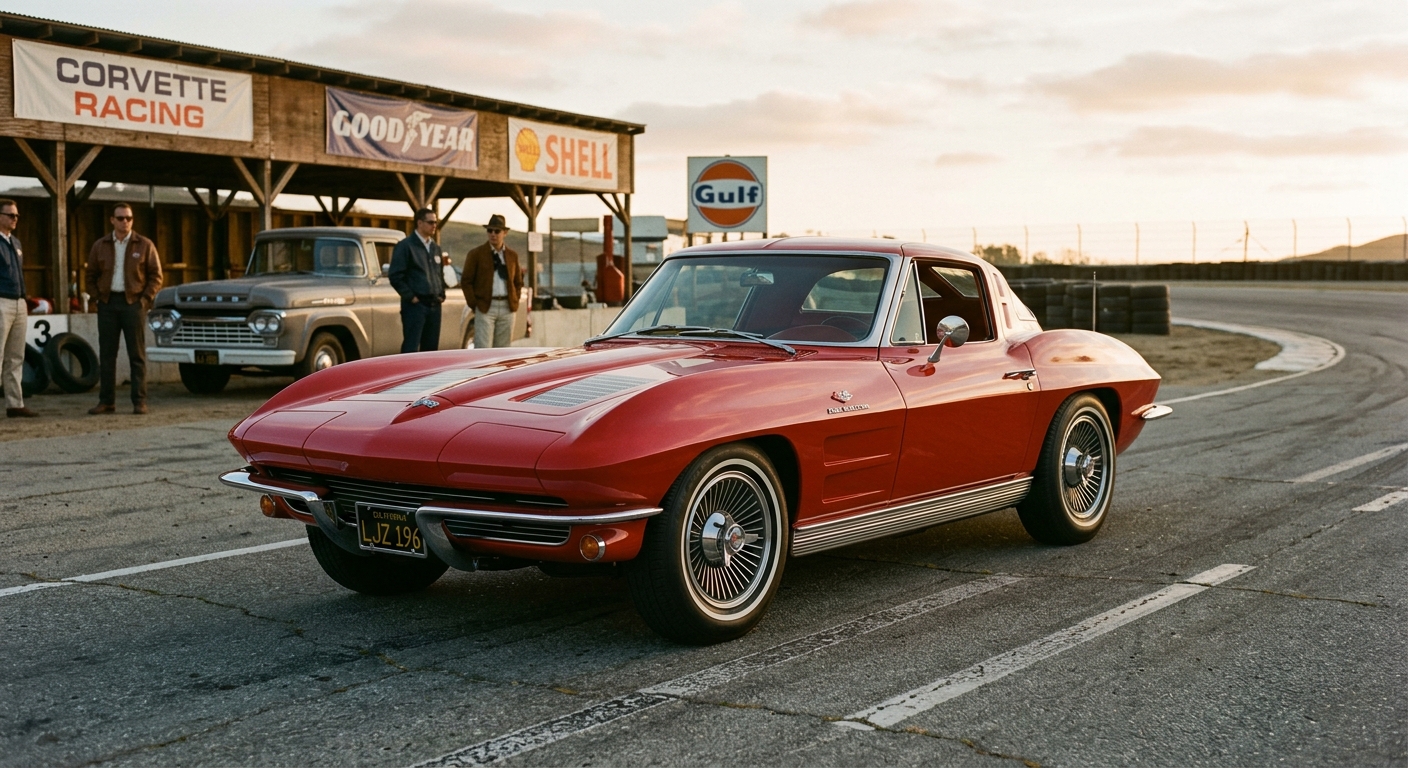
In 1963, Chevrolet unleashed something extraordinary upon the American automotive landscape: the second-generation Corvette Sting Ray. This wasn’t just an evolution of America’s sports car; it was a complete reinvention that would establish the template for performance car design for decades to come. The split-window coupe, in particular, represented a bold aesthetic statement that divided opinion then but stands today as one of the most beautiful cars ever produced.
A Design Revolution
The 1963 Sting Ray emerged from the studios of GM Design under the direction of Bill Mitchell, who drew inspiration from his experimental Mako Shark concept car. Gone was the somewhat crude fiberglass body of the original C1 generation, replaced by a sculpture in motion that seemed to flow like liquid mercury. The new Corvette’s hide-away headlights, knife-edge fender lines, and dramatically tapered rear deck created a silhouette that was unmistakably American yet sophisticated enough to turn heads in European sports car circles.
The split rear window of the coupe version was perhaps the most controversial design element. Zora Arkus-Duntov, the Corvette’s chief engineer, argued that it compromised rear visibility. He was right, but he was also missing the point. This was art on wheels, a rolling statement that American automotive design had finally come of age.
Performance Meets Sophistication
Beneath that stunning bodywork lay genuine mechanical innovation. For the first time, the Corvette featured independent rear suspension, transforming it from a boulevard cruiser into a legitimate sports car that could hold its own on winding roads. The new chassis, with its ladder-type frame and sophisticated suspension geometry, provided a level of handling precision that previous Corvettes could only dream of.
Engine options ranged from the base 250-horsepower 327 cubic inch V8 to the fire-breathing fuel-injected version producing 360 horsepower. The “fuelie” cars were particularly special, representing the pinnacle of mechanical fuel injection technology before the electronic age. These engines delivered not just impressive power figures but also a soundtrack that perfectly matched the car’s aggressive appearance.
The One-Year Wonder
What makes the 1963 split-window Corvette particularly significant is its brevity. Duntov’s concerns about rear visibility proved persuasive enough that Chevrolet eliminated the split window for 1964, making the ’63 a one-year-only design. This decision, while practical, robbed the world of one of automotive design’s most distinctive features.
Production numbers tell the story of America’s growing appreciation for sports cars. Chevrolet built 21,513 Corvettes in 1963, with 10,594 of them being the split-window coupe. These numbers, modest by today’s standards, represented a significant increase over previous years and established the Corvette as a serious player in the sports car market.
Driving the Legend
Behind the wheel, the 1963 Sting Ray delivers an experience that bridges the gap between old-school American muscle and European sports car finesse. The steering is heavy but communicative, the ride firm but not punishing. The independent rear suspension works magic on challenging roads, providing a level of composure that transforms the driving experience from wrestling match to ballet.
The cabin, while cramped by modern standards, envelops the driver in purposeful simplicity. The twin-cowl dashboard design, with its comprehensive gauge cluster, emphasizes the car’s serious sporting intentions. Every control falls naturally to hand, and the view over that long, sculpted hood is pure automotive theater.
The 1963 Corvette Sting Ray split-window coupe represents the moment American automotive design truly came of age, combining stunning aesthetics with genuine sports car performance. While finding a pristine example requires significant investment, the experience of owning and driving this automotive masterpiece remains unmatched. This is more than a car; it’s rolling sculpture that tells the story of American automotive ambition at its absolute peak.