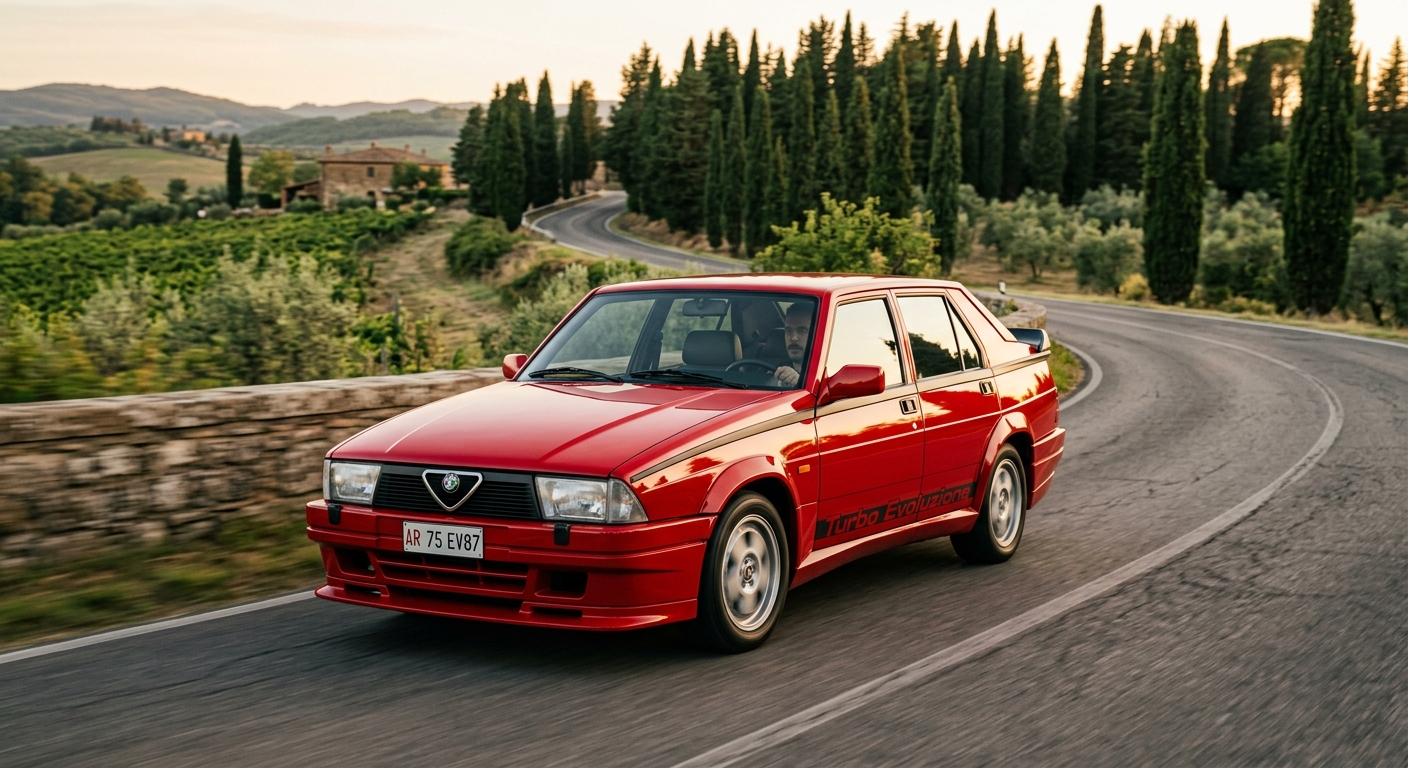
The 1987 Alfa Romeo 75 Turbo Evoluzione represents the culmination of Alfa Romeo’s front-engine, rear-wheel-drive tradition. As the final evolution of the Type 116 platform that had served Alfa faithfully through the 1970s and 1980s, the 75 Turbo Evoluzione delivered a fitting farewell to an era of pure Italian sporting sedans. With its turbocharged heart and razor-sharp handling, this was Alfa Romeo’s last hurrah before the brand’s future would be dictated by front-wheel-drive pragmatism.
The Heart of the Matter
Beneath the 75’s distinctive wedge-shaped hood lies a masterpiece of Italian engineering: a 1.8-liter twin-cam four-cylinder engine enhanced with turbocharging technology. This powerplant produces 155 horsepower and 166 lb-ft of torque, figures that might seem modest by today’s standards but delivered genuine excitement in 1987. The turbo spools with characteristic 1980s lag before unleashing a surge of power that transforms the 75 from cultured sedan to snarling predator.
The engine’s character is quintessentially Alfa Romeo: smooth and refined at low revs, increasingly vocal as the tachometer climbs, and utterly intoxicating at the redline. The turbo adds a layer of complexity to the power delivery, requiring skill and patience from the driver but rewarding both with genuine thrills.
Transaxle Excellence
One of the 75’s most innovative features is its rear-mounted transaxle, a sophisticated solution that places the transmission at the rear axle for optimal weight distribution. This configuration, shared with exotic supercars, gives the 75 a perfectly balanced 50/50 weight distribution that transforms its handling characteristics. The result is a sedan that changes direction with the precision of a sports car while maintaining the composure expected of a four-door.
The five-speed manual gearbox, accessed through a long but precise shifter, offers perfectly spaced ratios that complement the turbo engine’s power band. Gear changes require deliberate input, but the mechanical feedback through the lever connects the driver directly to the drivetrain in a way that modern cars simply cannot match.
Design That Defined an Era
Ercole Spada’s design for the 75 was controversial when new but has aged magnificently. The wedge profile, with its low nose and high tail, creates a sense of forward motion even at rest. Black side cladding runs the length of the car, visually lowering the greenhouse and emphasizing the 75’s sporting intentions. The Turbo Evoluzione adds specific aerodynamic enhancements, including a subtle rear spoiler and side skirts that improve both appearance and high-speed stability.
Inside, the 75 Turbo Evoluzione showcases Italian flair with supportive sport seats, a three-spoke steering wheel, and a driver-focused cockpit. The materials feel premium for their era, with soft-touch surfaces and careful attention to detail that speaks to Alfa Romeo’s aspirations as a luxury marque.
The Driving Experience
On the road, the 75 Turbo Evoluzione reveals its dual nature. In normal driving, it behaves as a refined European sedan should, with comfortable suspension settings and civilized manners. Push harder, and the car’s sporting DNA emerges. The steering, unassisted and beautifully weighted, provides constant communication about road conditions and grip levels. The chassis, with its sophisticated De Dion rear suspension, remains composed even when provoked, allowing skilled drivers to explore the limits with confidence.
Braking performance is exceptional, with four-wheel disc brakes providing strong, fade-resistant stopping power. The brake pedal feel is firm and progressive, inspiring confidence during spirited driving sessions.
Historical Significance
The 75 Turbo Evoluzione holds special significance as the final front-engine, rear-wheel-drive sedan Alfa Romeo would produce for decades. When production ended in 1992, it marked the end of an era for the brand. Future Alfas would prioritize front-wheel-drive efficiency over rear-drive purity, making the 75 the last of its kind.
Today, the 75 Turbo Evoluzione is increasingly recognized as a classic, with enthusiasts appreciating its combination of Italian style, advanced engineering, and pure driving pleasure. Well-maintained examples have become collectible, particularly the Turbo Evoluzione variants with their enhanced performance and distinctive styling.
The 1987 Alfa Romeo 75 Turbo Evoluzione stands as a testament to Italian automotive passion and engineering excellence. It combines genuine performance with undeniable character, creating a driving experience that remains compelling nearly four decades after its introduction. For enthusiasts seeking the soul of traditional Alfa Romeo in an increasingly collectible package, few cars deliver quite like this final front-engine masterpiece.