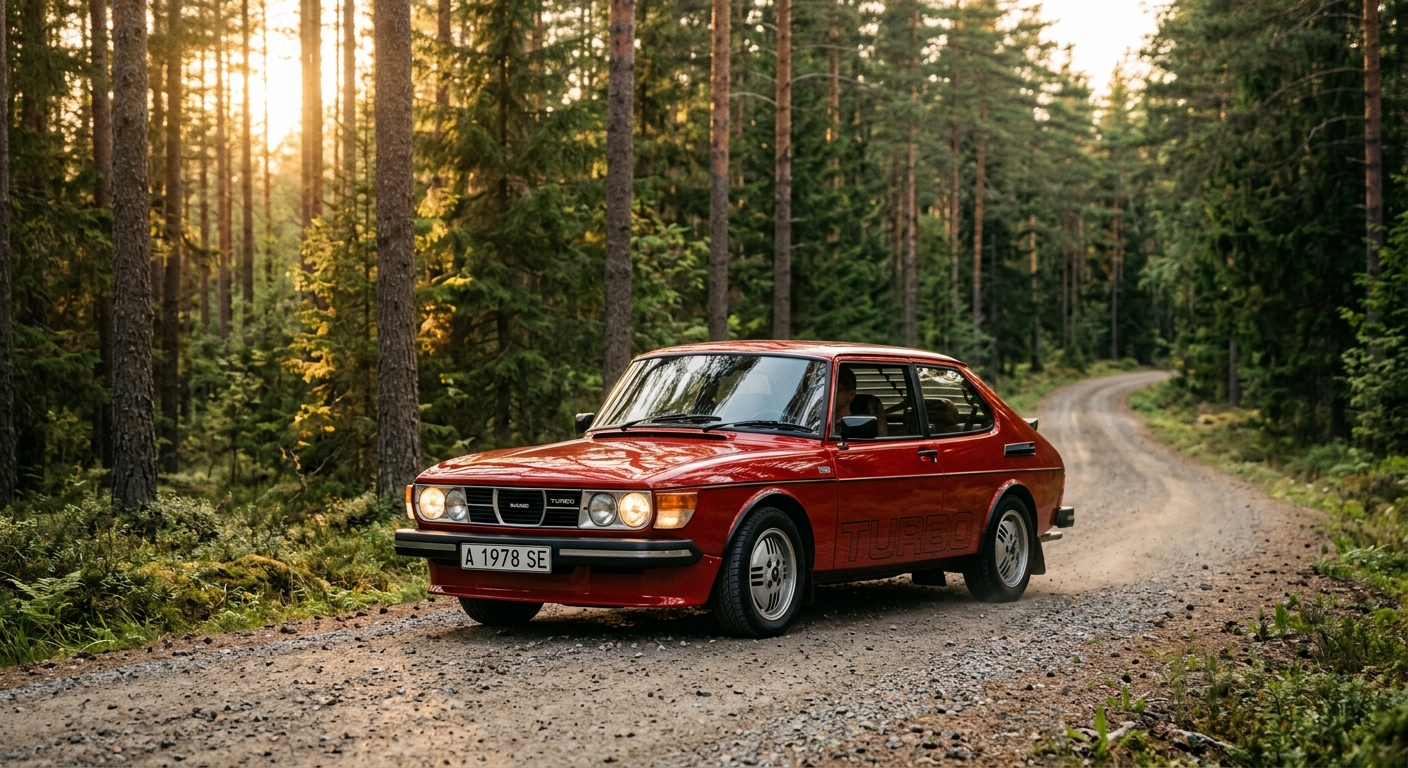
In 1978, while most manufacturers were struggling to meet emissions regulations with wheezing, strangled engines, Saab took a different approach. The Swedish automaker looked to turbocharging not as a performance enhancer, but as a solution to the fuel crisis and clean air requirements. The result was the 99 Turbo, a car that would fundamentally change how the world viewed forced induction and establish Saab as a pioneer in mainstream turbo technology.
Revolutionary Approach to Everyday Performance
The Saab 99 Turbo represented a philosophical shift in automotive engineering. While turbochargers had been used in race cars and exotic machinery, Saab was among the first to make the technology accessible to regular buyers. The 2.0-liter four-cylinder engine, boosted by a Garrett AiResearch T3 turbocharger, produced 145 horsepower at a time when most cars were making do with far less due to emissions constraints.
What made the 99 Turbo special wasn’t just the power figure, impressive as it was for the era, but how that power was delivered. The turbo lag was significant by modern standards, creating a distinctive driving character that required patience and skill. Press the accelerator and wait a beat, then the boost would arrive with a satisfying surge that pushed you back into the supportive seats.
Swedish Engineering Excellence
Saab’s approach to turbocharging was methodical and thorough. The company didn’t simply bolt a turbo to an existing engine; they redesigned the entire powerplant to handle the additional stress. The bottom end was strengthened, the cooling system upgraded, and the fuel injection system calibrated specifically for forced induction. This attention to detail resulted in remarkable reliability for such advanced technology.
The transmission was equally well-engineered. Saab’s four-speed manual gearbox featured close ratios that worked perfectly with the turbo engine’s power delivery characteristics. The clutch was progressive and well-weighted, making the most of the available torque without overwhelming the front wheels.
Distinctive Design and Practical Innovation
Visually, the 99 Turbo was unmistakably Saab. The distinctive wraparound windshield, long hood, and high greenhouse created a unique silhouette that prioritized visibility and safety over conventional beauty. The aggressive front air dam and subtle “Turbo” badging hinted at the performance potential within, while maintaining the understated Scandinavian aesthetic that defined the brand.
Inside, the 99 Turbo showcased Saab’s commitment to ergonomics and safety. The dashboard curved around the driver, with clearly marked gauges including a boost pressure indicator that became an essential part of the driving experience. The seats were supremely comfortable and supportive, designed for the long-distance touring that Swedish roads demanded.
Rally Heritage and Real-World Performance
The 99 Turbo’s capabilities extended far beyond the showroom floor. Saab’s rally program had been developing turbocharged technology since the early 1970s, and lessons learned on the stages of the Monte Carlo Rally directly influenced the production car. The result was a vehicle that could handle everything from daily commuting to spirited backroad driving with equal competence.
On twisty roads, the 99 Turbo revealed its true character. The front-wheel-drive layout provided excellent traction in adverse conditions, while the well-tuned suspension struck an admirable balance between comfort and control. The steering was precise and communicative, giving the driver confidence to explore the car’s capabilities.
The 1978 Saab 99 Turbo stands as a landmark achievement in automotive history, a car that proved turbocharging could be both practical and exciting. While modern turbos may be more refined, few cars have ever captured the pioneering spirit and distinctive character of this Swedish original. For enthusiasts seeking something genuinely different, the 99 Turbo remains an inspired choice that rewards the thinking driver.