Full Spec Motors

The Forgotten NASCAR Warrior, 1970 Mercury Cyclone Spoiler 429

3 min read

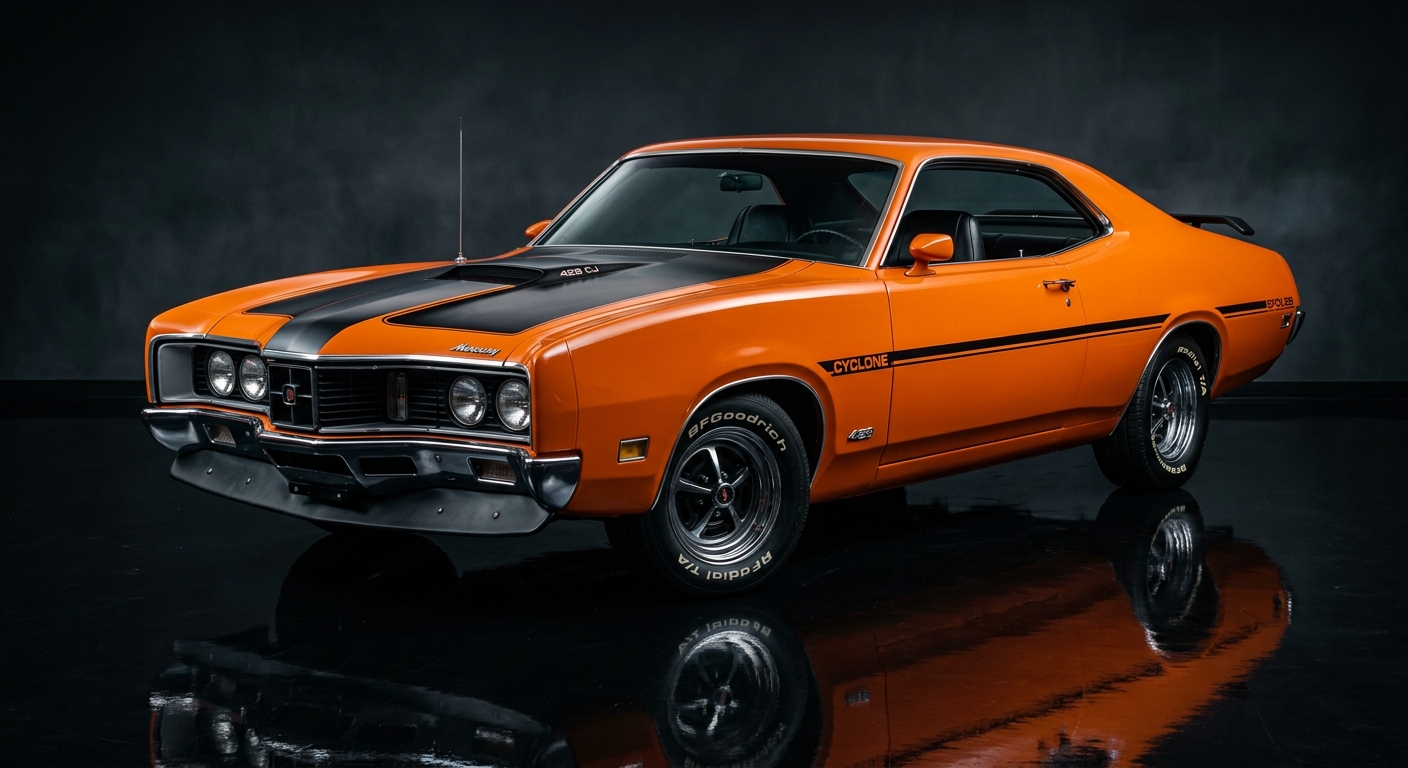
While Plymouth and Dodge dominated the headlines with their winged warriors, Mercury was quietly building its own aerodynamic monster. The 1970 Mercury Cyclone Spoiler 429 represented Ford’s intermediate division’s most serious attempt at combining NASCAR-bred aerodynamics with street-legal muscle car performance.

Born from Racing DNA

The Cyclone Spoiler wasn’t just another muscle car with a big engine and flashy graphics. Mercury developed this machine specifically to homologate aerodynamic improvements for NASCAR competition, where the brand was locked in fierce battle with Chrysler’s winged cars and GM’s slippery intermediates.

The most distinctive feature was the extended nose cone, which added several inches to the car’s length while smoothing airflow over the front wheels. Combined with the functional rear spoiler, these modifications reduced drag and increased high-speed stability. On the street, they gave the Cyclone an unmistakably purposeful appearance that set it apart from conventional muscle cars.

Thunder Valley Power

Under the hood, Mercury installed Ford’s legendary 429 Cobra Jet engine, a powerhouse that delivered 370 horsepower and 450 lb-ft of torque. This wasn’t the same 429 that would later appear in pickup trucks, this was a high-performance variant with specific camshaft timing, carburetion, and compression designed for maximum output.

The engine’s character matched the car’s racing pedigree. Rather than the explosive, short-lived power of some muscle cars, the 429 delivered sustained thrust across a broad powerband. It pulled strongly from idle and kept pulling well past the point where smaller engines would start gasping for air.

Track-Bred Handling

Mercury didn’t stop with straight-line performance. The Cyclone Spoiler received suspension tuning that prioritized high-speed stability over ride comfort. The result was a muscle car that could actually handle curves with confidence, a rarity in an era when most manufacturers focused solely on drag strip performance.

The steering was precise by 1970 standards, with good feedback from the road surface. Body roll was well-controlled, and the car felt planted even when pushed hard through sweeping corners. This composure came at the cost of some ride quality, but buyers who understood the car’s mission weren’t likely to complain.

Distinctive Styling

Beyond the aerodynamic modifications, the Cyclone Spoiler featured unique styling touches that emphasized its performance intent. The interior combined sporty bucket seats with functional instrumentation, while exterior graphics packages announced the car’s capabilities to anyone paying attention.

The build quality was typical of the era, meaning solid mechanicals wrapped in bodywork that showed the cost-cutting pressures facing American manufacturers. Chrome and trim pieces were generally well-executed, though some interior plastics felt cheap compared to what luxury car buyers expected.

Muscle Cars

1970 Mercury Cyclone Spoiler 429

429 Cobra Jet V8, NASCAR Aerodynamics

Original MSRP: $3,759 (Approximately $28,400 today)

0-60 MPH 6.2s
TOP SPEED 124mph
POWER 370hp
PRODUCTION 1,631built

Engine

Type 429 Cobra Jet V8
Displacement 429 cubic inches (7.0L)
Power 370 hp @ 5,400 rpm
Torque 450 lb-ft @ 3,400 rpm

Transmission

Type 4-speed manual
Layout Front engine, RWD
Final Drive 3.50:1 (optional 3.91:1)

Dimensions

Length 209.9 inches
Width 76.4 inches
Wheelbase 117.0 inches
Weight 3,773 lbs

History & Provenance

Introduced 1970 model year
Designer Ford Aerodynamics Team
Production 1,631 Spoiler 429s built
Current Value $45,000 – $75,000

Full Spec Motors Ratings

Performance

8.5

Handling

7.5

Daily Usability

6.0

Value

8.0

Sound

9.0

Character

8.5

The Mercury Cyclone Spoiler 429 stands as proof that Ford’s intermediate division could build serious performance machines when properly motivated. Its combination of NASCAR-derived aerodynamics, thunderous 429 power, and surprisingly capable handling makes it one of the most undervalued muscle cars of the classic era. While its Mopar winged competitors get most of the attention, the Cyclone Spoiler delivers equal thrills at a fraction of the price.

6 thoughts on “The Forgotten NASCAR Warrior, 1970 Mercury Cyclone Spoiler 429”

  1. yo this is actually making me think about my current project car situation lol, like im trying to figure out if going bigger displacement is ever worth it or if im just gonna end up with something that drinks money as fast as gas prices go up. did those cyclones actually hold any value at all after the 70s or did they become total throw aways? ngl im kinda scared of picking an engine that becomes uncool in 5 years and tanks my whole budget

    Log in or register to reply
    • honestly id be really careful with that logic, ben – those big displacement cars from that era pretty much became worthless by the 80s when fuel efficiency mattered, and jd power data shows that kind of depreciation is brutal. your concern about resale value is totally valid because even today a 429 cyclone isnt cheap to own, teh parts are rare and insurance on something that thirsty will bleed you dry. id suggest looking at Consumer Reports reliability ratings for whatever your actually considering and calculate your real ownership costs, not just the purchase price – that way you’re not suprised in year 3 when you’re stuck with a money pit.

      Log in or register to reply
      • ngl ive seen this play out so many times in barns across the midwest lol, those big block guys from the 70s either become gold mines if you restore em right or total money pits if you dont know what your getting into. the thing is tho, a 429 cyclone thats been sitting for decades, you can pick up for way cheaper than people think, and if you got the skills to do some of the work yourself the real numbers look way different then what insurance quotes tell you. ben if your gonna flip something, sometimes those forgotten big blocks are actually easier profit than trying to make a sensible small block car interesting, just gotta have a place to store it and patients to find the

        Log in or register to reply
        • man i get what your saying but honestly ive flipped more of these big block cyclones then i can count and the trick is knowing which ones got potential before you even walk up to em, like i found a 429 in a barn up in wisconsin last year buried under decades of hay and mice nests but the block was solid, picked it up for like 800 bucks and that thing could be 15k easy once shes cleaned up and running tbh, the depreciation thing is real but thats only if your trying to sell em as daily drivers – these nascar warriors are collectible now so your buying low and selling high if you know the market

          Log in or register to reply
          • Yeah, solid point about the barn finds, Billy. I’d just add that when you’re inspecting one of those 429 blocks before dropping serious money on a restore, check the cylinder walls real close for scoring and listen for any rod knock because that’s where the real money drain starts. The hay and mice situation is actually kind of ideal compared to direct moisture exposure, but I’d still run a borescope down there to see what you’re really working with before committing to a full rebuild.

  2. That 429 Cyclone is wild, but I keep thinking about what that depreciation curve probably looked like in the mid-70s when gas prices spiked. Those big displacement engines must have tanked resale values hard once fuel costs became a real concern for buyers. Do you know if Mercury offered any lease programs back then, or was it pretty much all cash purchases for muscle cars at that time?

    Log in or register to reply

Leave a Comment