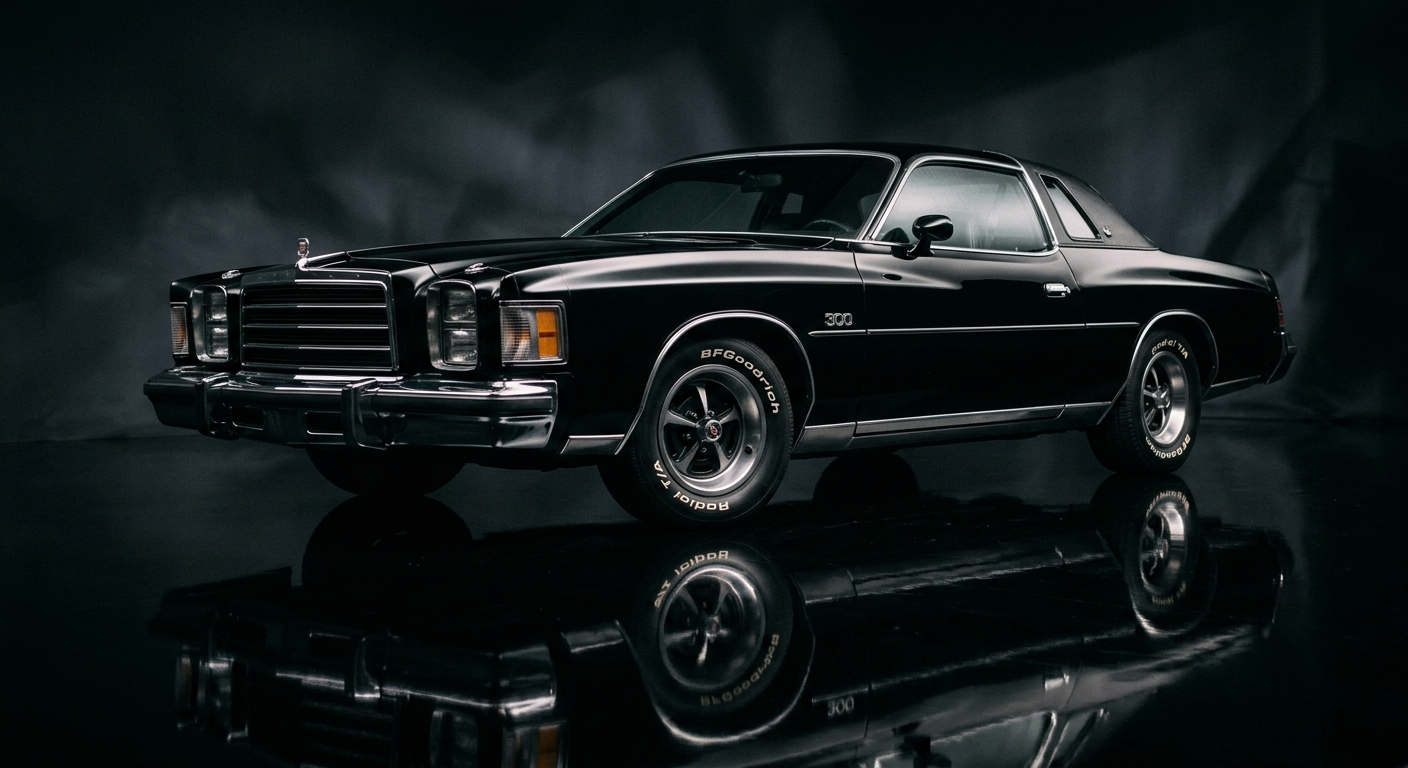
By 1979, the muscle car era was gasping its final breath. Emissions regulations, insurance costs, and fuel economy mandates had transformed America’s performance landscape into a wasteland of strangled small-blocks and anemic horsepower ratings. Yet Chrysler, in typical contrarian fashion, delivered one last hurrah with the 300, a luxury muscle car that dared to be different when conformity ruled the day.
The 1979 Chrysler 300 represented the swan song of an entire automotive philosophy. While competitors were downsizing and detoxifying their engines, Chrysler’s personal luxury coupe still offered genuine performance credentials wrapped in an elegantly aggressive package that recalled the glory days of American muscle.
Design and Presence
The 300’s styling was a masterclass in understated aggression. Built on Chrysler’s intermediate B-body platform, the car struck an ideal balance between luxury appointments and muscular proportions. The distinctive hidden headlight treatment and formal roofline gave it an air of sophistication that set it apart from the more overtly aggressive pony cars of the era.
At 18.4 feet long and weighing over 3,800 pounds, this was no lightweight sports car. Instead, it embodied the American ideal of effortless power delivery, where performance came from displacement rather than high-revving complexity. The car’s substantial presence on the road commanded respect, with its wide stance and purposeful proportions telegraphing serious intent.
Interior Luxury
Inside, the 300 lived up to its luxury billing with plush bucket seats, woodgrain trim, and full instrumentation. The cockpit felt more like a personal luxury coupe than a stripped-down muscle machine, complete with air conditioning, power accessories, and premium audio systems. This was muscle with manners, designed for adults who wanted performance without sacrificing comfort.
The Heart of the Beast
Under the hood lived Chrysler’s legendary 440 cubic inch V8, producing 195 horsepower in its final carbureted form. While those numbers seem modest by today’s standards, the real story was in the torque delivery. The big-block motor generated massive low-end grunt that made the 300 devastatingly effective in real-world driving situations.
The engine’s character was quintessentially American: smooth, torquey, and unflappable. It would pull cleanly from idle to redline, delivering its power with the kind of effortless authority that only comes from substantial displacement. The distinctive rumble from the dual exhaust system served as an audible reminder of the car’s serious performance intentions.
Transmission and Drivetrain
Power flowed through Chrysler’s TorqueFlite automatic transmission, a three-speed unit renowned for its durability and smooth operation. The combination of big-block torque and intelligent gearing made the 300 surprisingly quick off the line, with 0-60 mph times in the mid-eight-second range that were genuinely impressive for the era.
Driving Experience
Behind the wheel, the 1979 300 delivered a uniquely American driving experience. The steering was light and comfortable for cruising, while the suspension struck a reasonable compromise between ride quality and handling capability. This wasn’t a corner carver, but rather a high-speed cruiser that excelled at devouring interstate miles with minimal effort.
The car’s character revealed itself best on the open road, where the big V8 could stretch its legs and the substantial chassis felt planted and secure. Highway merging was effortless, and passing maneuvers were accomplished with a simple flex of the right foot rather than complex downshift strategies.
The End of an Era
What made the 1979 300 truly significant was its timing. This would be the final year for Chrysler’s big-block engines in passenger cars, making it quite literally the end of an era. Subsequent years would bring smaller, more efficient powerplants that prioritized fuel economy over raw performance.
For enthusiasts who understood automotive history, the 1979 300 represented a final opportunity to experience traditional American muscle in a refined, sophisticated package. It was muscle car performance for grown-ups, combining substantial power with genuine luxury and comfort.
The 1979 Chrysler 300 stands as a monument to a vanishing automotive philosophy, combining genuine muscle car performance with luxury appointments that few rivals could match. Today, clean examples represent exceptional value for collectors seeking the final expression of Detroit’s big-block era. This is American automotive history made tangible, wrapped in elegant sheet metal and powered by one last glorious rumble from the past.