Full Spec Motors

The Barely Street Legal Monster, 1967 Chevrolet Corvette L88

3 min read

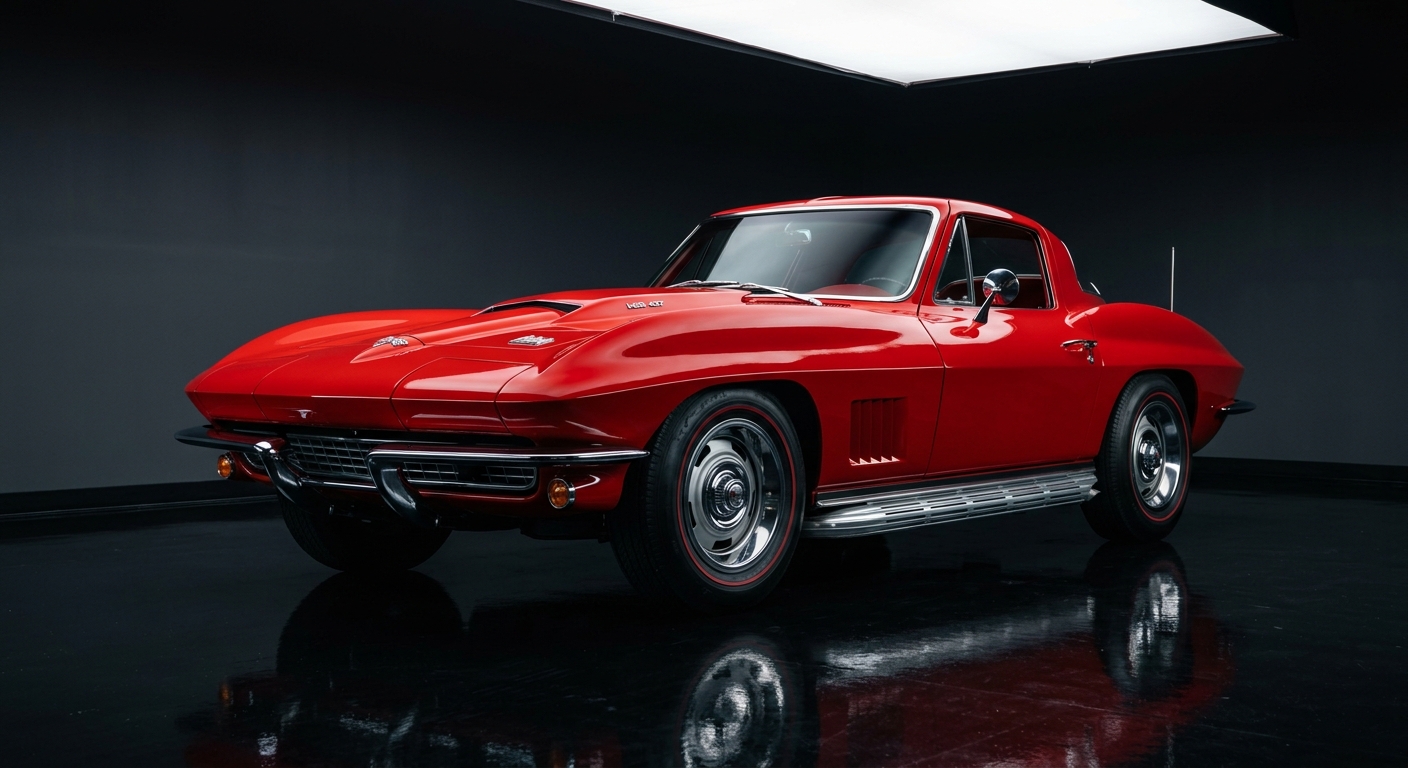
In 1967, Chevrolet offered what was essentially a race car with license plates, though they’d never admit it publicly. The L88 option package transformed the already potent Corvette into a barely civilized street machine that could embarrass purpose-built race cars at any track in America. Only 20 were built that first year, making it one of the rarest and most coveted Corvettes ever produced.

The Beast Beneath the Hood

The L88’s 427 cubic inch V8 was officially rated at 430 horsepower, but this was pure fiction designed to keep insurance companies and the NHRA happy. In reality, the aluminum-headed monster produced closer to 560 horsepower, making it one of the most underrated engines in automotive history. Chevrolet went to great lengths to disguise the L88’s true intentions, even mandating that cars equipped with this option delete the radio and heater to discourage street use.

The engine featured a radical solid lifter cam, 12.5:1 compression ratio, and a single massive Holley four-barrel carburetor that seemed to inhale air with the fury of a jet engine. The aluminum cylinder heads, borrowed from Chevrolet’s racing program, shed precious weight while flowing enormous volumes of air. This wasn’t an engine designed for cruising to the drive-in; it was a barely contained explosion waiting to be unleashed on unsuspecting racetracks.

Race Car Disguised as Street Car

Everything about the L88 betrayed its racing intentions. The mandatory M22 “Rock Crusher” four-speed transmission could withstand the engine’s massive torque output but sounded like a box of hammers at idle. The Positraction differential helped put the power down, though traction remained a theoretical concept in first and second gear. Side-mounted exhaust pipes announced the L88’s presence from blocks away, producing a sound that seemed to shake windows and rattle teeth.

The suspension, while sophisticated for 1967, was overwhelmed by the engine’s massive power output. Wheelspin was inevitable, controllable slides were common, and the unwary driver could find themselves facing backward before they knew what happened. This was raw, unfiltered American muscle in its purest form.

A Legend Born from Racing Necessity

The L88 existed primarily to homologate Chevrolet’s racing efforts, providing a legal pathway for the competition department to campaign the 427 in professional racing series. The street cars were almost incidental, sold to a select few customers who understood what they were buying. Many L88s were immediately converted to full race specification, their brief stint as street cars ending almost before it began.

The package price of $947.90 more than doubled the cost of a base Corvette, explaining why so few buyers checked the L88 option box. Those who did received what was essentially a factory race car that happened to have headlights and turn signals. The lack of creature comforts wasn’t an oversight; it was intentional, designed to ensure only serious drivers need apply.

Driving the Undriveable

Behind the wheel of an L88, subtlety becomes irrelevant. The engine idles with a lumpy, aggressive rhythm that promises violence. Acceleration isn’t smooth; it’s explosive, violent, and utterly addictive. The car doesn’t accelerate so much as it hurls itself forward with barely contained fury, the driver along for what feels more like a controlled crash than transportation.

Modern drivers accustomed to electronic aids and progressive power delivery would find the L88 terrifying. There’s no traction control, no stability management, nothing but the driver’s skill standing between controlled acceleration and spectacular loss of control. It’s automotive experience distilled to its most basic elements: engine, transmission, wheels, and prayer.

Muscle Cars
1967 Chevrolet Corvette L88
427 V8, 4-Speed Manual
Original Price: $5,240 ($48,500 in 2024)
0-60 MPH 4.0s
TOP SPEED 170mph
POWER 560hp
PRODUCTION 20units
Engine
Displacement 427 cubic inches (7.0L)
Configuration V8, aluminum heads
Compression 12.5:1
Peak Torque 460 lb-ft @ 4,000 rpm
Transmission
Type 4-speed manual
Code M22 “Rock Crusher”
Final Drive Positraction differential
Dimensions
Length 175.1 inches
Width 69.2 inches
Wheelbase 98 inches
Weight 3,200 lbs
History & Provenance
Year Introduced 1967
Designer Chevrolet Engineering
Total Production 216 units (1967-1969)
Current Value $400,000 – $800,000
Ratings
Performance

9.5

Handling

6.0

Daily Usability

2.0

Value

8.5

Sound

10

Character

10

The L88 Corvette represents American automotive extremism at its finest, a car so focused on pure performance that comfort and civility became casualties. It’s automotive violence disguised as a production car, and today’s collectors rightfully worship it as the ultimate expression of the muscle car era’s unbridled ambition.
6 thoughts on “The Barely Street Legal Monster, 1967 Chevrolet Corvette L88”

  1. ngl man that L88 is pure animal but lets be real, track only doesnt do it justice lol. ive taken some gnarly terrain in my lifted 4runner and the thing about raw horsepower like that is you need real world versatility ya know? that corvette would get torn apart on a rocky trail, no skid plates no recovery points. but yeah hiding all that beast under a sleeper body is sick, kinda like how you can make a rig look stock but have lockers and a winch hiding underneath. theyre different beasts but i respect the raw engineering either way.

    Log in or register to reply
    • Yeah I feel that about versatility, but here’s the thing with that L88 – the real beast is under the hood thermally speaking. That engine was running hotter than most anything on the road, and without the heavy cooling system they deleted to save weight, you’d see thermal stress patterns that would make a trail rig look calm in comparison. The L88 was purpose built for one thing: sustained high RPM abuse on smooth pavement where that heat signature stays consistent. Your 4Runner’s doing completely different work at lower temps, so they’re honestly in different thermal universes despite both being raw power.

      Log in or register to reply
      • yo irene ur actually spittin facts bout the thermal stuff, thats y the L88 was so sepcial – it was literally engineered to run hot and angry on track where you can keep it sideways and let that motor do its thing. like a lifted 4runner is cool n all but it aint built for sustained abuse at 7k rpms lol, the corvette was purpose built for one job and tbh thats what makes it a legend. cant compare apples to oranges when ones designed to go sideways forever and the others built for terrain imo

        Log in or register to reply
        • lol nah bro track beast and trail rig are two totally different animals, cant hate on either one. the l88 was all out aggression in a closed enviroment but a proper 4runner or lockers and skids will get you out of places where the vette would be dead weight – ive pulled more stuck sports cars off mountains than i can count tbh. both got their purpose but one actually takes you somewhere, ya know?

          Log in or register to reply
  2. yo this thing wud be absoloute fire on a track ngl, like imagine getting that beast sideways down a course lol. i heard the L88 was insane but hiding all that power under a normal looking body is lowkey genius – kinda like when you’re tryna hide your build budget from the boys haha. the real question tho is how many transmissions you think one of these legends took out back in the day, cuz ive already killed 3 this year and im way less powerful then that monster tbh

    Log in or register to reply
    • I appreciate the enthusiasm, but there’s a crucial difference between sustained thermal management and just throwing power at a gearbox – the L88 was engineered for controlled aggression on a closed course with proper cooling, not street abuse. If you’re going through three transmissions a year, the issue isn’t horsepower, it’s how that power is being delivered and modulated, which is exactly why German marques focus on chassis balance and drivetrain durability as a complete system rather than isolated power figures.

      Log in or register to reply

Leave a Comment