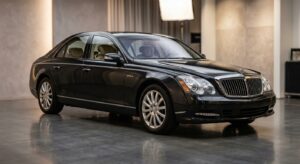
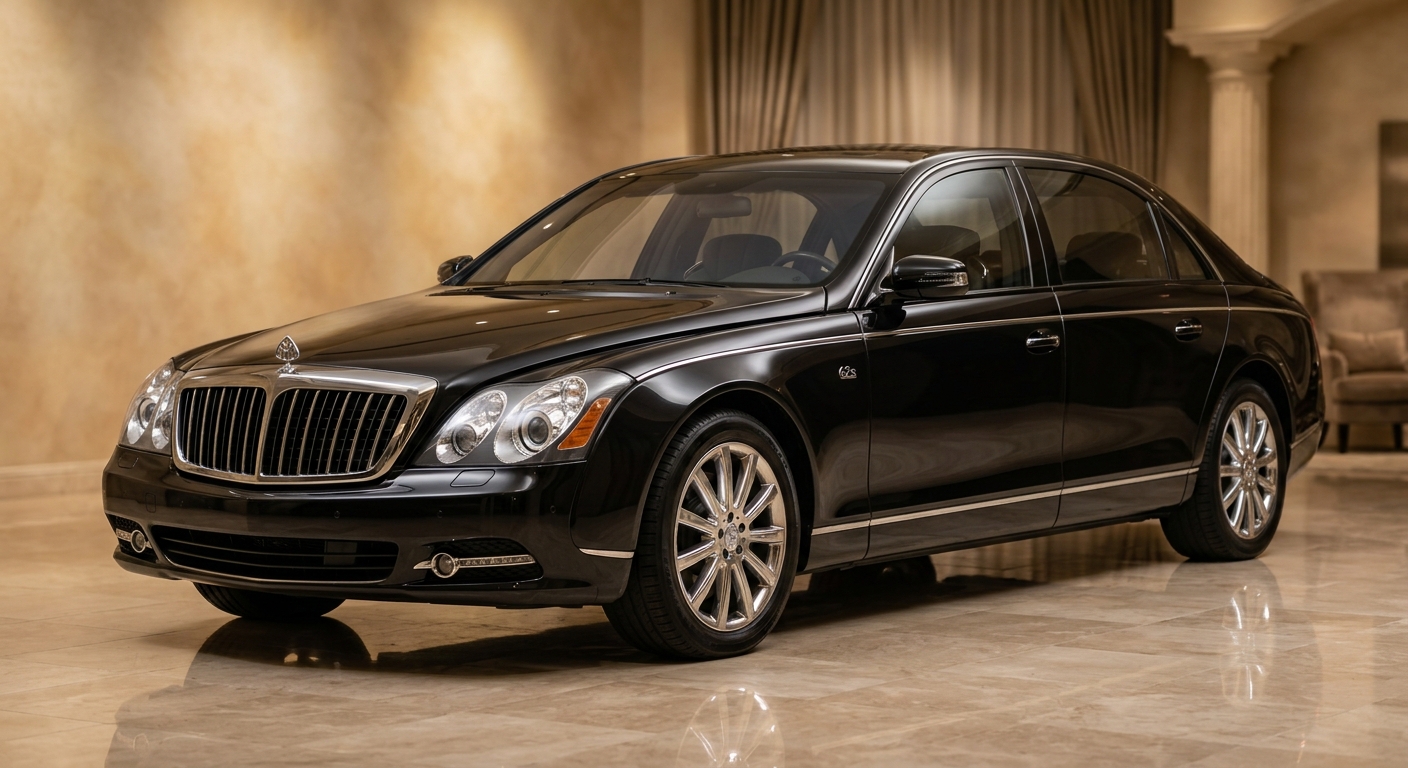
In 2008, when the world’s financial markets collapsed and excess became a dirty word, Maybach quietly continued building the most extravagant sedans money could buy. The 62S represented the pinnacle of this brief renaissance of German ultra-luxury, a car so opulent and over-engineered that it made a Rolls-Royce seem restrained.
The Maybach Renaissance
Mercedes-Benz revived the dormant Maybach name in 2002, hoping to create a halo brand that would compete directly with Rolls-Royce and Bentley. The strategy was simple: take the best of Mercedes engineering, stretch it to limousine proportions, and wrap it in the kind of luxury that would make oligarchs weep with joy. The 62S was the flagship of this ambitious project, a 20-foot-long monument to automotive excess.
Built on a stretched S-Class platform, the 62S added nearly two feet of wheelbase compared to even the long-wheelbase S600. This wasn’t just about creating more rear legroom; it was about establishing presence, making a statement that announced your arrival before you even stepped out of the car.
V12 Power and Poise
Under the 62S’s imposing hood lived a 6.0-liter twin-turbocharged V12 producing 604 horsepower and 738 lb-ft of torque. In an era when most luxury cars prioritized smoothness over speed, the 62S offered both in startling abundance. Despite weighing nearly 6,200 pounds, it could sprint to 60 mph in just 4.8 seconds, making it one of the quickest luxury sedans of its time.
The engine’s character perfectly matched the car’s mission. Power delivery was seamless and relentless, with massive torque reserves that made highway passing effortless. The twin-turbo V12 pulled with the authority of a freight train, yet remained whisper-quiet at idle, befitting a car designed for those who preferred to be driven rather than drive.
Interior Sanctuary
Step inside a 62S and you entered a different world. The rear compartment was less like a car’s interior and more like a private jet’s cabin. Individual reclining seats could be adjusted in dozens of ways, each featuring heating, cooling, and massage functions. Fold-down tables, champagne flutes, and a refrigerator completed the mobile office experience.
The attention to detail bordered on obsessive. Door handles were solid metal, interior trim was real wood or carbon fiber, and even the floor mats were hand-stitched leather. Maybach offered nearly unlimited customization options, from exotic leather colors to personalized embroidery, ensuring that no two cars were exactly alike.
Technology and Comfort
The 62S pioneered several luxury technologies that would later trickle down to mainstream Mercedes models. The AIRMATIC air suspension could adjust ride height and firmness on the fly, while the active body control system virtually eliminated body roll. Rear-seat passengers enjoyed individual climate control, premium sound systems, and early infotainment displays.
Noise isolation reached almost surreal levels. The 62S used advanced sound dampening materials and triple-sealed doors to create a cabin so quiet that conversations could be held in whispers. This isolation from the outside world was both the car’s greatest strength and, perhaps, its fatal flaw in a changing world.
Market Reality
Despite its impressive engineering and uncompromising luxury, the Maybach brand struggled to find its audience. Priced significantly higher than comparable Mercedes S-Class models, the 62S competed directly with established ultra-luxury brands that had decades of heritage and prestige. Many potential buyers questioned whether the Maybach badge carried sufficient cachet to justify its premium pricing.
The 2008 financial crisis proved to be the final nail in Maybach’s coffin as a standalone brand. Sales plummeted as even the ultra-wealthy became conscious of appearances, and conspicuous consumption fell out of favor. By 2012, Mercedes had discontinued the Maybach line, though the name would later return as a trim level for the S-Class.
The 2008 Maybach 62S stands as a fascinating footnote in automotive history: a brilliant engineering exercise that arrived at precisely the wrong moment. While it couldn’t save the Maybach brand, it remains one of the most compelling luxury sedans ever built, a rolling testament to what happens when engineers are given an unlimited budget and told to build the ultimate luxury car. Today, as these magnificent machines depreciate into attainability, they offer a unique opportunity to experience automotive excess from a bygone era.