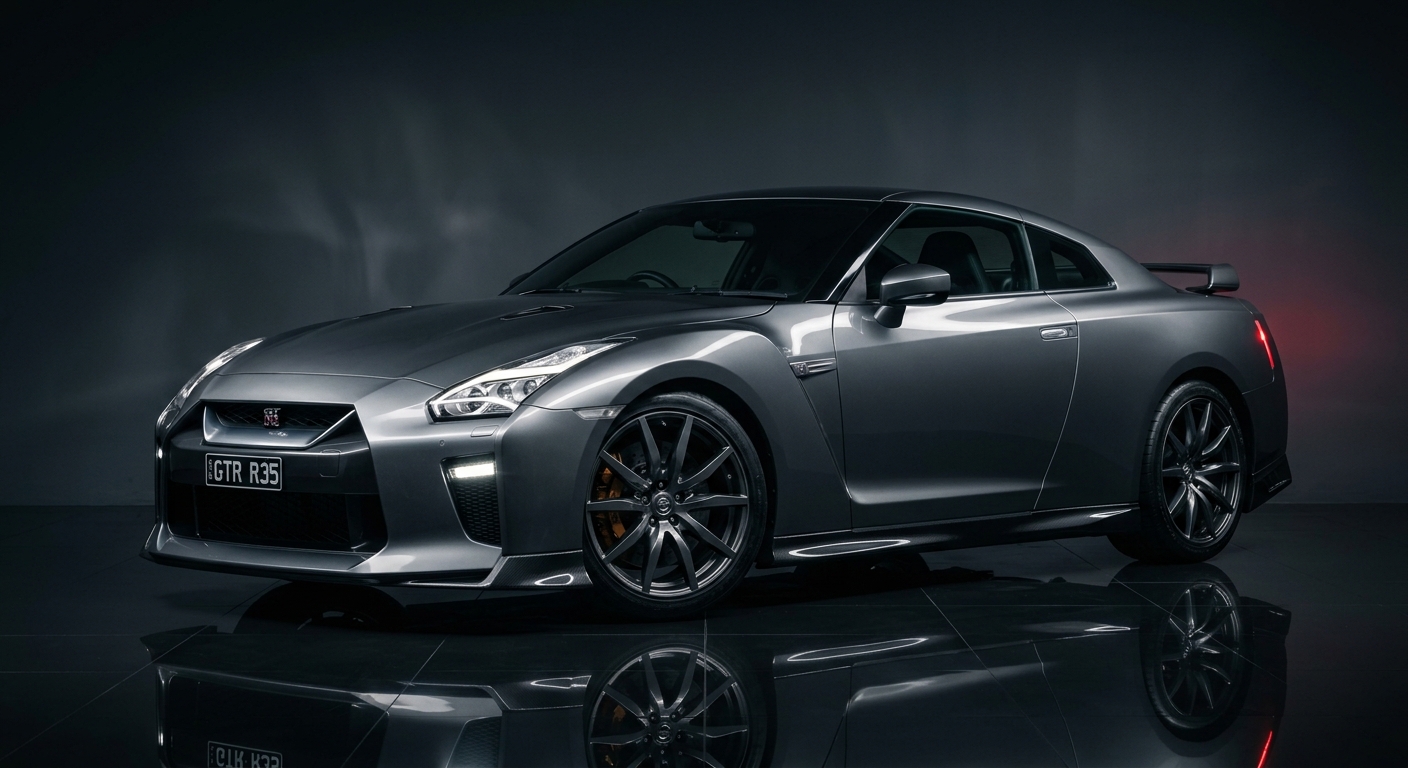
When Nissan unleashed the R35 GT-R in 2009, it didn’t just enter the supercar arena,it kicked down the door and demanded respect. This was Japan’s uncompromising answer to Porsche’s 911 Turbo and Ferrari’s F430, delivering otherworldly performance wrapped in a package that cost less than half its European rivals.
The Godzilla Awakens
The 2009 GT-R represented a seismic shift for Nissan’s flagship performance car. Gone was the Skyline badge, replaced by a standalone GT-R identity that signaled serious intent. At its heart sat a hand-built 3.8-liter twin-turbocharged V6 producing 480 horsepower and 430 lb-ft of torque, mated to a dual-clutch transmission that could shift faster than any human ever could.
But raw numbers only told part of the story. The GT-R’s sophisticated ATTESA E-TS all-wheel-drive system could vary torque distribution between front and rear axles in milliseconds, while the active suspension adapted to road conditions 100 times per second. This wasn’t just brute force engineering,it was technological artistry.
Track-Bred Performance
On the road, the GT-R felt like a barely civilized race car. The launch control system enabled consistent sub-3.5-second 0-60 mph runs that would embarrass cars costing twice as much. The steering was precise if not particularly communicative, pointing the nose exactly where intended while the all-wheel-drive system shuffled power to maintain grip levels that defied physics.
The GT-R’s party piece was its ability to make average drivers feel like heroes. Where other supercars demanded respect and skill, the Nissan flattered its pilot with electronic aids that caught mistakes before they happened. Yet beneath this safety net lurked genuine performance credentials,this was a car that lapped the Nürburgring in under 7 minutes 30 seconds, faster than the Porsche Carrera GT.
Daily Driver Capabilities
Unlike many supercars, the GT-R could function as daily transportation. The interior, while not luxurious, offered reasonable comfort and a full complement of modern amenities. The trunk could accommodate weekend luggage, and the suspension’s comfort mode tamed the worst road imperfections. This dual personality,track monster by day, commuter by night,set the GT-R apart from more temperamental exotic alternatives.
Engineering Excellence
The GT-R’s technical achievements extended beyond its powertrain. The body structure used a multi-material approach, with the engine mounted behind the front axle for optimal weight distribution. The transaxle design placed the dual-clutch gearbox at the rear, connected to the front-mounted engine via a carbon fiber driveshaft,an unusual but effective solution for balance.
Aerodynamics played a crucial role, with active rear spoiler deployment and carefully sculpted bodywork managing airflow. Every vent and crease served a purpose, channeling cooling air to vital components while maintaining stability at triple-digit speeds.
The 2009 GT-R proved that supercar performance didn’t require a European pedigree or six-figure price tag. It democratized exotic car thrills while establishing Nissan as a serious performance player on the global stage. Fifteen years later, it remains one of the greatest automotive bargains ever created.