In 2017, legendary Italian design house Pininfarina shocked the automotive world with the H2 Speed, a radical hydrogen-powered track weapon that challenged every assumption about zero-emission performance cars. While the industry obsessed over lithium batteries, Pininfarina dared to explore hydrogen fuel cell technology in its purest, most extreme form.
The H2 Speed represented more than just another concept car: it was a bold statement about the future of sustainable supercars. Built as a track-only prototype, this machine combined Pininfarina’s timeless design philosophy with cutting-edge hydrogen technology, creating something that felt both futuristic and timelessly elegant.
Revolutionary Hydrogen Technology
At the heart of the H2 Speed lies a sophisticated hydrogen fuel cell system that generates electricity to power electric motors at each wheel. The setup produces 503 horsepower in total, with the fuel cells providing continuous power while a compact battery pack handles peak demands during acceleration and cornering.
The hydrogen storage system uses high-pressure tanks integrated into the car’s carbon fiber monocoque chassis. This packaging required ingenious engineering to maintain the low center of gravity essential for track performance while safely containing the pressurized hydrogen. The result is a car that can theoretically run for hours on track without the range anxiety that plagues battery-electric vehicles.
What makes the H2 Speed truly special is its refueling capability. While electric supercars require lengthy charging sessions, this Pininfarina can be refueled with hydrogen in minutes, just like a conventional race car. The only emission from the tailpipe is water vapor.
Track-Focused Engineering
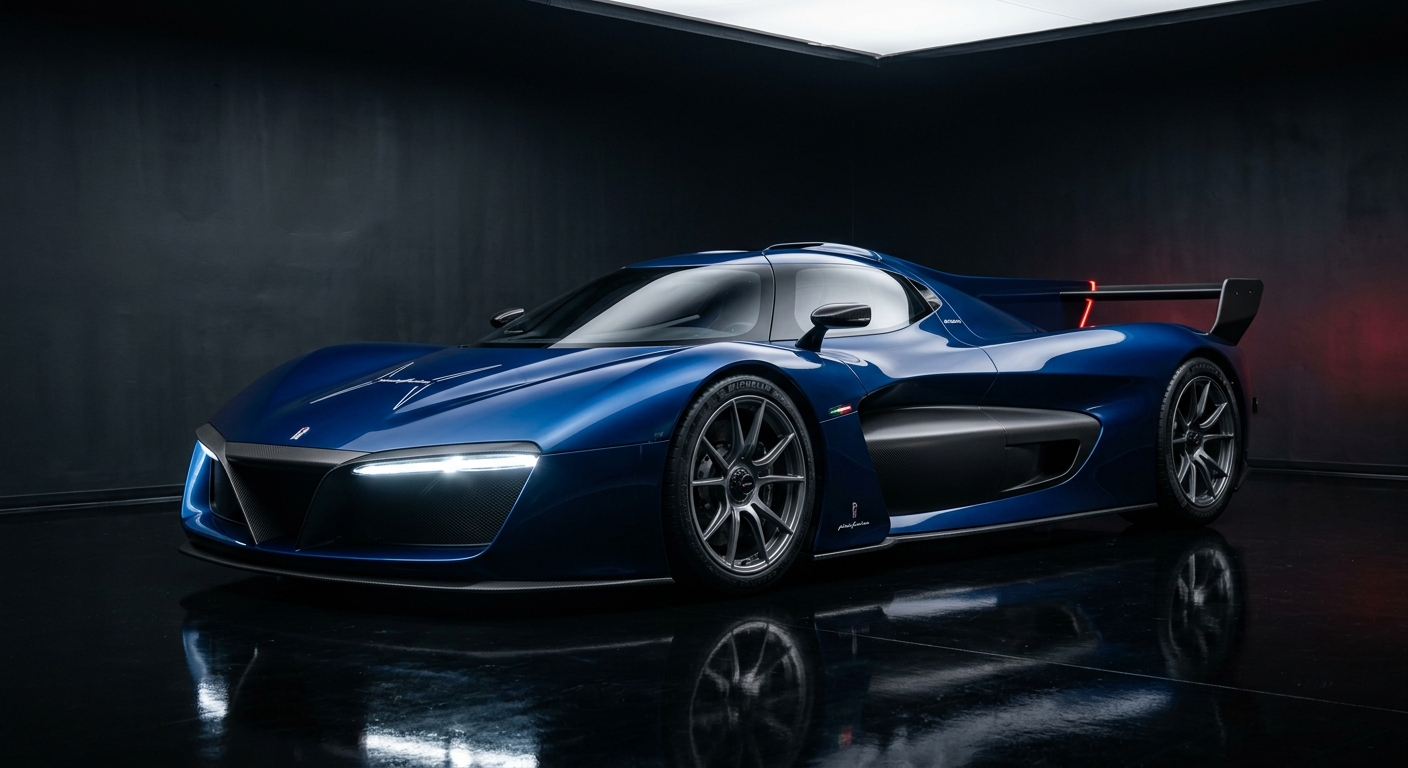
Pininfarina developed the H2 Speed specifically for track use, and every aspect of the car reflects this singular focus. The carbon fiber bodywork incorporates aggressive aerodynamic elements including a massive rear wing, front splitter, and complex underbody diffusers that generate significant downforce at speed.
The suspension system uses advanced adaptive dampers and anti-roll bars tuned specifically for circuit driving. Carbon ceramic brakes provide the stopping power necessary to repeatedly slow the car from high speeds, while the lightweight construction keeps the total weight remarkably low for a hydrogen-powered vehicle.
Inside, the cabin is stripped down to essentials with a full roll cage, racing seats, and a digital dashboard focused on critical telemetry. The steering wheel incorporates controls for the various driving modes and energy recovery systems.
Design Philosophy
True to Pininfarina’s heritage, the H2 Speed manages to look both purposeful and beautiful. The bodywork flows seamlessly from the aggressive front fascia to the dramatic rear wing, with every surface serving both aesthetic and aerodynamic purposes.
The proportions are classic mid-engine supercar, but the details are uniquely futuristic. LED lighting elements are integrated into the bodywork, while exposed carbon fiber and metallic accents emphasize the car’s high-tech nature. The result is unmistakably a Pininfarina design, even while pushing into uncharted technological territory.
Performance Potential
While Pininfarina never released comprehensive performance figures, estimates suggest the H2 Speed could achieve 0-60 mph times in the low 3-second range, with a top speed limited more by aerodynamics than powertrain capability. The instant torque delivery from electric motors provides crushing acceleration, while the hydrogen fuel cells ensure consistent power delivery throughout extended track sessions.
Perhaps more importantly, the H2 Speed demonstrated that hydrogen technology could work in an extreme performance application. The car served as a rolling laboratory for fuel cell integration, thermal management, and high-pressure hydrogen storage in a lightweight sports car platform.
The Pininfarina H2 Speed remains one of the most compelling concept cars of the 2010s, proving that hydrogen technology could work in extreme performance applications. While infrastructure limitations prevented its production, this radical machine opened minds to alternative zero-emission futures. In a world where electric supercars now dominate, the H2 Speed’s instant refueling and extended range capabilities feel more relevant than ever.